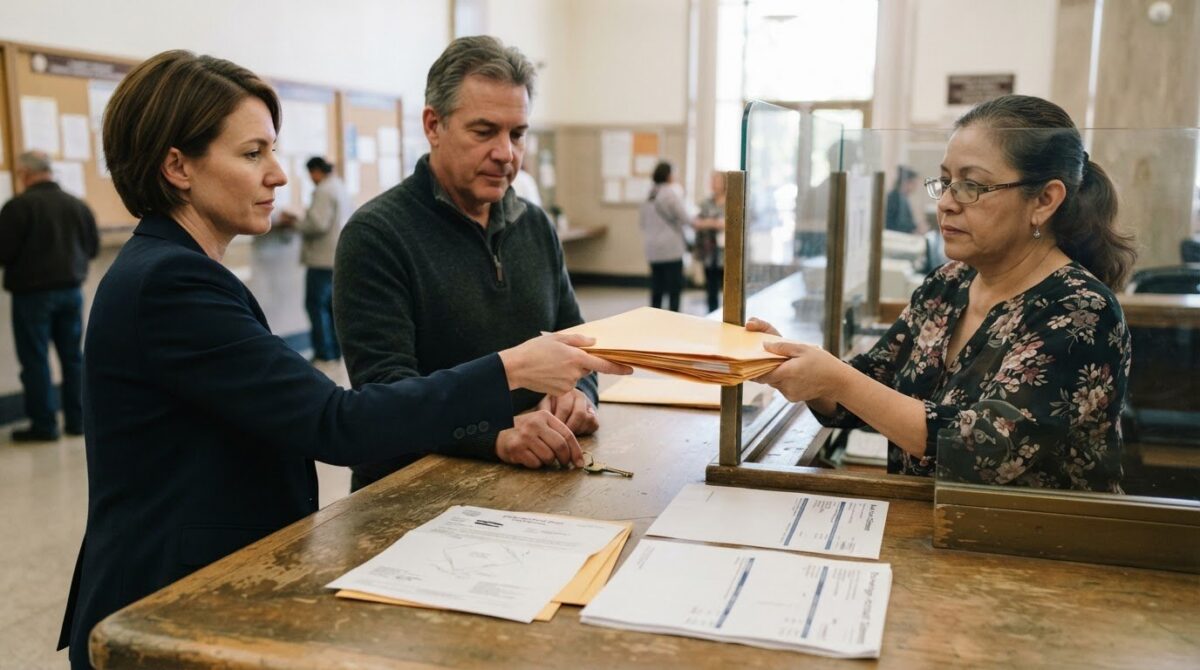
An unfunded trust can leave an asset exposed to probate, even when the trust document reflects the owner’s intentions. Securing trust assets that are not properly titled usually means correcting ownership during the owner’s lifetime. After death, a California Heggstad petition may help transfer qualifying property into the trust without full probate administration. The central question is whether the available records show that the owner intended the specific asset to belong to the trust.
It’s understandable to expect a signed trust to cover everything you own, but ownership records matter too. This article explains how to transfer property into a trust, which assets generally pass by beneficiary designation instead, and what can happen when property remains in an individual’s name. You’ll also learn when a Heggstad petition may be appropriate and why evidence of intent matters, so you can understand options for resolving an untitled asset in California.
Key Takeaways
- When you acquire property after creating a trust, make sure ownership records reflect the trust where appropriate; the correct transfer method depends on the type of asset.
- A general assignment may cover personal property, while real estate and business interests can require different transfer documents or records.
- A California Heggstad petition may help transfer an asset into a trust after death when evidence supports that the owner intended it to be trust property.
- An asset left in an individual’s name may be subject to probate, so understanding its title and the available transfer options can help clarify the next step.
Assets acquired after creating a trust
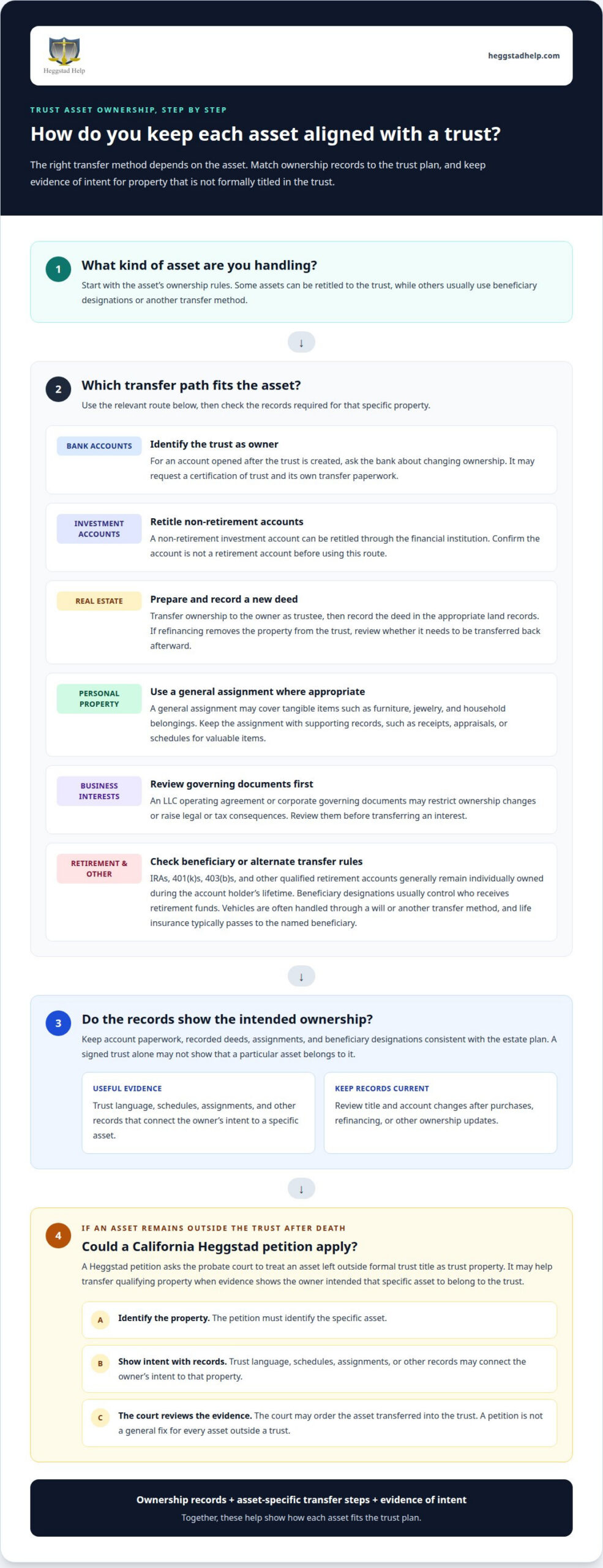
A trust covers an asset only when ownership is properly transferred or otherwise aligned with the trust plan. With a revocable trust, the person who created it can serve as trustee and add property by changing its title. For example, a bank account opened after the trust is created should identify the trust as owner or confirm that the trust holds the account. The bank may request a certification of trust and its own transfer paperwork. Non-retirement investment accounts can also be retitled through the financial institution.
To transfer real estate into a trust, prepare a new deed transferring ownership to the owner as trustee, then record it in the appropriate land records. The deed should accurately reflect the intended trust ownership. If the property remains in the owner’s individual name, it may be outside the trust. When refinancing, review any title changes: property removed from the trust may need to be transferred back afterward.
Not every asset belongs in the trust’s name. IRAs, 401(k)s, 403(b)s, and other qualified retirement accounts generally remain individually owned during the account holder’s lifetime; transferring one may be treated as a withdrawal and create tax consequences or penalties. Instead, beneficiary designations usually control who receives retirement funds. Vehicles are also often handled through a will or another transfer method rather than trust ownership. Review beneficiary designations so they remain consistent with the intended estate plan.
Business interests need a separate review before transfer. An LLC operating agreement or a corporation’s governing documents may restrict ownership changes or create unintended legal or tax consequences. A general assignment may transfer personal property, such as household belongings, without retitling each item separately. Keep trust asset records aligned with later purchases, account changes, and ownership documents. This focused review helps secure trust assets not properly titled by distinguishing straightforward transfers from those that need closer attention.
Assigning personal property to a trust
A general assignment can transfer tangible personal property, such as furniture, jewelry, and household items, without retitling every object individually. The document should identify the property being assigned and connect it to the living trust. For example, trust language covering all personal property wherever situated may help show that an item belongs to the trust, even if the document does not name each possession separately.
Specific records still matter. Jewelry appraised at $75,000 or antique furniture valued at $50,000 can be difficult to handle during trust administration if ownership was never documented. An assignment creates a written record of the owner’s intent, while receipts, appraisals, and schedules can help identify particular items. Keep those records with the estate plan, and update them when valuable property is acquired or transferred.
To retitle bank and brokerage accounts into a revocable living trust, ask the financial institution to change the account owner to the trust and complete its required paperwork. The institution may request a certification of trust, which summarizes key trust information without providing the entire document. For a brokerage account, confirm that it is a non-retirement investment account. Retirement accounts generally remain individually owned during the account holder’s lifetime.
Beneficiary designations require a separate review. Life insurance proceeds typically pass to the named beneficiary rather than through trust ownership. A trust may be named as beneficiary when that fits the estate plan, but this can affect when proceeds are distributed and may have tax implications for a sufficiently large estate or policy. Review designations after changes in family circumstances and coordinate them with the trust’s terms.
If an account or item’s ownership records don’t match the intended plan, Trust Asset Title Correction can help address the discrepancy and clarify the trust’s ownership record.
California Heggstad Petitions
In California, a Heggstad petition asks the probate court to treat an asset left outside formal trust title as trust property. It can provide a court process for transferring eligible property into the trust. The concept comes from Estate of Heggstad, reported at 16 Cal. App. 4th 943. A petition must identify the specific asset and show the trustor intended it to belong to the trust. A signed trust alone may not establish that intent if its language and related records do not connect it to the property.
Evidence may include trust language describing the asset, schedules, assignments, or other records showing the owner’s intent. For example, a trust schedule identifying a particular parcel can help connect that real estate to the trust. The court considers the documents together, including whether they clearly identify the asset. A general wish to fund the trust is different from evidence tied to specific property.
State laws affect how assets are transferred because deed requirements, ownership records, and court procedures vary. For real estate, the property’s location matters. A California Heggstad petition addresses trust funding through a California court; assets located elsewhere may involve different rules. Retirement accounts also require separate treatment because beneficiary designations, rather than trust ownership, commonly determine who receives them.
After reviewing the evidence, the court may order the asset transferred into the trust, where it can be administered and distributed under the trust’s terms. A Heggstad petition is not a general fix for every asset outside a trust. It focuses on whether the specific property was intended to be trust property, not simply on whether the trustor wanted a comprehensive estate plan.
Consult an estate planning attorney when an owner has died and property remains titled individually, or when trust documents and ownership records conflict. An attorney can assess whether the asset is identifiable, whether the documents show intent, and whether a Heggstad petition fits the circumstances. Addressing those questions promptly can clarify how the asset may be transferred and whether probate may otherwise be required.
Consequences of assets left outside a trust
A trustee’s authority generally extends to assets held by the trust, not everything the trustor owned. If a California home remains in an individual’s name, the trust may not control its transfer at death. Probate may then be needed before the property can be distributed. The same issue can arise with personal property when no assignment or other ownership record connects it to the trust.
To identify potentially missing assets, compare the trust’s asset schedule and transfer documents with current ownership records. Review real estate deeds, bank and investment account statements, and records for business interests. For personal property, look for a signed assignment or a specific list of valuable items. Note assets opened or acquired after the trust was created, and flag title changes made during refinancing.
An unfunded or partially funded trust can leave beneficiaries facing court filings, added administration, and delayed access to property. For example, a home removed from a trust during refinancing may remain outside it if ownership was never transferred back. A trustee cannot rely on the trust document alone to control an asset still titled to someone else.
Retirement assets require a different review. An IRA or 401(k) generally passes under its beneficiary designation, rather than through trust ownership. If an account names a former spouse or omits an intended beneficiary, the distribution may not match the estate plan. Changing ownership instead of reviewing the designation can also create unintended tax consequences.
Funding should be reviewed after major life events and when accounts, custodians, or ownership records change. Compare each asset’s title and beneficiary designation with the trust plan, then identify whether a transfer, updated designation, or court process may be needed. For help addressing ownership discrepancies, request Trust Asset Title Correction.
HEGGSTAD HELP: Trust Asset Title Correction
HEGGSTAD HELP, a service provided by attorney Robert P. Bergman, a Board Certified Specialist in Estate Planning, Trust and Probate Law, assists families, attorneys, title companies, and their clients throughout California for securing trust assets not properly titled. Its Heggstad petition and trust asset title correction services address assets left outside a trust when title records or trust documents need court-supported resolution.
For uncontested petitions involving trusts in counties such as Los Angeles, Orange, or San Diego, filing ex parte in Santa Clara County can offer a faster route; petitions there are typically granted in 7 to 10 days. In San Mateo County, ex parte petitions can be filed, heard, and granted the same day. In Contra Costa County, petitions can often be filed and granted the same day when the court is satisfied that urgency has been demonstrated.
Heggstad petitions have fixed fees that cover filing fees and attorney fees. This office handles uncontested petitions, not contested petitions. Contact HEGGSTAD HELP to discuss an untitled trust asset and the appropriate next step.
Take the Next Step Toward Clear Trust Ownership
The next step is to identify the specific ownership question that remains unresolved: whether an asset needs a title correction, a trust transfer, or a court order. That distinction helps focus the review on the asset’s records and the evidence of the owner’s intent. A focused approach to securing trust assets that are not properly titled can help families and professionals decide what issue needs attention first.
HEGGSTAD HELP offers Trust Asset Title Correction, Heggstad Petition Filing, and Ex Parte Court Order Services. The appropriate path depends on the asset, its current ownership, and the documents connecting it to the trust. If you’re ready to discuss a property or account that remains outside the trust, contact HEGGSTAD HELP for guidance. A clear explanation of the asset and the unresolved title issue can help start a focused conversation. Take the next step when you’re ready, with a clearer understanding of the question that needs to be resolved.
Frequently Asked Questions
What about Probate?
Probate depends on the assets, ownership records, and available transfer methods, not simply on whether someone signed a trust. The estate’s value and asset types affect whether this option applies.
What happens when assets are not properly titled in a trust?
The asset’s legal owner may differ from the person expected to manage it under the trust plan. That mismatch can create practical hurdles, such as needing additional documents to establish who has authority to act. For instance, a successor trustee may have trust paperwork but still need to address an account or deed recorded in the former owner’s individual name.
What are the probate consequences of assets not titled in a trust?
Probate can require the court to establish authority over property before it is distributed, adding steps for the people handling the estate. A will may direct distribution of assets in the probate estate, but it generally does not control property paid directly to a named beneficiary. Identifying how each asset is owned or payable helps clarify which process applies.
Can improperly titled trust assets create tax, creditor, or Medicaid eligibility problems?
Possibly, but an ownership mismatch alone does not determine tax treatment, creditor exposure, or Medicaid eligibility. The analysis can depend on the trust’s terms, whether it is revocable or irrevocable, who owns or can access the asset, and when transfers occurred. Retirement accounts require particular care because changing ownership can create tax consequences or penalties. Consider each issue separately before changing title.

Article by
Robert P. Bergman, Attorney at Law
Attorney Robert P. Bergman ("Bob Bergman") has been a Board-Certified Specialist in Estate Planning, Trust and Probate Law since 2011, as certified by the California State Bar Board of Legal Specialization. For several years, Bob has assisted families and the clients of other attorneys with obtaining court orders through Heggstad petitions to avoid the time and expense of Probate administration. Bob is friendly, very approachable, and believes in explaining complex legal topics in clear ordinary language so that his clients understand exactly what they're doing and why they're doing it.
Bob is often able to assist clients who are in other counties than his home county of Santa Clara through his approach to Heggstad petitions.
Disclaimer
This article is for informational purposes only. Nothing in this article is intended to replace legal advice from a competent attorney or be considered legal guidance for anybody's specific legal situation. Nobody should rely on information in this article in making legal decisions without such consultation.


