A California home may be sold without waiting for full probate after a Heggstad petition is granted, if the order confirms the property as a trust asset. Selling property after a Heggstad petition in California generally requires giving the title company a certified copy of the court order before closing.
If the home was intended for the trust but title was never transferred, it is understandable to worry that a sale could be delayed or probate may be unavoidable. The key question is whether the court can confirm the property belongs to the trust, allowing the successor trustee to handle the sale.
This article explains when probate may be needed, what a title company may require, and what happens after the court grants the petition. It also covers how the trust’s authority to sell affects the next steps, so you can identify what needs to be resolved before the sale proceeds.
Key Takeaways
A Heggstad petition can ask the court to confirm that a home left off the trust’s title belongs to the trust, based on evidence of the settlor’s intent.
According to the California Legislature, a trustee must give written notice to every beneficiary and legal heir within 60 days after a revocable trust becomes irrevocable at the settlor’s death. The notice process also affects the petition timeline.
Once the court grants the petition, a certified copy of the order can help establish the trustee’s authority to move forward with a sale or refinance.
Uncontested petitions may be filed ex parte in Santa Clara, San Mateo, or Contra Costa County, with timing depending on the court and, in Contra Costa County, whether urgency is demonstrated.
What is a Heggstad Petition in California?
A Heggstad petition asks a California probate court to confirm that an asset belongs to a trust even though title was never transferred. It may address a home left out of the trust when documents show the settlor intended it to be trust property. When a home is properly titled in a living trust, the successor trustee can generally manage it without transferring it through probate.
The legal framework includes Probate Code Section 850, which can be used to ask the court to determine ownership, and Probate Code Section 17200, concerning trust petitions. Probate Code Section 851 addresses notice to beneficiaries and heirs. In Estate of Heggstad (1993), a signed trust declaration identifying property showed intent without a deed. Ukkestad v. RBS Asset Finance, Inc. (2015) also addressed written conveyances and property descriptions.
After a settlor dies, the California Legislature requires a trustee to serve written notice on every beneficiary and legal heir within 60 days after a revocable trust becomes irrevocable. Separately, California Courts describes the Heggstad petition process as including 30 days’ notice to interested parties. These notice steps matter even when the petition seeks to correct a title mistake.
Alternatives include transferring title into the trust during the settlor’s life. If there is no trust, the California Legislature says a Primary Residence Petition may be an option when the estate’s main asset is a home worth $750,000 or less. It adjusts every three years.
Full probate can be a lengthy process, and attorney fees may be substantial. An uncontested ex parte petition in Santa Clara County is typically granted in 7 to 10 days. A noticed hearing may be set 30 to 60 days after filing, or several months later in some counties. Heggstad petitions have fixed fees covering filing fees and attorney fees.
Do You Need Probate to Sell a House in a Trust?
Not always. If a California home is titled in a living trust, the successor trustee can generally sell it without transferring it through probate. If the decedent owned the home personally, a Heggstad petition may ask the court to confirm it belongs to the trust, based on evidence of intent.
That evidence may include a signed trust, a property schedule, or estate-planning documents identifying the home. For example, if a parent’s trust lists a house but public records still name the parent, those documents may support the claim that the omission was a title mistake. A spouse’s statements alone may not establish the decedent’s intent as clearly as signed records.
California cases help frame the issue. In Estate of Heggstad, the court considered a signed declaration identifying property as held in trust. In Ukkestad v. RBS Asset Finance, Inc., the court addressed written conveyances and whether the property description identified real estate with reasonable certainty. Together, these cases make the trust language and property description central to the request.
For a real-estate petition, supporting documents generally include the trust and amendments, records showing the decedent’s intent, and a property description. The petition asks the court to confirm ownership and transfer the asset into the trust, correcting the title record for trust administration. The specific evidence depends on how the trust and property records fit together.
That court process can be faster than full probate, but it does not make the property part of the trust automatically. A granted order provides the basis for correcting title; it does not replace the trustee’s separate authority to sell. A Heggstad petition for trust property can address an untitled asset when the documents support the requested correction.
What Do Title Companies Require After a Heggstad Order?
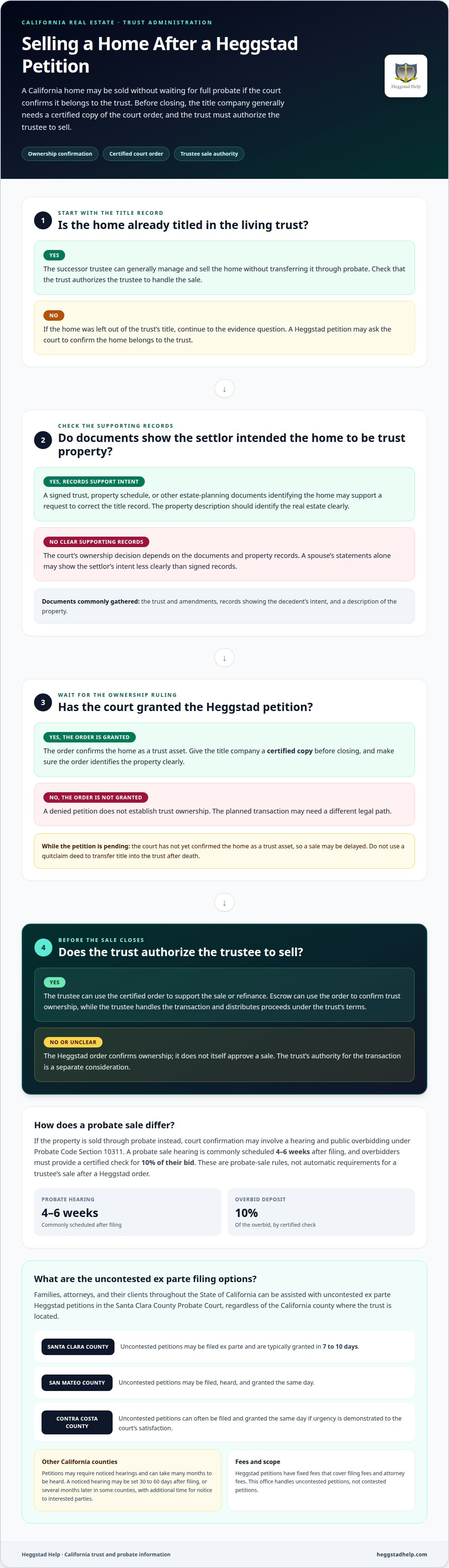
A Heggstad order confirms that real property belongs to the trust; it does not itself approve a sale. A title company generally needs a certified copy of the order before closing.
Title and Escrow Requirements After an Order
The certified order is the court’s written confirmation that the property is a trust asset. It matters because escrow and title review must connect the court’s decision to the property being sold. The order should clearly identify the real estate so the title record and court ruling match. The successor trustee can provide the order as part of the sale file.
Authority Before Court Confirmation
While the Heggstad petition is pending, the court has not yet confirmed the property as a trust asset. A sale may be delayed until the order is issued, since title review needs a basis to treat the home as trust property. A trustee should not try to transfer title into the trust after death using a quitclaim deed. The court order addresses the ownership question.
Selling or Refinancing After an Order
After the order is granted, the trustee can use its certified copy to support a sale or refinance. The trust must also authorize the trustee to handle the transaction. Escrow can use the order to confirm trust ownership, while the trustee manages the sale and distributes proceeds under the trust’s terms. A denied petition does not establish trust ownership, so the planned transaction may need a different legal path.
A Heggstad order confirms ownership, not sale approval. If the property is instead sold through probate, court confirmation may involve a hearing and public overbidding under Probate Code Section 10311. A probate sale hearing is commonly scheduled 4-6 weeks after filing; overbidders must provide a certified check for 10% of their bid. These are probate-sale rules, not automatic requirements for a trustee’s sale after a Heggstad order.
How Do You Sell a California Home After a Heggstad Petition?
After the court grants a Heggstad petition, the order confirms the home as trust property. Selling property after a Heggstad petition in California can then proceed through the successor trustee without waiting for the entire estate to pass through probate. The trustee still needs authority under the trust to sell and must act in the beneficiaries’ interests.
Start by obtaining a certified copy of the order and providing it to escrow and the title company. They can confirm that the court’s decision matches the real estate in the pending sale. For example, if the order identifies a Los Angeles County home, its property description should correspond to the home under contract.
Review the trust’s sale authority and identify who can sign for the trust. If two successor trustees are named, confirm how the trust directs them to act.
Give escrow the certified order and trustee documents. This helps resolve the title issue before closing paperwork is prepared.
At closing, the authorized trustee signs the transfer documents. The sale proceeds remain trust property and are handled under the trust’s terms.
A granted Heggstad order is not the same as a formal probate sale order. If a transaction instead requires probate court confirmation, the process may include a hearing and public overbidding under Probate Code Section 10311. That distinction matters: the Heggstad order establishes trust ownership, while the trust’s terms govern the trustee’s sale and distribution of proceeds.
When selling real property after a Heggstad petition in California, coordinate the court process with the expected sale timeline if the petition is still pending. A buyer’s contract alone does not confirm trust ownership. For help addressing an untitled home, get assistance with a Heggstad petition.
How Can Heggstad Help Assist With a Heggstad Petition?
HEGGSTAD HELP, a service of attorney Robert P. Bergman, Board-Certified Specialist in Estate Planning, Trust, and Probate Law (California State Bar Board of Legal Specialization), assists families, attorneys, title companies, and their clients throughout California when property intended for a trust remains outside it. Its services include Heggstad petition filing, ex parte court order services, and trust asset title correction.
Uncontested petitions may be filed ex parte in Santa Clara County Probate Court, regardless of where the trust property is located. This can provide a court path for a home in Los Angeles County or Orange County without filing the petition in that county.
In Santa Clara County, petitions are typically granted in 7 to 10 days. San Mateo County petitions can be filed, heard, and granted the same day. Contra Costa County petitions can often be filed and granted the same day if the Court is satisfied that urgency exists.
In other counties, including Alameda County and San Diego County, Heggstad petitions often require noticed hearings and may take many months to be heard. An uncontested petition from those counties can instead be heard ex parte in Santa Clara County, where decisions often come 7 to 10 days after filing. The appropriate filing path depends on whether the petition is uncontested and the court’s procedures.
All Heggstad petitions have fixed fees covering filing fees and attorneys’ fees. This office handles uncontested petitions only, not contested petitions. If the petition is disputed, this filing service is not the appropriate path.
For help with an uncontested petition or a title correction, contact HEGGSTAD HELP.
Move the Sale Forward With a Clear Plan
Once the court process for resolving ownership is clear, coordinate the order, the trustee’s authority, and the expected closing documents before the sale becomes time-sensitive. This can help prevent a title issue from becoming a last-minute obstacle for the family, buyer, or escrow file.
For families selling property after a Heggstad petition in California, the court result is only one part of being ready to sell. The trust’s terms, the person authorized to sign, and the title record all need to align. Keeping those pieces organized helps beneficiaries understand what happens next and allows the trustee to approach the transaction carefully.
Rather than guessing about the next step, bring the property and trust circumstances to a focused discussion with Heggstad Help. The discussion can clarify the path for an uncontested matter and help align decisions with the intended sale schedule.
Discuss your situation with HEGGSTAD HELP, and move forward with a clearer plan. Addressing the ownership issue methodically can make the next stage feel more manageable.
Frequently Asked Questions
Can a trustee sell property without all beneficiaries agreeing?
Yes, if the trust authorizes the trustee to sell, unanimous agreement from beneficiaries may not be required. The trustee must still act in their best interests and account for the proceeds. For example, a trustee considering an offer should follow the trust’s sale provisions and keep clear records of how the proceeds are handled. A beneficiary’s objection may raise a separate dispute.
House Still in a Deceased Parent’s Name: What Happens Next?
A home still titled in a deceased parent’s name needs an ownership path before a sale can close. Gather the trust, any property schedule, and the deed to understand how the home was intended to be held. If the records support trust ownership, a Heggstad petition may ask the court to confirm it. If no trust applies, another transfer process may be needed.
How Does the Sale Actually Work, Step by Step?
First, establish who has authority to act for the property. Next, address any title issue and provide escrow with the court order and documents showing the trustee’s authority. The trustee then reviews the sale terms, signs the required transfer papers, and handles proceeds under the trust. For example, if the trust requires two trustees to act together, both may need to sign the transaction documents.
What If a Property Was Left Out of the Trust?
If the decedent intended the property to belong to the trust, a Heggstad petition can ask the court to confirm that ownership despite an incomplete title transfer. Evidence may include signed trust documents identifying the home. If the evidence does not establish intended trust ownership, the property may need another transfer route, such as probate or an applicable small-estate procedure.
What Documents Does a Successor Trustee Need to Sell?
A successor trustee generally needs the trust and amendments showing who may act and whether the trustee can sell. If a Heggstad order corrected the property’s status, keep its certified copy available for the title and escrow file. A Certification of Trust can also summarize relevant trust terms and identify the acting trustee without providing the entire trust document.
What Must You Do Before Listing the Property?
Before listing, identify the record owner, the acting trustee, and any title issue that could affect closing. Review the trust’s sale provisions and determine whether a Heggstad order is needed to establish trust ownership. If a petition is pending, coordinate the court process with the proposed contract timeline. Avoid signing as trustee until the authority and ownership path are clear.
Disclaimer
This article is for informational purposes only. Nothing in this article is intended to replace legal advice from a competent attorney or be considered legal guidance for anybody's specific legal situation. Nobody should rely on information in this article in making legal decisions without such consultation.