
You shouldn’t have to endure a year of complex court proceedings just because a single asset was left out of a trust. For many California successor trustees, the discovery of an untitled property or bank account feels like a direct path into the long, expensive probate process. It’s a stressful realization, especially when statutory fees for a standard probate can exceed $40,000 for a million-dollar estate. However, a Heggstad petition (a legal request to transfer assets into a trust after death) offers a much faster resolution. To find the right advocate, you need to know the specific questions to ask a Heggstad petition lawyer to ensure they have the specialized experience required for a swift victory.
We understand the confusion that comes with technical jargon like Probate Code Section 850 (the statute governing these petitions). This article provides the clarity you need to interview potential counsel effectively. You’ll discover how to identify a specialist who can secure a court order in months rather than years, allowing you to avoid full probate administration and fulfill your duties with confidence. We will walk through the essential inquiries regarding their track record with ex parte (emergency or expedited) orders and their specific approach to proving the decedent’s intent through clear and convincing evidence.
Key Takeaways
- Understand the “Generalist Trap” and why hiring a standard probate attorney might lead to unnecessary delays and costs compared to a Heggstad specialist.
- Learn the specific questions to ask a Heggstad petition lawyer to verify their success rate in cases where property was never formally deeded to the trust.
- Discover how utilizing ex parte court order services can significantly shorten your timeline by navigating local California court backlogs more effectively.
- Identify how a Board-Certified Specialist’s exclusive focus on Section 850 filings minimizes procedural errors and provides a more direct path to asset recovery.
Why Vetting a Heggstad Petition Lawyer is Critical for California Trustees
Discovering that a valuable asset, such as a family home or a brokerage account, was left out of a trust can be a jarring experience for any successor trustee. In California, the standard remedy for this situation is a Heggstad petition, which is a specialized legal filing under Probate Code Section 850 (the statute governing trust asset transfers). This procedure allows the court to declare that an asset is part of the trust estate even if the formal title was never transferred before the decedent passed away. It’s based on the landmark legal precedent set by the Estate of Heggstad, which established that a written declaration of intent can be sufficient to confirm trust ownership.
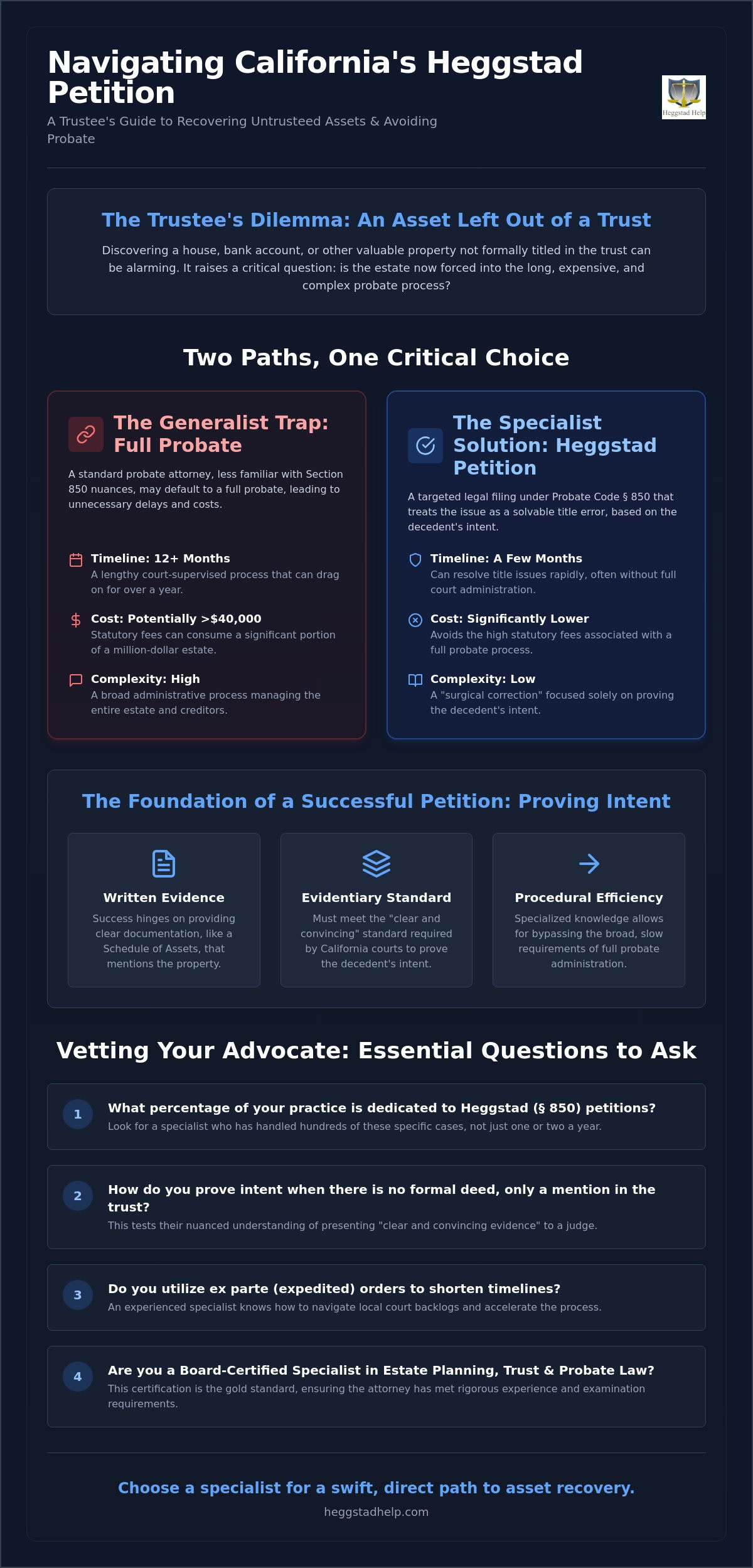
However, not every estate attorney is equipped to handle these filings with the necessary precision. This often leads to the “Generalist Trap,” where a standard probate lawyer might default to recommending full probate administration simply because they’re less familiar with the nuances of Section 850. Falling into this trap is a costly mistake. While a successful petition can resolve title issues in a few months, a failed or overlooked petition forces the estate into a full probate process that often lasts 12 months or longer and consumes thousands of dollars in statutory fees. Understanding the specific questions to ask a Heggstad petition lawyer will help you determine if they possess the specialized focus required to avoid these unnecessary delays.
The Difference Between General Probate and Specialized Section 850 Filings
General probate is a broad, administrative process designed to manage an entire estate, settle with creditors, and eventually distribute assets. In contrast, a Section 850 filing is a surgical correction of a specific title error. It relies on “Intent-Based Recovery,” a strategy that focuses solely on proving the decedent’s written desire to include the asset in the trust. Success in these cases often hinges on specific factors:
- Written Evidence: Providing a Schedule of Assets or a comprehensive trust declaration that mentions the property.
- Evidentiary Standards: Meeting the “clear and convincing” standard required by California courts to prove intent.
- Procedural Efficiency: Using specialized knowledge to avoid the broad requirements of a full probate administration.
Because these petitions require such specific documentation, generalist attorneys often overlook the subtle evidence needed to satisfy a judge. Choosing a specialist ensures that you’re treating the missing asset as a solvable title issue rather than a reason to subject the entire estate to court supervision.
Essential Questions to Ask a Heggstad Petition Lawyer Regarding Expertise
When you interview potential counsel, you aren’t just looking for someone who understands probate; you’re looking for a specialist who treats title corrections as a primary focus. One of the most revealing questions to ask a Heggstad petition lawyer is what percentage of their practice is dedicated specifically to these filings. Because California Probate Code 850 (the law governing these petitions) is a highly technical niche, a generalist who only handles one or two cases a year may not be familiar with the latest local court requirements. You’ll want to ensure they’ve handled hundreds of these specific matters to guarantee they can navigate the procedural hurdles efficiently.
It’s also vital to ask how they handle cases where there’s no formal deed, but only a mention of the asset in the trust document. This scenario is common, yet it requires a nuanced understanding of how to present “clear and convincing evidence” to a judge. You should also inquire if they’re a Board-Certified Specialist in Estate Planning, Trust and Probate Law. This certification ensures the attorney has met rigorous standards, including passing a comprehensive examination and demonstrating a high level of experience in this field beyond what a standard law license requires. If you’re facing a complex title issue, choosing a firm that specializes in Heggstad Petition Filing can provide the steady hand you need.
Evaluating the Attorney’s Record with California Probate Code Section 850
Every California county court operates with its own set of local rules and “legal culture.” Ask the attorney about their success rate within the specific county where the petition will be filed. A lawyer who knows the local probate examiners’ preferences can often anticipate and resolve issues before they lead to a hearing delay. For example, trustees dealing with property in Southern California should ask specifically about experience navigating the Heggstad petition Los Angeles County process, where court backlogs at the Stanley Mosk Courthouse can significantly affect timelines. Additionally, ask how they handle objections from disgruntled heirs who might prefer the asset go through a full probate administration (the standard court-supervised process for distributing a decedent’s estate). A seasoned specialist will have a clear strategy for defending the decedent’s intent and keeping the asset within the trust’s protections.
Questions About Timelines, Ex Parte Orders, and Legal Costs
Successor trustees are often surprised to learn that even a straightforward petition can be delayed by administrative backlogs. When interviewing counsel, some of the most practical questions to ask a Heggstad petition lawyer involve the specific logistics of the court calendar. You should ask if they offer ex parte court order services (expedited requests handled with little or no notice to avoid immediate harm or delay) to confirm trust assets. While a standard Heggstad hearing might take several months, an ex parte application can sometimes address urgent title issues in a fraction of that time if the specific circumstances justify it.
It’s equally important to inquire about the current backlog in your specific California county court for Section 850 hearings. In some jurisdictions, the wait for a hearing date can extend significantly beyond the statutory 30-day notice period. Understanding these delays helps you manage beneficiary expectations from the start. Additionally, you should ask how their fees compare to the statutory fees of a full probate administration. For an estate valued at $1 million, statutory probate fees for the attorney and executor can exceed $40,000. In contrast, a Heggstad filing usually costs a small fraction of that amount. For a deeper dive into these numbers, see our guide on California Heggstad Petition Cost: Fees and Legal Expenses.
Understanding the Procedural Path Forward
The timeline for your petition is largely dictated by notice requirements (the legal mandate to inform all interested parties of the court hearing). Ask your lawyer who must be notified and how they ensure compliance with the 30-day notice period required by the California Probate Code. If a single heir is missed, the court may continue the hearing, adding weeks or months to the process. You’ll want a lawyer who is meticulous with these service requirements to avoid unnecessary resets.
Finally, ask about the process for recording the final “Order” with the County Recorder. Once the judge signs the order confirming the asset belongs in the trust, that document must be properly filed to fix the deed. A specialist doesn’t stop at the courtroom door; they ensure the title correction is finalized so you can sell or distribute the property. If you’re ready to resolve a title error, our Trust Asset Title Correction services can help you secure the necessary court order without the delays of a full probate.
Why a Board-Certified Specialist is the Right Choice for Your Heggstad Filing
Identifying the right advocate is the final step in securing your trust’s assets and fulfilling your fiduciary duties. While the previous sections outlined the technical questions to ask a Heggstad petition lawyer, the answers you receive will likely point you toward a specialist rather than a general practitioner. Choosing a Board-Certified Specialist in Estate Planning, Trust and Probate Law ensures you’re working with an attorney who has met the highest standards of the State Bar of California. At HEGGSTAD HELP, Robert P. Bergman brings over 40 years of experience to every filing, providing a level of seasoned insight that general litigation firms rarely possess. You can learn more about the benefits of this credential by visiting our page on a Board Certified Estate Planning Lawyer for Heggstad Petition in California.
Our practice is built on a consultative approach that transforms a stressful discovery into a structured resolution. Instead of navigating the “Generalist Trap,” where non-specialists might default to full probate administration, we focus exclusively on Section 850 filings and title corrections. This niche focus allows us to maintain a methodical rhythm, identifying the necessary evidence of written intent quickly and preparing petitions that satisfy the strict requirements of California probate examiners. By treating your case as a surgical title correction rather than a broad legal battle, we reduce both the timeline and the emotional burden on the successor trustee.
The HEGGSTAD HELP Advantage: Focused Expertise for Successor Trustees
General litigation firms often juggle dozens of different case types, which can lead to procedural errors or missed deadlines in specialized probate matters. Because HEGGSTAD HELP focuses exclusively on this niche, we’ve refined our processes to handle title corrections with maximum efficiency and a lower risk of court-ordered continuances (delays in hearing dates). This specialization provides a more direct path to a court order, ensuring your assets are recovered without the 12-month wait typical of a full probate. If you’re ready to fix a title error and protect the estate’s value, Schedule a consultation with a Heggstad petition expert today to begin the recovery process.
Take the Next Step Toward Resolving Your Trust Title Issues
Discovering an untitled asset doesn’t have to lead to a year-long probate battle. By knowing the critical questions to ask a Heggstad petition lawyer, you can distinguish between a generalist and a specialist who can secure a court order in a fraction of the time. Success depends on proving the decedent’s intent with clear and convincing evidence, which is a task best handled by an advocate who understands the nuances of local California court requirements and ex parte procedures.
Robert P. Bergman is a Board-Certified Specialist in Estate Planning, Trust and Probate Law with over 40 years of experience. Our firm focuses exclusively on Heggstad and Section 850 filings, providing the steady hand you need to navigate these procedural hurdles with calm competence. If you’re ready to recover missing trust assets and avoid the delays of full probate administration, Get Expert Help with Your California Heggstad Petition today. You have the tools to move forward, and we’re here to ensure the transition is as smooth and efficient as possible.
Frequently Asked Questions
Is a Heggstad petition faster than probate in California?
Yes, a Heggstad petition is significantly faster than a full probate administration in California. While a formal probate proceeding often requires twelve months or longer to conclude, a successful petition under Section 850 is typically resolved within two to six months. This efficiency allows successor trustees to correct title errors (the process of updating ownership records) and distribute assets to beneficiaries without the prolonged court supervision and administrative hurdles required in a formal probate.
Can I file a Heggstad petition without a lawyer?
While you are legally permitted to file a petition on your own, it’s not recommended due to the high evidentiary standards required by California courts. Judges demand “clear and convincing evidence” to prove the decedent’s intent, and any procedural error can lead to a summary denial. Consulting a specialist ensures you know the right questions to ask a Heggstad petition lawyer to verify they can handle the technical notice requirements (the legal duty to inform all heirs and interested parties) and local court rules.
What evidence is needed to win a Heggstad petition?
Success hinges on providing written proof of the decedent’s intent to include the asset in the trust. This evidence often includes a “Schedule of Assets” (a list of property attached to the trust document) or a “pour-over will” (a legal document that directs remaining assets into a trust upon death). The court looks for specific, documented language showing the creator of the trust intended for the property to be trust property, even if the formal deed was never recorded with the county.
How much does a probate lawyer charge for a Heggstad petition?
Legal fees for a Heggstad petition are generally much lower than the statutory fees (fixed percentages of the estate value set by California law) required for a full probate. For instance, statutory fees for a million-dollar estate can exceed $40,000 for the attorney and executor combined. Most specialized firms offer a more cost-effective structure for these filings, though exact costs vary based on the complexity of the title correction and whether the petition requires an ex parte (expedited) hearing to address urgent matters.
What happens if a Heggstad petition is denied by the court?
If the court denies the petition, the asset must typically undergo a full probate administration to transfer title to the beneficiaries. This results in the very delays and expenses the successor trustee was attempting to avoid. However, if the denial was based on a procedural error or a lack of specific documentation, a specialist may be able to file an amended petition or an appeal to address the judge’s concerns and secure the court order confirming the asset belongs in the trust.

Article by
Robert P. Bergman, Attorney at Law
Attorney Robert P. Bergman ("Bob Bergman") has been a Board-Certified Specialist in Estate Planning, Trust and Probate Law since 2011, as certified by the California State Bar Board of Legal Specialization. For several years, Bob has assisted families and the clients of other attorneys with obtaining court orders through Heggstad petitions to avoid the time and expense of Probate administration. Bob is friendly, very approachable, and believes in explaining complex legal topics in clear ordinary language so that his clients understand exactly what they're doing and why they're doing it.
Bob is often able to assist clients who are in other counties than his home county of Santa Clara through his approach to Heggstad petitions.
Disclaimer
This article is for informational purposes only. Nothing in this article is intended to replace legal advice from a competent attorney or be considered legal guidance for anybody's specific legal situation. Nobody should rely on information in this article in making legal decisions without such consultation.


