
A beneficiary’s lack of consent does not automatically prevent a Heggstad petition. A Heggstad petition without beneficiary consent may ask the court to confirm that an omitted asset belongs to a trust. Beneficiaries and other interested parties can object, and the court may consider written evidence of the trust creator’s intent. Filing a petition does not guarantee that the court will treat the asset as trust property.
If you’re facing this issue, you may be wondering whether an objection will stop the process or lead to a dispute. This article explains when an omitted asset may be brought into a trust, who might file a petition, how beneficiaries can object, and what evidence may support the request. It also explains the difference between an uncontested petition and a contested matter, so you can understand the process and consider your next steps.
Key Takeaways
- A beneficiary’s lack of consent doesn’t automatically prevent a Heggstad petition, but the court considers whether the evidence supports treating the omitted asset as trust property.
- Review the trust, property schedules, and other written records for clear evidence that the trust creator intended to include the asset.
- Beneficiaries and other interested parties can object; for a noticed hearing, California law requires formal 30-day notice to interested parties, according to the California Legislature.
- Before choosing a filing path, distinguish an uncontested petition from a contested matter, since objections can add court steps and affect timing.
When can an omitted asset be brought into a trust?
A California court may confirm that an omitted asset belongs to a trust if written evidence shows the creator intended to include it. A Heggstad petition asks the probate court to decide that ownership question.
Establishing Trust Ownership
A Heggstad petition is a request for a California probate court to confirm that specific property belongs to a trust, despite incomplete title transfer. Under Probate Code Section 850, a trustee or beneficiary may petition over whether an asset belongs to a trust. What is a Heggstad petition in California probate? It is a court process for establishing trust ownership of an asset that wasn’t formally transferred. If granted, the order can allow the trustee to handle and distribute the asset under the trust, rather than through full probate. The petition identifies the asset and explains why it should be treated as trust property.
Evidence of the Decedent’s Intent
Evidence of intent includes written trust records connecting the decedent to the asset. The court needs more than a family member’s unsupported belief that the property was meant for the trust. Review the signed trust document and its Schedule of Assets for a property description, ownership interest, or other identifying details. In Estate of Heggstad, a listed property interest was mislabeled as a “partnership interest,” but the schedule supported the decedent’s intent. A pour-over will, which directs remaining assets into a trust, may also be relevant. The specific asset and supporting records still matter.
Transferring Unfunded Assets
A successful petition can establish that an asset belongs to the trust even though its title was never formally transferred. For example, a home may have been refinanced without being retitled in the trust’s name, or an asset may have been omitted from transfer paperwork. Gather the trust, property schedule, and records identifying the asset. If the court grants the petition, its order confirms the property as a trust asset. The trustee can then address title correction and manage the asset under the trust, rather than starting full probate for that property.
Alternatives to a Petition
The available alternatives depend on whether the trust creator is living and how clearly the records identify the property. If the creator can still transfer the asset, completing the title transfer may address the issue without asking a court to establish ownership. After death, probate or trust reformation, a court-requested change to trust terms, may be considered if a Heggstad petition does not fit the evidence or circumstances. What are alternatives to a Heggstad petition for transferring assets into a trust? Depending on the case, they may include a lifetime transfer, probate, or trust reformation. Compare the asset’s title with the trust records before choosing a path.
Can a Heggstad Petition Be Contested?
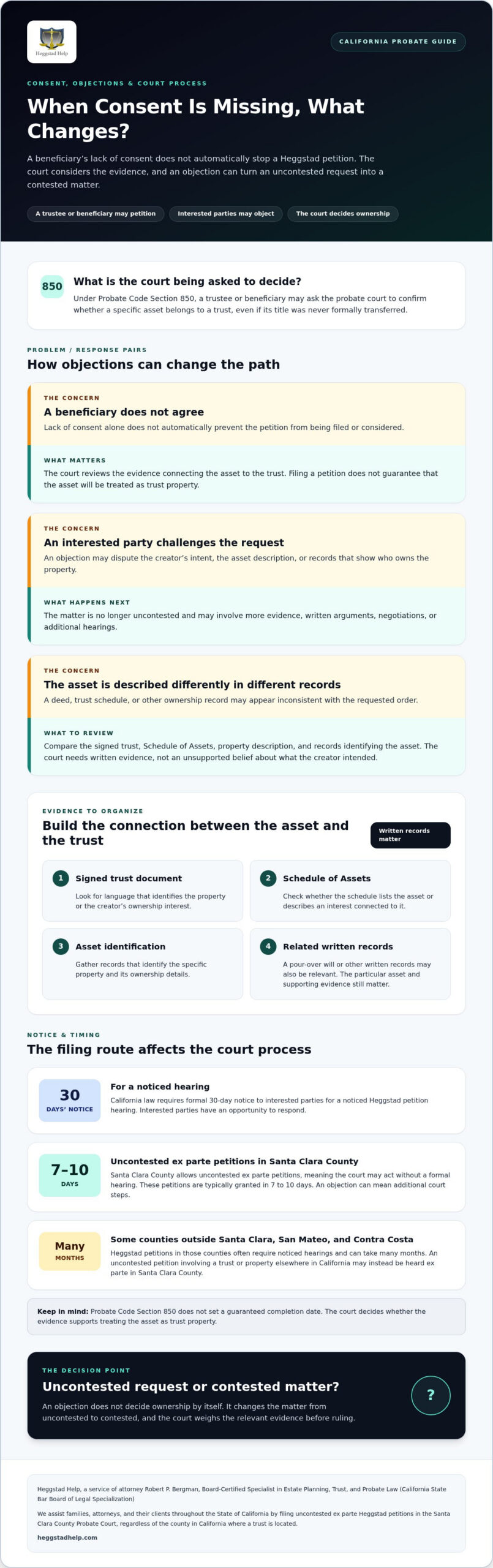
Yes. Beneficiaries and other interested parties can object, and the court considers their evidence before deciding whether to grant the petition. A Heggstad petition without beneficiary consent may proceed, but an objection can make an otherwise uncontested request a contested matter.
The Court Process
The court process gives interested parties a chance to address the requested order. Must beneficiaries receive notice of a Heggstad petition, and can they object? Yes. For a noticed Heggstad petition hearing, California law requires formal 30-day notice to interested parties, according to the California Legislature. At the hearing, a beneficiary may challenge evidence about the asset’s ownership or its connection to the trust. An attorney can organize records and present a Heggstad petition filing to the probate court. If a party objects, the court process may involve further evidence exchange, written arguments, negotiations, or additional hearings. Probate Code Section 850 does not set a guaranteed completion date.
Notice and Objections
Notice informs interested parties about the petition and gives them an opportunity to respond. The petition should clearly identify the asset and the order requested. An objection may dispute the decedent’s intent, challenge the asset description, or present competing ownership records. For example, a beneficiary might point to a deed that conflicts with the trust’s description. When disagreements lead to formal objections, beneficiaries often turn to counsel like JE Law to handle contentious estate disputes. Organize relevant documents and note any inconsistencies so the court can assess the evidence.
County Court Procedures
Santa Clara County allows uncontested ex parte petitions, meaning the court may act without a formal hearing. These petitions are typically granted in 7 to 10 days. If a beneficiary objects, however, the matter is no longer uncontested and may require additional court steps. In counties outside Santa Clara, San Mateo, and Contra Costa, Heggstad petitions often require noticed hearings and can take many months. An uncontested petition involving a trust or property elsewhere in California may instead be heard ex parte in Santa Clara County. Filing a Heggstad petition without beneficiary consent makes it especially important to understand whether an objection has been raised.
Common reasons to file a Heggstad petition
A Heggstad petition may help when an asset was intended for a trust but remained outside it. The problem often appears after the trust creator dies, when a successor trustee reviews the estate and discovers property still titled individually. Probate Code Section 850 allows a trustee or beneficiary to ask the court to resolve whether an asset belongs to a trust. If the court confirms ownership, the trustee may handle that asset under the trust instead of through full probate.
Can a trustee file a Heggstad petition without the beneficiary’s consent? Yes. A trustee may petition the court without first obtaining beneficiaries’ agreement. Beneficiaries can still receive notice and object, so the trustee should be prepared to present records supporting the request.
Common reasons for filing include an unfinished transfer, an asset left off a trust schedule, or a property interest described incorrectly. For example, a trust document may identify an ownership interest that a later record describes differently. A petition may also be considered when the omission is discovered after death or when the trust has become irrevocable. The key question is whether the available records connect the specific asset to the creator’s intent.
Before filing, gather documents that identify both the trust and the property. A practical starting set includes:
- The signed trust document and any relevant amendments, to show the trust’s terms.
- A Schedule of Assets or other written trust record identifying the asset or ownership interest.
- Title records, deeds, or account documents showing how the asset is currently held.
- A pour-over will, if one exists, as evidence of the creator’s plan for assets left outside the trust.
A successor trustee generally files because that person is responsible for administering trust property. A beneficiary, heir, or other interested person may file in some situations. Keep the original records together and note any differences between the asset’s description in the trust and its current title. This comparison helps clarify the issue the petition asks the court to decide.
Common reasons for filing a Heggstad petition
A Heggstad petition can address a mismatch between a living trust’s terms and an asset’s legal title. For example, a decedent may have intended a home or ownership interest to pass through the trust but never completed the transfer. The court can decide whether that specifically identified asset belongs to the trust. If the petition succeeds, the property may avoid full probate. The petition does not determine how every later-discovered estate asset should be distributed.
The process traces to Estate of Heggstad, decided by the California Court of Appeal in 1993. There, a property interest appeared on the trust’s Schedule of Assets, although it was mislabeled as a “partnership interest.” That example shows why the filing should connect the asset’s description in trust records with the property identified in the court request. Compare those descriptions before filing, and flag any mismatch for explanation.
Venue and filing steps also matter. A Heggstad petition generally proceeds in the probate court associated with the successor trustee’s county. The court file is opened in the trust’s name, even when no formal probate estate is opened. In counties outside Santa Clara, San Mateo, and Contra Costa, these petitions often require a noticed hearing and may take many months to be heard. An uncontested petition from another California county can instead be heard ex parte in Santa Clara County, where decisions often come 7 to 10 days after filing. San Mateo and Contra Costa have separate ex parte procedures.
For a noticed hearing, California law requires formal 30-day notice to interested parties, according to the California Legislature. Gather the trust, property description, title records, and documents supporting the requested order; complete notice as required for the chosen filing route. This gives interested parties a chance to respond and helps define the question before the probate court.
If you’re preparing an uncontested petition, review Heggstad petition filing information to understand the filing route and supporting records.
HEGGSTAD HELP: Heggstad Petition Filing
Heggstad Help, a service of attorney Robert P. Bergman, Board-Certified Specialist in Estate Planning, Trust, and Probate Law (California State Bar Board of Legal Specialization), assists families, attorneys, title companies, and their clients throughout the State of California with uncontested Heggstad petitions.
For trusts located across California, the office can file uncontested ex parte petitions in the Santa Clara County Probate Court. It also files ex parte petitions in San Mateo and Contra Costa Counties. Heggstad Petition Filing and Ex Parte Court Order Services address the court request, while Trust Asset Title Correction can help reflect the resulting order in asset records. These services are for uncontested matters.
If you’re considering an uncontested petition, contact HEGGSTAD HELP or visit heggstadhelp.com to discuss the filing.
Take the Next Step With a Clear Plan
Before moving forward, gather the trust paperwork and asset records so the issue can be assessed as a whole. Identify the outcome you need, such as confirming ownership or correcting an asset’s title, and note any disagreement that could affect whether the matter is uncontested.
If you are considering a Heggstad petition without beneficiary consent, focus first on whether the documents clearly support the request and whether the matter is uncontested. A court filing is a significant step, so understanding the purpose of the petition and the evidence behind it can help you make an informed decision about what happens next.
HEGGSTAD HELP handles Heggstad Petition Filing, Ex Parte Court Order Services, and Trust Asset Title Correction. If you’re ready to discuss your situation, contact HEGGSTAD HELP. A clear next step can make a complex trust issue easier to approach.
Frequently Asked Questions
Do I need an attorney to file one?
A Heggstad petition asks a probate court to decide an asset’s ownership based on trust records, so legal assistance is important. The process is not a self-service alternative like a Small Estate Affidavit. An attorney can organize the trust and title documents, identify the order requested, and address court filing and notice requirements. For example, a deed with a different property description may need to be explained alongside the trust paperwork.
What controls the timeline?
The filing county’s court calendar is a major timing factor, and objections can add steps. A court may require additional evidence, written arguments, negotiations, or another hearing if interested parties dispute the request. The petition’s completeness also matters: missing title records or unclear descriptions can prompt requests for clarification. Before filing, assemble the relevant records and identify any disagreement, so the requested order and supporting materials address the issue directly.
What if the asset isn’t specifically listed on the Schedule of Trust Assets?
An asset’s absence from the schedule does not automatically end the inquiry. Other written records, such as an executed trust document, assignment, or pour-over will, may connect the property to the trust creator’s intent. Compare each record’s asset description with current title documents. A general statement that the creator wanted everything in the trust is less useful than records identifying the specific asset or ownership interest.
What should families do after finding an unfunded trust asset?
Preserve the records and avoid assumptions about who owns or can transfer the asset. Gather the trust and amendments, current title or account statements, and any assignment or correspondence concerning the asset. Note how the asset is described in each document and identify any mismatch. Also establish whether the trust creator is living or deceased, as that affects which transfer options may be available.
When might probate still be necessary?
Probate may still be needed if the court does not confirm the asset as trust property or the records do not support the requested finding. It may also be relevant if other estate assets need a separate transfer process. A Heggstad petition addresses only the specifically identified property before the court; it does not automatically transfer every asset discovered later. Distinguish the petition’s target asset from the rest of the estate.
Who has standing to file a Heggstad petition?
A trustee or beneficiary may petition under Probate Code Section 850 to ask the court to resolve whether property belongs to a trust. A successor trustee commonly takes the lead because that person administers the trust, while an heir or another interested person may be able to file in some situations. The petitioner should explain their connection to the trust and identify the specific asset and requested court decision.

Article by
Robert P. Bergman, Attorney at Law
Attorney Robert P. Bergman ("Bob Bergman") has been a Board-Certified Specialist in Estate Planning, Trust and Probate Law since 2011, as certified by the California State Bar Board of Legal Specialization. For several years, Bob has assisted families and the clients of other attorneys with obtaining court orders through Heggstad petitions to avoid the time and expense of Probate administration. Bob is friendly, very approachable, and believes in explaining complex legal topics in clear ordinary language so that his clients understand exactly what they're doing and why they're doing it.
Bob is often able to assist clients who are in other counties than his home county of Santa Clara through his approach to Heggstad petitions.
Disclaimer
This article is for informational purposes only. Nothing in this article is intended to replace legal advice from a competent attorney or be considered legal guidance for anybody's specific legal situation. Nobody should rely on information in this article in making legal decisions without such consultation.


