
A Heggstad petition for vacant land in California can ask the probate court to confirm that land omitted from a trust belongs to the trust. Under Probate Code Section 850, the petition must be supported by evidence that the owner intended to include the property, such as trust documents or other written records. If granted, the court’s order can allow the land to be handled under the trust rather than through a separate probate proceeding.
If vacant land was never formally transferred into a trust, questions about ownership and next steps can follow. A Heggstad petition for vacant land in California asks the probate court to confirm that property intended for a trust belongs to it. The court considers the evidence, including records identifying the parcel and showing the owner’s intent. This guide explains what to gather and how the filing process works.
Key Takeaways
A Heggstad petition under Probate Code Section 850 may ask the court to confirm that omitted property belongs to a trust, avoiding a separate probate process if the petition is granted.
Written records showing the owner’s intent can help support a petition, including when land was left out of the trust or removed during refinancing.
Filing location and whether anyone objects affect the process. Uncontested ex parte petitions in Santa Clara County are typically granted in 7 to 10 days, while noticed hearings elsewhere can take longer.
Vacant land can be addressed through a petition supported by evidence tied to the property and the deceased owner’s intent; our office can assist with filing an uncontested Heggstad petition.
What is a Heggstad petition?
A Heggstad petition asks a California probate court to confirm that property belongs to a trust, even when title was not formally transferred. Under Probate Code Section 850, the request relies on evidence that the deceased owner intended the property to be part of the trust.
What do petitions under Probate Code Section 850 cover?
Probate Code Section 850 provides a court process for determining claims to property. In a Heggstad petition, the trustee asks the judge to recognize an omitted asset as trust property. The request may concern vacant land, a home, or another asset. The key issue is whether written records support the owner’s intent, not simply whether the trust’s name appears on the title.
The California Court of Appeal’s 1993 decision in Estate of Heggstad established the basis for this approach. For example, a trust document or asset list identifying a parcel may help show intent, even if no new deed was signed. The petitioner must present evidence clearly enough for the court to make the requested ownership determination.
How does a petition compare with full probate?
Full probate is a court-supervised process for handling a deceased person’s estate. A Heggstad petition focuses on whether a particular asset belongs to an existing trust. If the court grants the petition, the trustee can handle that asset under the trust’s terms, rather than opening probate solely to address it. Full probate in California commonly takes 9 to 18 months, and often longer.
A deed correcting title is not the same as a court order confirming trust ownership. After the owner’s death, the issue is whether the evidence supports the trust’s claim, not simply whether a deed can be prepared. A Heggstad petition may address the issue without relying on a post-death quitclaim deed to the trust.
A judge may deny a petition if the documents do not clearly show that the deceased owner intended the property to belong to the trust, or if the evidence is weak or conflicting. Missing or inconsistent records create risk, particularly if an interested party disputes the trustee’s claim. The court decides based on the evidence presented.
How can a Heggstad petition address property omitted from a California trust?
A petition can ask the court to confirm that an asset belongs to a trust when title records do not show the trust as owner. Under Probate Code Section 850, the central question is whether the deceased owner intended to include that property. Written evidence helps connect the asset to the estate plan and supports the trustee’s request.
Useful records may include the trust document, an asset schedule, signed letters, bank statements, or tax returns. Look for documents that identify the property or consistently show an intent to hold it in trust. For example, a signed asset list naming a parcel may help explain why the owner expected it to pass under the trust, even though no deed transfer was completed.
Refinancing can leave a different paper trail. A lender may require a property to be removed from a trust during refinancing, and the owner may not transfer it back afterward. The petition can present trust records alongside refinancing documents to show the removal was part of the loan process, rather than a decision to exclude the property from the estate plan.
The California Court of Appeal’s 2015 decision in Ukkestad v. RBS Asset Finance, Inc., 235 Cal.App.4th 156, addressed parcels described generally in a trust. That example illustrates why the full record matters: a description need not always list every parcel detail if other evidence supports the owner’s intent. The petitioner must provide clear and convincing evidence; weak or conflicting records can lead to denial.
A Heggstad petition may concern more than land or a home. It can also involve bank or brokerage accounts, business interests, shares of stock, and other personal assets. If the court grants the petition, its order can allow the trustee to administer the confirmed property under the trust instead of handling that asset through separate probate.
What are the filing, notice, and hearing requirements for a Heggstad petition?
The filing county, notice requirements, and any objections shape the process. An uncontested ex parte petition follows a different path from a petition requiring a noticed hearing.
Where is the petition filed, and who receives notice?
A petition is generally filed where the trust is administered, often where the successor trustee lives. Probate Code Section 851 governs notice to interested parties unless they waive notice and consent. The filing identifies beneficiaries and other interested parties, describes the property, and explains the requested order. For vacant land, include its location and assessor’s parcel number.
Notice gives interested parties an opportunity to respond before the court decides ownership. An objection can make the matter contested and lead to further court proceedings.
Who can file the petition, and what does representation involve?
A successor trustee or another person with a legal interest may file, depending on the circumstances. The petition should connect the trust records, property details, and requested relief clearly. For an uncontested petition, ex parte means seeking an order without a formal hearing. Santa Clara County petitions are typically granted in 7 to 10 days. San Mateo County ex parte petitions can be filed, heard, and granted the same day.
Contra Costa County petitions can often be filed and granted the same day if the court is satisfied that urgency has been demonstrated. Contested petitions take longer; this office does not handle them.
Which forms and fees apply, and how does Santa Clara County filing work?
Prepare the petition and supporting records, including trust documents, evidence of intent, property details, and information about interested parties. California Judicial Council form DE-115/GC-015 is the notice of hearing form. The person completing proof of service by mail must be over 18 and not a party to the case.
Heggstad petitions have fixed fees covering court filing fees and attorney fees. In counties outside Santa Clara, San Mateo, and Contra Costa, petitions often require noticed hearings and may take many months. A hearing is typically set 30 to 60 days after filing, with additional time for notice. Uncontested petitions from those counties can be filed ex parte in Santa Clara County and are typically granted in 7 to 10 days.
How can a Heggstad petition address vacant land and other real property?
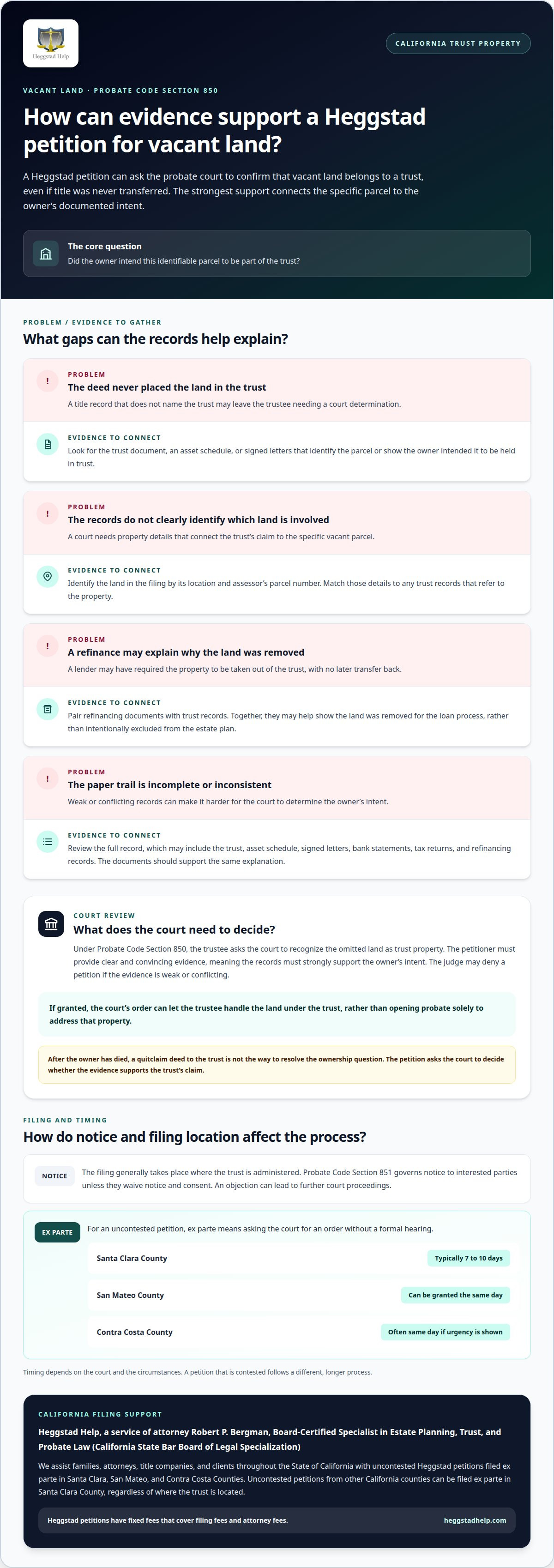
A Heggstad petition for vacant land in California asks the probate court to confirm that an omitted parcel belongs to a trust. Because vacant land may have no street address, identifying the parcel precisely is especially important. The petition should connect the deceased owner’s intent to the specific land using consistent records, including its location and assessor’s parcel number.
For a Heggstad petition for vacant land in California, organize supporting records around two questions: which parcel is involved, and what shows the owner intended it to belong to the trust? Relevant materials may include:
The trust and any asset schedule describing the parcel.
Signed letters or other written statements linking the land to the trust.
Tax returns or financial records that refer to the property.
Property details, including the assessor’s parcel number and location.
For example, a trust schedule might refer to “the parcel in Placer County” without giving a street address. County records identifying the parcel can help connect that description to the land before the probate court. Presenting related documents together can clarify how the owner’s trust records and the parcel details fit.
A house or other real property can raise a similar title question if it remained in the deceased person’s name. If the court grants the petition, its order can support steps to address title records and administer the property under the trust. The order does not automatically update property records, so subsequent title steps must follow what the court ordered.
Vacant land is not excluded simply because it has no building. A precise property description and consistent evidence of the deceased owner’s intent help the court evaluate the petition.
How can Heggstad Help assist with filing a Heggstad petition?
HEGGSTAD HELP, a service of attorney Robert P. Bergman, Board-Certified Specialist in Estate Planning, Trust, and Probate Law (California State Bar Board of Legal Specialization), assists families, attorneys, title companies, and their clients throughout the State of California with uncontested Heggstad petitions for vacant land California. These petitions can be filed in the Santa Clara County Probate Court regardless of the California county where the trust is located.
Heggstad petition services include preparing and filing the request and supporting records for court review. For land in Los Angeles County, for example, an uncontested ex parte petition can generally be filed in Santa Clara County. If granted, the court’s order can support the next steps to address the property’s title and trust ownership.
Ex Parte Court Order Services handle uncontested requests for an order without a formal hearing. In Santa Clara County, petitions are typically granted in 7 to 10 days. In San Mateo County, ex parte petitions can be filed, heard, and granted the same day. Contra Costa County petitions can often be filed and granted the same day when the court is satisfied that urgency has been demonstrated.
A Heggstad petition asks the court to determine whether an asset is trust property. HEGGSTAD HELP handles uncontested petitions, not contested matters, so an objection from an interested party may mean this process is not suitable.
If you’d like to discuss an uncontested petition, contact HEGGSTAD HELP.
Frequently Asked Questions
What Happens After the Court Grants Your Petition?
After the court grants a petition, keep the signed order with the trust’s records. The successor trustee can use it to support later title-record steps and explain the court’s determination to parties handling the property. For a vacant parcel, ensure the order’s property description matches the land at issue, including its assessor’s parcel number when applicable.
What Evidence Do Courts Require?
Courts consider evidence linking the deceased owner’s intent to the asset named in the petition. For example, a signed trust schedule and a separate record identifying the same parcel may help establish that connection. The court also considers whether the records are consistent and whether documents or objections from interested parties suggest a different ownership intent.
What controls the timeline?
The filing county, court calendar, notice requirements, and objections all affect timing. Where available, an uncontested ex parte petition may avoid waiting for a formal hearing. A noticed hearing requires time for notice and a court date. Incomplete records or a response disputing ownership can add steps before the court decides.
What evidence may support the petition?
Trust schedules, signed letters, tax returns, and financial records may help show that the owner intended an asset to be held in trust. For a Heggstad petition for vacant land in California, pair evidence of that intent with records identifying the parcel. For instance, a tax record naming the land may clarify which property a general description in the trust refers to.
What is a Heggstad petition under California Probate Code Section 850?
It is a court request asking for a determination that property belongs to a trust, even though title records do not reflect the trust’s ownership. Probate Code Section 850 provides a process for asking the court to determine a claim to property. The petition explains the requested determination and presents evidence supporting the trust’s claim to the asset.
Can a Heggstad petition transfer vacant land into a California trust?
A Heggstad petition for vacant land in California asks the probate court to confirm that land belongs to an existing trust when the evidence supports the claim. The petition is not a deed, and filing it does not change title. If the court grants the request, its order can support the subsequent steps to address title and administer the parcel under the trust.
Disclaimer
This article is for informational purposes only. Nothing in this article is intended to replace legal advice from a competent attorney or be considered legal guidance for anybody's specific legal situation. Nobody should rely on information in this article in making legal decisions without such consultation.