
A common schedule of assets for living trust mistake is assuming that the list itself transfers ownership. A revocable living trust generally controls assets that have actually been transferred to it, so signing the trust or listing property alone may leave assets outside the trust. Funding typically requires titling property in the trust’s name or the trustee’s name on its behalf, with special care for assets such as retirement accounts.
It’s understandable to expect one schedule to keep everything organized, but the schedule and legal title serve different purposes. An outdated list may name assets you no longer own or omit property acquired later. This article explains how to distinguish an asset record from actual trust funding, what may happen when assets remain outside the trust, and how accurate titling and thoughtful updates can keep your estate plan aligned with the property you own.
Key Takeaways
Distinguish a trust schedule, which records assets, from the title transfer that funds the trust.
Understand how property left outside a trust may face a different path after the owner dies, including possible probate.
Keep asset records aligned with changes in ownership, while treating beneficiary-designated accounts with care.
Learn how an uncontested Heggstad petition may help address certain trust title problems and how filing options differ by county.
How do you fund a revocable living trust?
A revocable living trust is funded when ownership of an asset is transferred to the trust or its trustee. Signing the trust document alone does not complete that transfer. For example, a home still titled in the owner’s individual name may remain outside the trust.
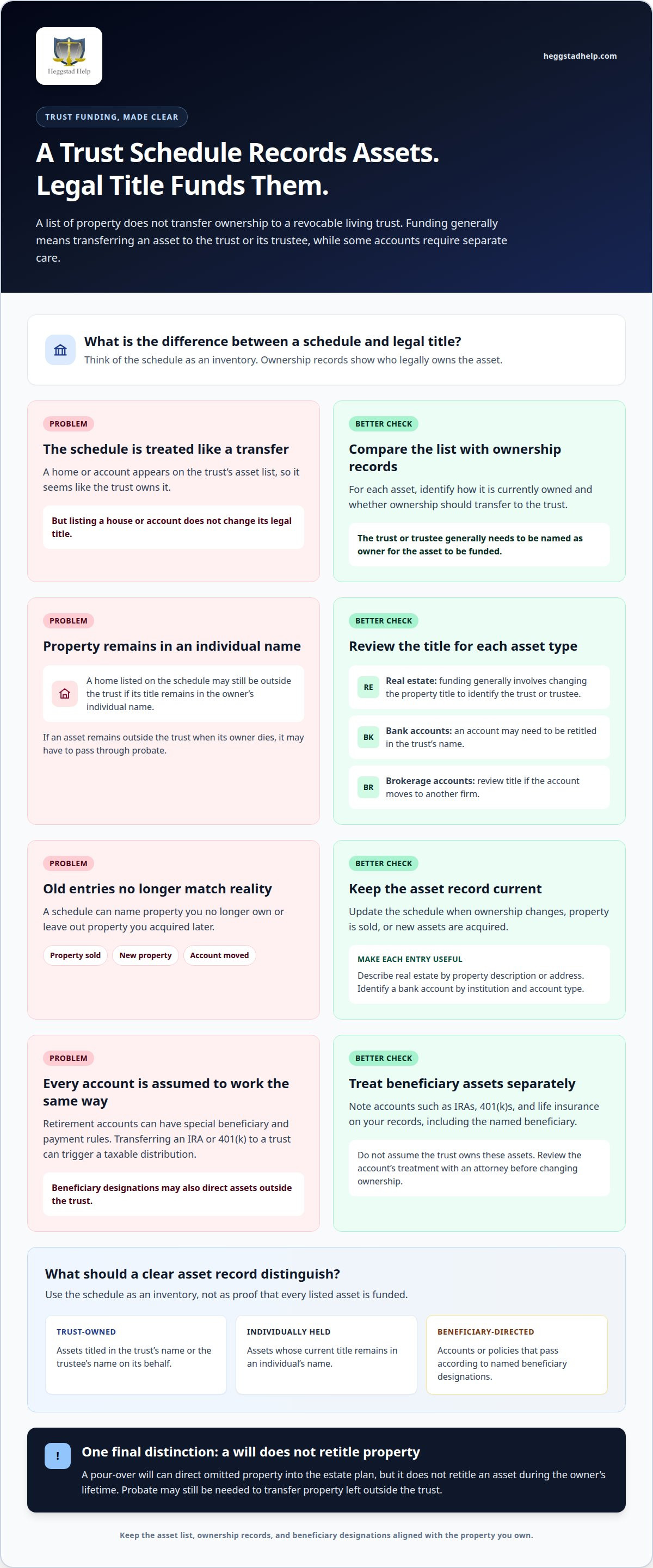
For real estate, funding generally involves changing the property title to identify the trust or trustee. A bank account may also need to be retitled in the trust’s name. The ownership record matters: listing a house or account on a schedule does not change its legal title.
For each asset, identify how it is currently owned, then determine whether ownership should transfer to the trust. A brokerage account, for example, may need retitling if it moves to a different firm. Keep the trust’s asset schedule current as circumstances change, including when property is sold or new assets are acquired.
Retitling every asset is not appropriate. Retirement accounts such as IRAs and 401(k)s have special beneficiary and payment rules. Transferring an account to a trust can trigger a taxable distribution, so review the account’s treatment with an attorney before changing ownership. Beneficiary designations may also direct assets outside the trust, creating a conflict with the estate plan.
Common mistakes include treating the schedule as proof of ownership and overlooking bank accounts or newly acquired property. A useful funding review compares each asset’s current title with the trust’s intended ownership and beneficiary designations. This helps clarify which assets the trust actually holds for loved ones and which may need a considered transfer.
What can happen if a trust is not funded?
If an asset is omitted from a living trust schedule, its ownership title still determines whether the trust owns it. A house listed on the schedule but titled only in its owner’s name may remain outside the trust. Conversely, a correctly titled asset does not become individually owned just because its schedule entry is missing.
If the owner dies while a home or bank account remains outside the trust, that asset may have to pass through probate. The trust’s instructions may not directly control the property, which can complicate administration for beneficiaries. For example, a successor trustee may manage trust property, while an individually titled home may require a separate probate process.
A pour-over will can direct omitted property into the estate plan, but it does not retitle an asset during the owner’s lifetime. The will may help capture property left outside the trust, but probate may still be needed to transfer it. Addressing an unfunded trust means considering ownership, not just written instructions.
Review the trust after buying property, closing a bank account, or changing beneficiary designations. A retirement account needs separate attention because its beneficiary and payment rules differ from ordinary trust ownership. Consider an estate planning attorney’s instructions alongside the account designation and current title, rather than treating those instructions as a substitute.
Failing to update records can leave outdated details in place after estate planning goals change. Keep a dated asset list that distinguishes trust-owned property, individually held assets, and accounts that pass under beneficiary designations. This gives loved ones a clearer starting point and helps identify property that may need attention.
Should you list assets in a trust?
Yes. A trust schedule, often called Schedule A, can record property associated with the trust. In California, it can be updated to remove assets someone no longer owns and add property acquired after the trust was created. A clear list helps a successor trustee understand what the trust was intended to include.
Organize entries by asset type and describe each item clearly. For real estate, record the property description or address; for a bank account, identify the institution and account type. A common schedule of assets for living trust mistake is treating the list as proof of ownership. The schedule does not replace legal title.
Some assets need a different kind of estate-planning record. IRAs, 401(k)s, and life insurance may pass under beneficiary designations, so note the account and its named beneficiary without assuming the trust owns it. Also consider digital assets, including email, social media accounts, and cryptocurrency, when organizing information for the people who may handle your affairs.
Review the schedule when circumstances change. A home sale, newly acquired property, or brokerage account moved to another firm can make an entry inaccurate. Marriage, divorce, a birth, or a death may also affect how the trust should reflect your current wishes and family relationships. Another schedule of assets for living trust mistake is leaving outdated entries uncorrected.
Use the schedule as an inventory, not as proof that every listed asset is funded. For each entry, distinguish trust-owned property from assets held individually or directed by beneficiary forms. This simple distinction keeps the document useful and reveals where the estate plan may need an update.
How do trust schedules relate to correct asset titling?
A trust schedule records assets associated with the trust, but it does not transfer ownership. If a California deed still names an individual, listing that home in the trust document does not change its title. A schedule of assets for a living trust mistake can arise when someone assumes the list itself changes ownership. The schedule records intended assets; title documents show legal ownership.
State laws can affect how trust documents are interpreted and how property transfers are handled. For California real estate, an experienced estate planning attorney can assess the trust terms alongside the deed and other ownership records.
An attorney’s charge to review or correct a living trust schedule depends on the work involved, including document review and title correction. A mistake involving a schedule of assets for a living trust is assuming review costs are the same for every situation; the fee is provided after a quote request.
Retirement accounts should not be transferred by changing ownership without considering their special beneficiary and payment rules. Retitling an IRA or 401(k) to a trust can trigger a taxable distribution. Review the account documents and beneficiary designations before making changes.
Update the schedule regularly, including every 3 to 5 years or after a major life event. A property purchase, sale, marriage, or death can change what the schedule should reflect. Keep the trust document and asset records aligned with your current wishes.
For each entry, distinguish trust-owned property from assets that merely appear on the list. For example, a brokerage account moved to another firm may need an updated schedule entry, while its title must still identify the trust or trustee. This distinction helps a successor trustee understand which assets to distribute under the trust and which documents govern other property.
How can Heggstad Help correct a trust asset title?
HEGGSTAD HELP, a service of attorney Robert P. Bergman, Board-Certified Specialist in Estate Planning, Trust, and Probate Law (California State Bar Board of Legal Specialization). We assist attorneys, title companies, and clients throughout California with uncontested ex parte Heggstad petitions, including filings in Santa Clara, San Mateo, and Contra Costa Counties. When trust documents show the intent to include property but title was not changed, a Heggstad petition may address the gap through a court order. An ex parte petition may provide a way to ask a court to consider a request through a process different from a standard hearing.
Uncontested petitions can be filed ex parte in Santa Clara County Probate Court, regardless of the California county where the trust is located. Santa Clara County petitions are typically granted in 7 to 10 days. In San Mateo County, ex parte petitions can be filed, heard, and granted the same day. Contra Costa County petitions can often be filed and granted the same day if the court is satisfied that urgency exists.
In other counties, Heggstad petitions often require noticed hearings and may take many months to be heard. An uncontested petition from another county can instead be filed ex parte in Santa Clara County and often decided within 7 to 10 days from filing. If a noticed hearing is required, it may be set 30 to 60 days after filing, or several months later, with additional time for notice to interested parties.
Heggstad petitions have fixed fees covering filing fees and attorneys’ fees. This office handles uncontested petitions, not contested petitions. After someone has died, do not use a quitclaim deed to transfer property into the trust; a petition may be the relevant title-correction process.
Contact HEGGSTAD HELP to discuss an uncontested trust title issue.
Frequently Asked Questions
What is a schedule of assets for a living trust?
A schedule is a record that helps identify property associated with a trust and organize information for future administration. A useful schedule can show an asset’s description, institution or location, and the date it was reviewed. For example, “house” may be too broad; a property address gives a successor trustee a clearer reference when sorting records.
Is a schedule of assets legally required for a revocable living trust?
There isn’t one answer that applies to every trust. The trust document and applicable law determine whether a schedule is required or has a particular role. Read the executed trust to see whether it refers to an attached schedule or incorporates one. Keep any referenced attachment with the signed trust so the documents remain together.
Does listing an asset on a trust schedule transfer ownership into the trust?
No. A schedule entry alone does not complete an ownership change. If an entry and an asset’s records appear inconsistent, treat that as a discrepancy to resolve rather than assuming the list controls. For example, a dated bank statement or recorded deed can help clarify the account or property record associated with the entry.
How can an attorney properly fund a living trust by retitling assets?
An attorney can review the trust and asset records, then identify the appropriate documentation for each transfer. A deed addresses real estate ownership records, while a bank may require its own account paperwork. The attorney can also organize completed documents with the trust file, creating a clearer record of changes and unresolved items.
What mistakes are common when preparing a living trust asset schedule?
Vague descriptions, undated revisions, and multiple conflicting versions can make a schedule harder to use. For example, an entry labeled only “personal property” may not help a trustee distinguish a valuable collection from ordinary household items. Use clear descriptions, date each revision, and keep one current copy with the trust papers.
How should jointly owned property and beneficiary-designated accounts be listed?
Record the ownership arrangement for jointly held property and identify the other owner using the wording in the applicable records. For an account with a beneficiary designation, note that a designation exists and identify the named recipient in a secure record. The trust schedule should not be treated as permission to override co-owner rights or account instructions.
Disclaimer
This article is for informational purposes only. Nothing in this article is intended to replace legal advice from a competent attorney or be considered legal guidance for anybody's specific legal situation. Nobody should rely on information in this article in making legal decisions without such consultation.