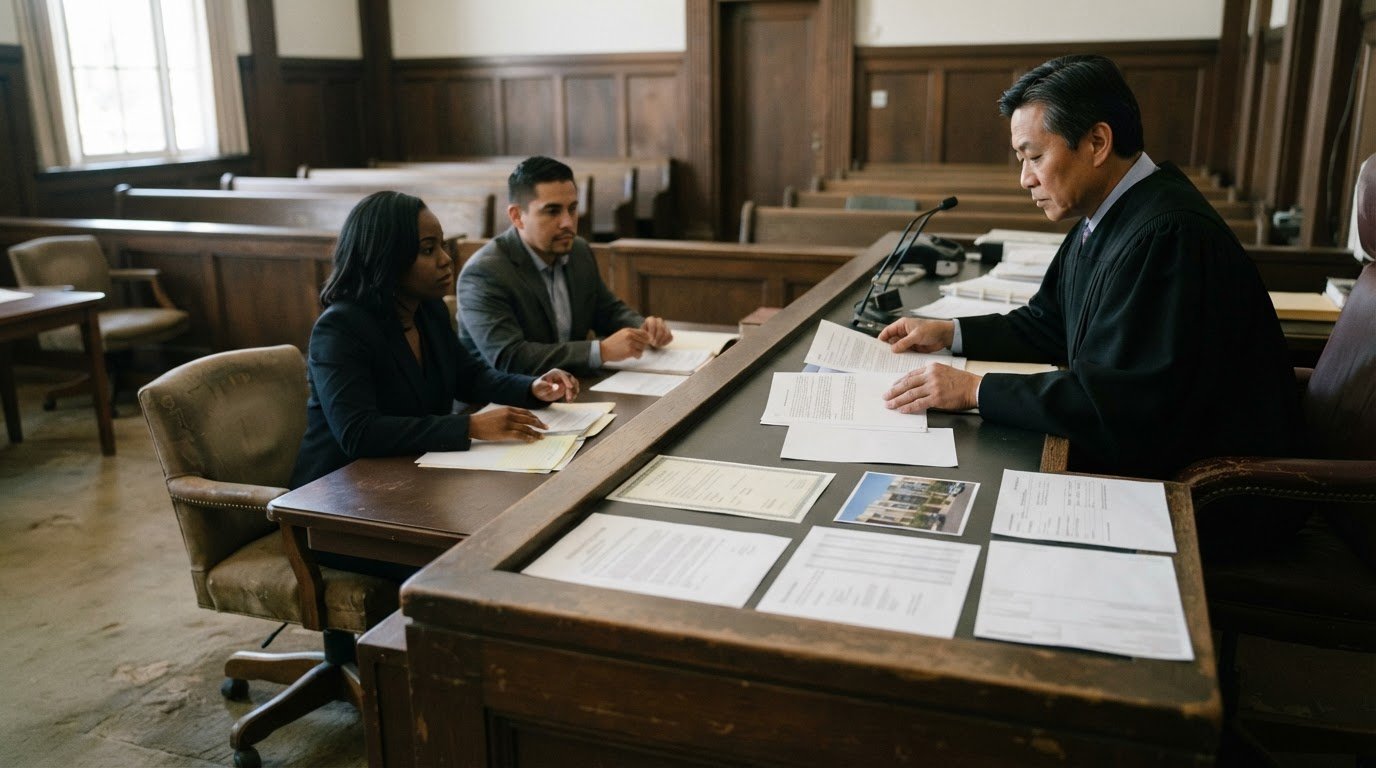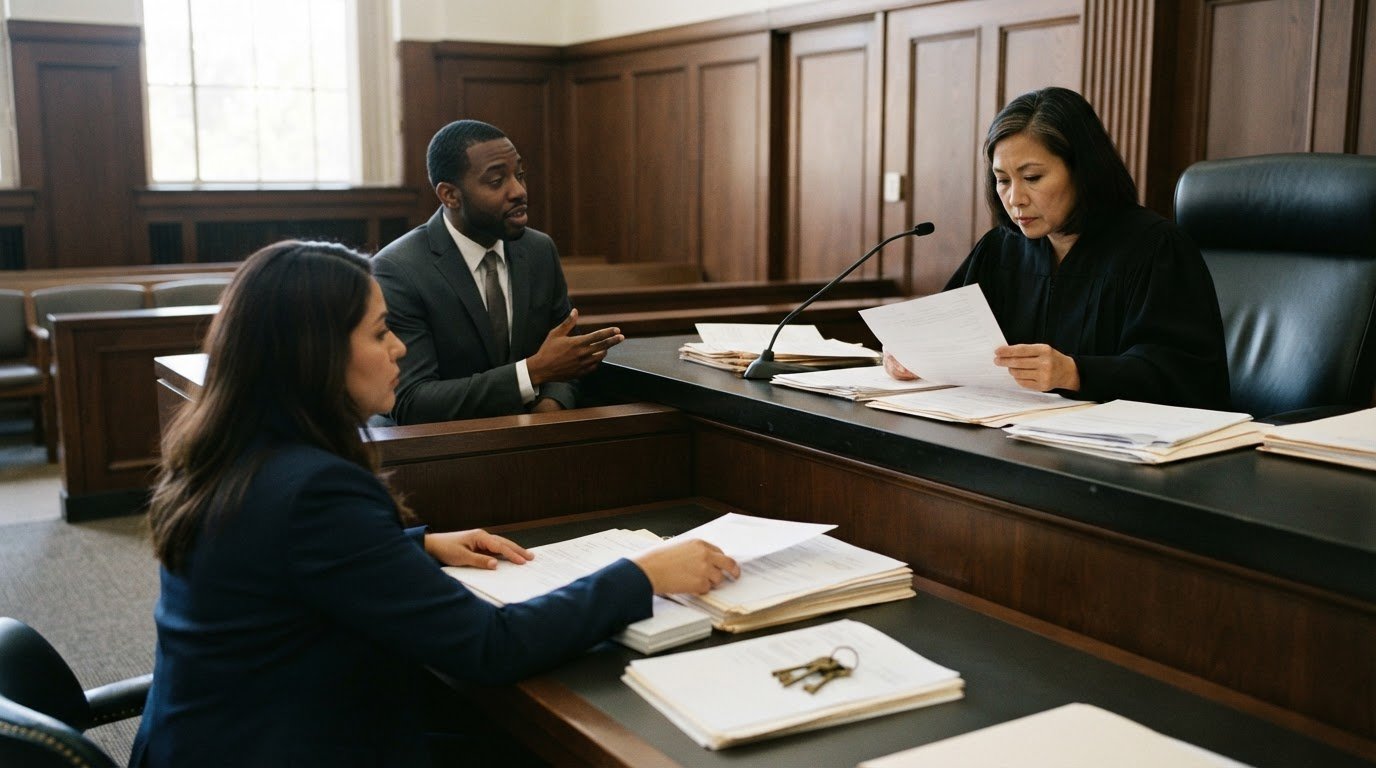
Trust documents missing a schedule of assets do not, by themselves, invalidate a properly executed trust. In California, a missing trust instrument may sometimes be reconstructed using appropriate secondary evidence, but a successor trustee generally cannot replace it based only on family members’ beliefs about its terms. Whether an asset belongs to the trust depends on the available evidence of the trustor’s intent and how the asset was titled.
It’s understandable to worry that a missing schedule means property was left out or that the trust cannot be administered. Practical options may include searching for copies, presenting evidence of the trust’s terms to a court, or seeking a Heggstad petition when written evidence shows that property was intended for the trust. This guide explains how those paths may apply in California, which records can help identify missing or disputed assets, and what to consider before taking the next step.
What are the key takeaways?
Search trustee, financial, legal, and family records for copies of the trust and evidence of its assets, debts, and distributions before taking action.
When the trust’s terms are disputed or missing, evidence of the trustor’s intent can help clarify what a court may be able to recognize or interpret.
Use deeds, account records, agreements, and other available documents to assess whether specific property was transferred to the trust or may need a different process.
For an uncontested Heggstad petition, families, attorneys, and clients throughout California can use the ex parte process in Santa Clara County, where petitions are typically granted in 7 to 10 days.
How should you handle lost or missing trust documents in California?
Yes. Trust-document requirements and consequences can vary by state, so identify which state’s law governs the trust. In California, a missing or incomplete Schedule A does not, by itself, invalidate a properly executed trust.
Start by searching the trustee’s files, storage boxes, and digital records for the signed trust and any amendments. When trust documents are missing a schedule of assets, signed amendments may clarify the trustor’s intent. Ask the prior attorney, accountant, bank, and family members whether they have copies. Compare available account statements, deeds, tax returns, loan documents, and insurance records. These may show which assets were transferred and which liabilities remain.
Reconstruct the accounting period by period. Record assets at the beginning and end of each period, along with transactions, income, expenses, and distributions to beneficiaries. Include debts and supporting documents, such as bank statements, invoices, and tax filings. A written request may help clarify how trust property has been handled. A clear record can help distinguish an unexplained withdrawal from an authorized expense.
Do not distribute property based only on family recollections or an incomplete list. For trust documents missing a schedule of assets, deeds and account records may help establish what property the trustor intended to transfer. Without clear authority, a distribution can prompt disputes, an accounting demand, or a claim that property should have remained in the trust. Before seeking termination, consider whether a will, probate, or intestacy (inheritance without a valid will) would produce different distributions. Preserve records and unresolved assets until the trustee’s authority and beneficiaries’ interests are clear.
Can a court reconstruct or clarify a lost trust?
Sometimes. A missing Schedule A may be added or corrected when a person with authority can properly amend the trust. After the trustor dies, family belief alone generally cannot establish replacement terms; evidence of the original intent matters.
California Probate Code Section 17200 allows a trustee or beneficiary to petition about a trust’s internal affairs, including whether a trust exists and what its terms are, according to California Legislative Information. A petition may ask the court to interpret available documents, determine disputed terms, or provide instructions for administration. If written evidence shows the trustor intended specific property to be held in trust, a Heggstad petition may ask the court to recognize that property as trust property.
If the written trust does not reflect the trustor’s intent, an interested party may seek reformation (a court-ordered correction) or instructions. Evidence may include signed documents, communications, deeds, and records showing how the trustor treated the property. Without written proof connecting property to the trust, establishing ownership can be difficult.
A trustee or beneficiary may petition the court about the trust’s internal affairs. The process requires notice to interested parties, giving them an opportunity to respond. If beneficiaries disagree about the evidence or requested relief, the matter may become contested and take longer.
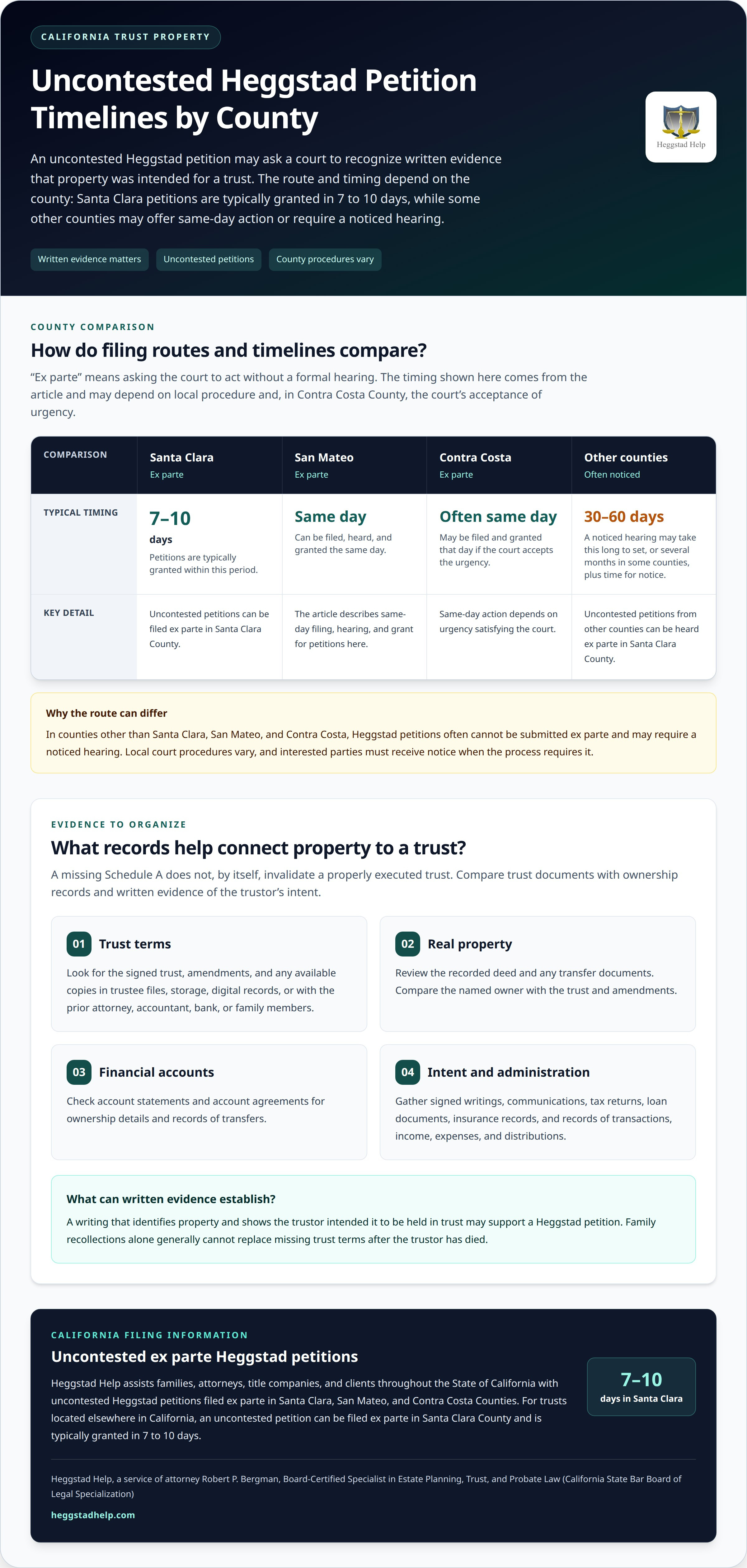
For uncontested Heggstad petitions, ex parte means asking the court to act without a formal hearing. In Santa Clara County, petitions are typically granted in 7 to 10 days. San Mateo County petitions can be filed, heard, and granted the same day. Contra Costa County petitions can often be granted that day if the court accepts the urgency. Elsewhere, noticed hearings may take 30 to 60 days to set or several months in some counties, plus time for notice. Local court procedures for these petitions may vary, so check the applicable court’s filing practices before proceeding.
How can you determine whether property belongs to a trust?
Compare the trust documents with records showing who owns each asset. A missing schedule alone does not settle ownership; the title, transfer evidence, and trustor’s written intent matter.
Handling Trusts Without Asset Schedules
A bank or title company may rely on the trust instrument and ownership records, rather than a missing asset schedule alone. It may request available copies of the trust, amendments, account agreements, or recorded deeds before processing a transaction. Requirements can differ by institution and asset type. Ask what documentation is needed for that specific account or property, then have an attorney review how the documents fit together.
Risks of Unlisted or Improperly Titled Assets
An asset omitted from a schedule may still belong to a trust, but unclear or individual title can make that difficult to establish. If a court doesn’t find that property belongs to the trust, the decedent’s assets may have to go through probate. In California, real property may require probate unless estate assets are less than $150,000. An inaccurate ownership assumption can also delay transfers or lead to disputes among beneficiaries.
For each asset, identify the legal owner shown on the latest record. For real estate, review the recorded deed; for an account, examine statements and the account agreement. Compare these records with the signed trust, amendments, and any transfer documents. Note differences, such as a deed naming the trust while the schedule omits the home. Keep copies together so an attorney can assess whether the trustor intended the asset to be transferred.
California courts may use a Heggstad motion to order property listed in a writing to be treated as trust property. A writing that identifies the asset and shows the trustor’s intent can therefore matter. If the documents don’t establish that connection, a Probate Code Section 850 petition may be needed to determine ownership.
What should you do about missing or omitted trust assets?
Treat a missing asset schedule as a recordkeeping gap, then investigate each possible asset separately. A lead in a financial record may point to property, but it does not establish ownership by itself.
How can you identify missing or omitted trust assets?
Start with the settlor’s records and note assets that appear in financial activity but not in trust files. For example, recurring interest on a tax return may point to an account that needs investigation. Check whether the account still exists and identify its current owner using statements or registration documents.
Next, organize findings by asset and source. Keep separate entries for accounts, real estate, and other property, noting any differences in names or ownership. If an estate inventory includes an asset absent from trust records, record the discrepancy rather than assuming the asset belongs to either the estate or the trust.
If beneficiaries suspect concealment or misuse, put the concern in writing and identify the asset and supporting record. This makes the issue more specific and helps focus any request for legal advice.
Can a trust be valid without an asset schedule?
The absence of a schedule alone does not answer whether a trust was validly created. That question depends on the trust instrument and applicable execution requirements, while the asset schedule concerns property records.
Separate those questions before deciding what to do. Review the signed instrument for the trustor’s stated terms, then determine whether the missing information concerns the trust’s creation or only particular property. If the settlor is alive, competent, and retains authority to amend or revoke the trust, a complete restatement may be an option. For a joint trust, first identify which portions remain revocable before changing its terms. After the settlor’s death, preserve existing records and do not treat an updated list as proof that ownership changed.
How can Heggstad Help assist with trust asset title correction?
Heggstad Help, a service of attorney Robert P. Bergman, Board-Certified Specialist in Estate Planning, Trust, and Probate Law (California State Bar Board of Legal Specialization), assists families, attorneys, title companies, and clients with trust asset title correction when an asset’s title does not reflect the trust. Heggstad Petition Filing can ask a court to recognize property as trust property based on supporting written evidence, such as a document showing the trustor intended to transfer it.
For an uncontested petition, the ex parte process asks the court to act without a formal hearing. In Santa Clara County, petitions are typically granted in 7 to 10 days. In San Mateo County, an ex parte petition can be filed, heard, and granted the same day. In Contra Costa County, petitions can often be filed and granted that day if the court finds urgency.
Families, attorneys, and clients throughout the State of California can use an uncontested ex parte petition in Santa Clara County, regardless of where the trust is located. In other counties, including Los Angeles County and Alameda County, petitions often require noticed hearings and may take many months. A noticed hearing may be set 30 to 60 days after filing, or several months later in some counties, with added time for notice. A Santa Clara County filing can offer an ex parte option for an uncontested matter.
Heggstad Help’s Heggstad petitions have fixed fees covering filing fees and attorneys’ fees. The office handles uncontested petitions, not contested matters. If interested parties dispute whether property belongs to the trust, that dispute may require a different court process. Ex Parte Court Order Services support the filing process when an uncontested petition is appropriate.
Contact Heggstad Help to discuss an uncontested petition for trust asset title correction.
What are frequently asked questions about trust schedules?
What should I do if I have questions about a missing or incomplete trust?
First identify whether the concern is the trust instrument, an amendment, or only its asset list. These documents answer different questions. If you’re a beneficiary, write down the specific uncertainty, such as whether an account was meant to be managed under the trust or whether a later amendment changed distribution terms. A focused question makes a review of the available paperwork more useful.
What is a schedule of assets in a trust document?
A schedule of assets is an inventory attached to or referenced by trust paperwork, often naming property the trustor intended to include. It may use brief descriptions rather than complete account numbers or current values. Treat it as an organizing aid: use the trust’s terms and the asset’s own records to interpret entries, especially if an account has since changed names or ownership.
What happens if a trust's asset schedule is missing or incomplete?
An incomplete schedule can leave a trustee without a reliable inventory for planning distributions and explaining account activity. Record the gap as unresolved rather than filling it from memory. For example, distinguish a listed brokerage account from one mentioned only in an old tax record, so beneficiaries can see which items are documented and which still need clarification.
How can I determine which assets are owned by a trust?
Build a separate ownership snapshot for each item as of the relevant date. For an account, note the account holder and any payable-on-death designation; for insurance or retirement benefits, note the named beneficiary; for jointly held property, record the co-owners. These features can affect who receives property, so distinguish trust ownership from the trustor’s connection to an asset.
How do you amend or restate a trust to add a schedule of assets?
An amendment changes selected terms, while a restatement replaces the trust text with a consolidated version. Before either document is prepared, identify the provisions that need revision and note which asset references are affected. Keep the signed document with the trust records. Depending on the asset, financial institutions or title records may still need separate updates to reflect the intended ownership.
Does a trust schedule of assets transfer property into the trust?
A schedule should not be treated as a universal transfer document. For a parcel, compare the recorded legal description and grantee; for a financial account, examine its registration. Matching names and dates across these documents can help show whether the schedule describes completed funding or a planned transfer. The appropriate ownership method depends on the type of property involved.
Disclaimer
This article is for informational purposes only. Nothing in this article is intended to replace legal advice from a competent attorney or be considered legal guidance for anybody's specific legal situation. Nobody should rely on information in this article in making legal decisions without such consultation.