A house left out of a trust usually can’t be sold by the successor trustee until its title is addressed. If you’re selling a house left out of trust California, a Heggstad petition (a request for a court order confirming the home belongs to the trust) may resolve the title problem without requiring full probate, depending on the facts.
It’s understandable to feel pressure when a sale is waiting and it’s unclear which court or process applies. Heggstad Help, a service of attorney Robert P. Bergman, Board-Certified Specialist in Estate Planning, Trust, and Probate Law (California State Bar Board of Legal Specialization), assists families, attorneys, and their clients throughout the State of California by filing uncontested ex parte Heggstad petitions (requests made without a formal hearing) in Santa Clara County, regardless of where the trust property is located. These petitions are typically granted in 7 to 10 days. This article explains how the petition may address title, why counties such as Los Angeles County and Orange County often require noticed hearings that can take many months, and how a Santa Clara County filing may offer a faster next step.
Key Takeaways
- When selling a house left out of trust California, first identify who holds title, because the trust may need a court order before it can sell the property.
- A Heggstad petition asks the court to confirm that a house belongs to the trust, which may help address the title issue before a sale.
- Uncontested petitions in Santa Clara County are typically granted in 7 to 10 days; San Mateo County and Contra Costa County have separate ex parte procedures, with Contra Costa requiring the Court to accept urgency.
- Start by gathering the title, trust, and property records, then assess the petition path. In many other counties, a noticed hearing may take many months, while an uncontested petition may be filed ex parte in Santa Clara County.
Why Can’t You Sell a California House Left Out of a Trust Right Away?
A sale may need the title resolved before the trust can convey the house. A house left out of a trust is real property that, at the owner’s death, is still titled outside the trust, so the trust’s sale process may not be enough to establish who can transfer it.
This differs from selling a house already titled in a trust: in that situation, the trust is shown as the owner, and the trustee can act under the trust’s terms. A useful way to understand the distinction is that the deed and public title record show who appears to own the house, while the trust document alone may not show that the house was transferred into the trust. The broader principles of trust law help explain why trust documents and ownership of specific property are related but separate questions.
What does it mean that a house was left out of a trust?
Creating and signing a trust document and changing a property’s title are distinct steps. For example, a person may sign a trust naming a successor trustee, but the recorded deed may still name that person individually. If that remains the title at death, the house may not appear to be a trust asset, even if the owner intended it to be included. To avoid these discrepancies, multi-disciplinary wealth advisory teams such as Kotini & Kotini help families coordinate legal, tax, and property titling across their broader estate strategies.
To understand the issue, start with the deed and determine whose name appears as owner. Compare that information with the trust and any property records showing whether title was transferred.
Can a successor trustee sell before title is resolved?
Not necessarily. Being named successor trustee gives someone authority to act for the trust, but it may not establish that the trust owns a house still titled in the deceased owner’s name. The deed matters because a buyer needs a clear record of who is conveying the property.
That doesn’t mean every omitted house follows the same legal path. The relevant documents and circumstances matter, so avoid assuming the property automatically requires full probate or that the trustee can sell it immediately. For families considering selling a house left out of trust California, the practical first step is to review the deed alongside the trust, then determine how the title issue can be addressed before proceeding with a sale.
How Can a Heggstad Petition Help Address the House’s Title?
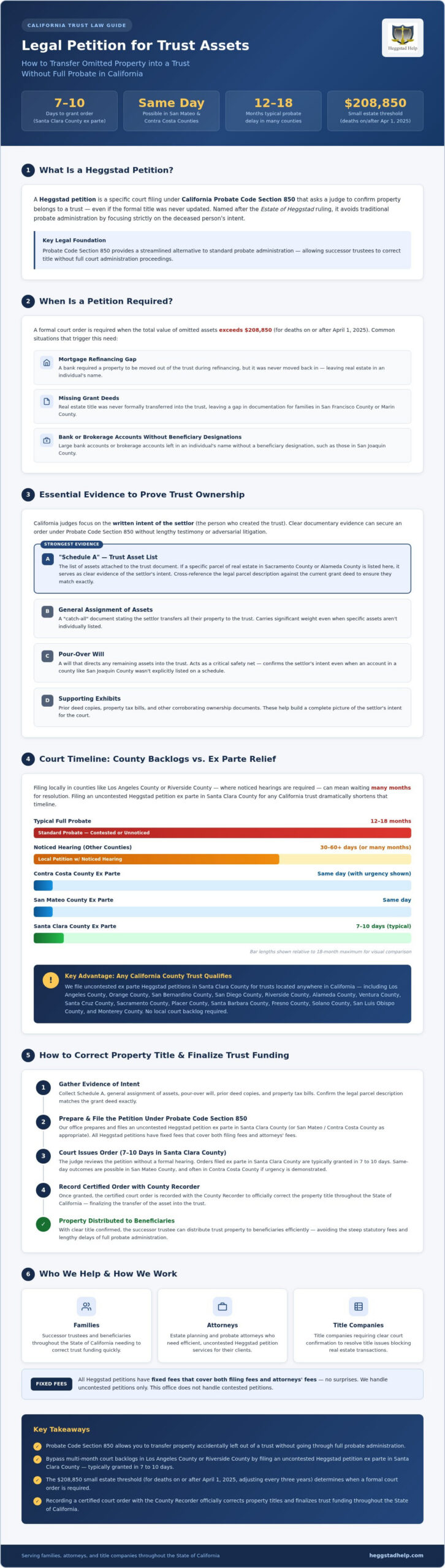
A Heggstad petition is a request asking a judge to confirm that an asset belongs to a trust, even though title was not formally transferred to the trust. For an omitted house, a court order may help establish trust ownership so the trustee can proceed with a sale under the trust’s terms. The request is not an automatic transfer, and approval isn’t guaranteed. The outcome depends on the facts and evidence presented.
A Heggstad petition is generally brought under Probate Code Section 850. The California Probate Code Section 850 guide explains the legal framework. This process is distinct from probate, which the California Courts: Probate page describes. Whether a petition can address a particular title problem depends on the property’s history and supporting records.
What information helps explain the title problem?
Start by gathering the deed, the trust and any relevant amendments, and records showing how the property was held. These documents can help show what the title says and whether there is evidence the owner intended the house to be part of the trust. The court considers the specific facts and supporting documents presented, not simply the fact that a trust exists.
Does every omitted house qualify for a Heggstad petition?
No single outcome applies to every property. Whether a petition is appropriate depends on the circumstances and available evidence, so a court order should not be treated as certain or as an automatic title change. If the court grants the request, its order may provide a way to address trust ownership before a sale proceeds.
Heggstad Help assists families, attorneys, and their clients throughout the State of California with uncontested ex parte Heggstad petitions filed in Santa Clara County, regardless of where the trust property is located. If you’re selling a house left out of trust California, reviewing the Heggstad petition filing service can help you understand this title-correction path.
What California County Procedures Can Affect the Path to a Sale?
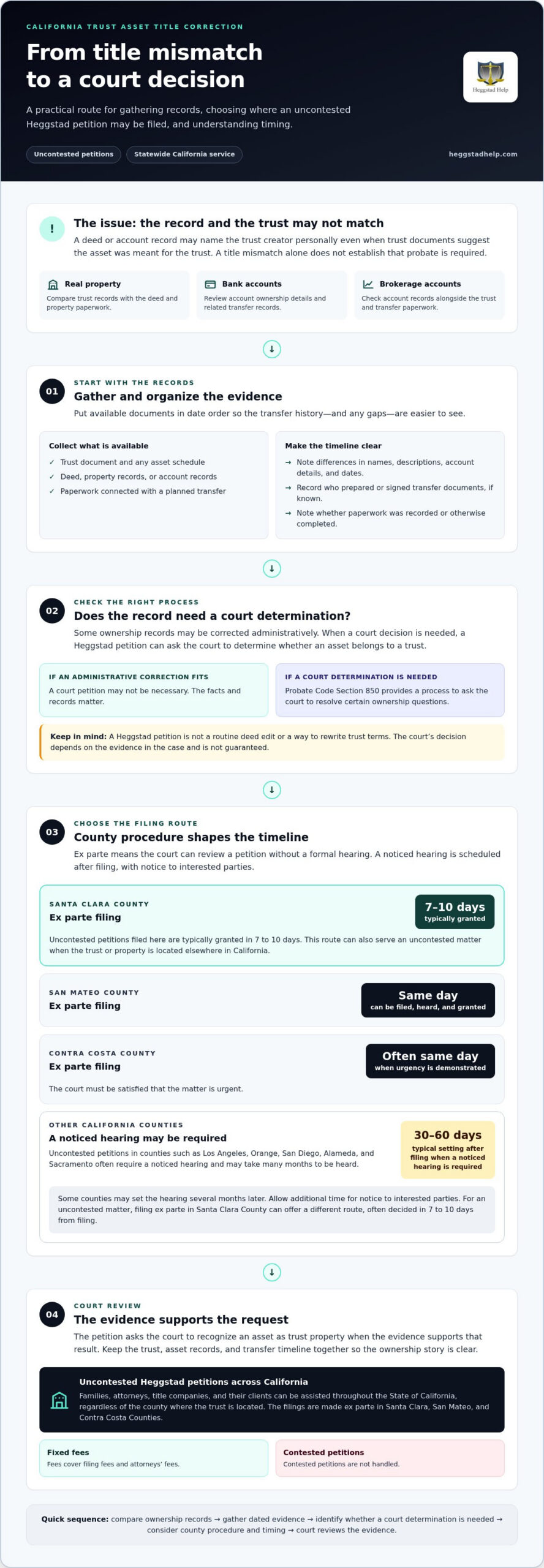
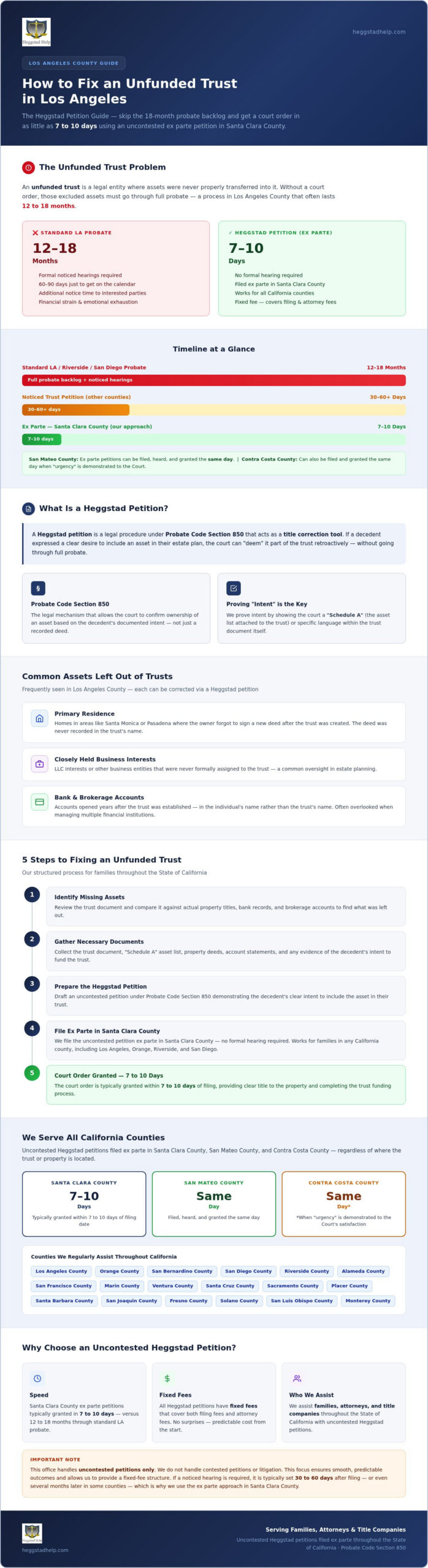
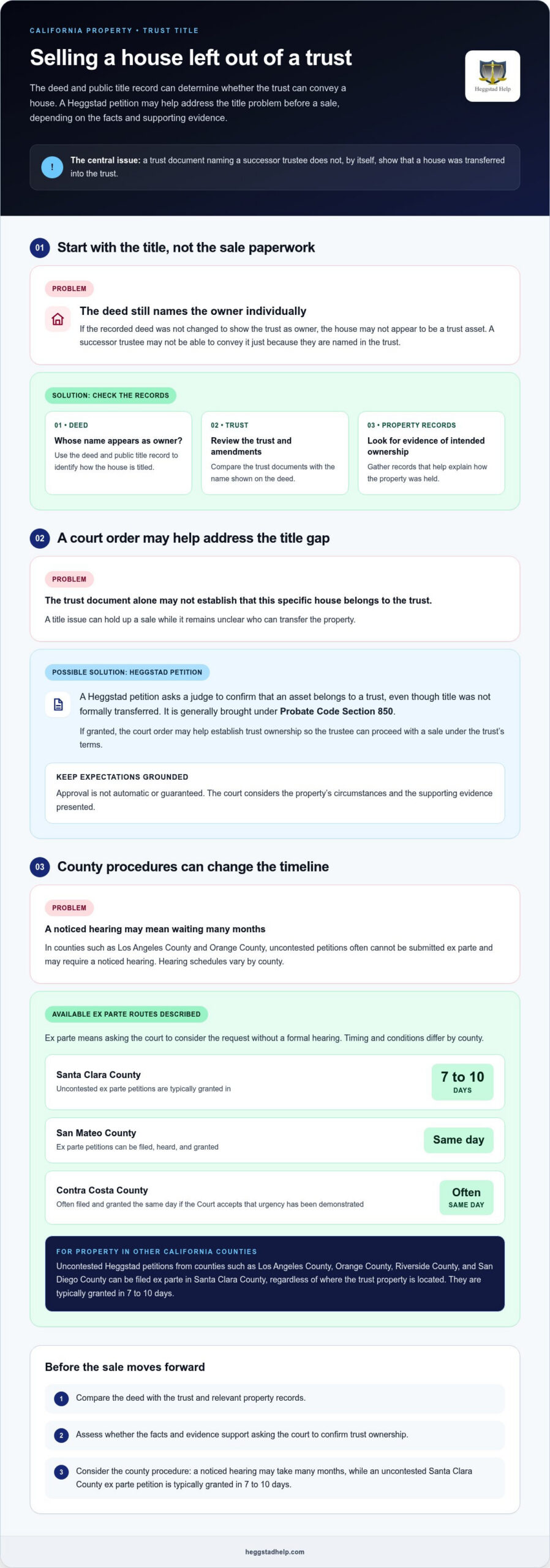
The county where a house is located can affect how quickly an uncontested Heggstad petition is heard. Santa Clara, San Mateo, and Contra Costa Counties have ex parte routes, but the timing and conditions differ. An ex parte filing asks the court to consider a request without a formal hearing; a noticed hearing is scheduled later and requires advance notice to interested parties.
- Santa Clara County: Uncontested ex parte Heggstad petitions are typically granted in 7 to 10 days.
- San Mateo County: Ex parte petitions can be filed, heard, and granted the same day.
- Contra Costa County: Petitions can often be filed and granted the same day if the Court is satisfied that urgency has been demonstrated.
What if the house is in another California county?
In counties such as Los Angeles County and Orange County, an uncontested Heggstad petition often cannot be submitted ex parte and may require a noticed hearing. Those hearings can take many months to be heard, depending on the county’s procedures and calendar. The location of the house does not necessarily mean the petition must be filed in that county: an uncontested petition for trust property elsewhere in California may be filed ex parte in Santa Clara County.
This can matter when a sale is waiting on a title decision. Families, attorneys, and their clients throughout the State of California can pursue this Santa Clara County filing route regardless of the county where the trust property is located.
How do noticed hearings differ from ex parte petitions?
A noticed trust modification petition hearing is typically set 30 to 60 days after filing, or several months later in some counties. The time needed to notify interested parties adds to the schedule, and a contested petition takes longer. By contrast, an uncontested ex parte petition avoids a formal hearing, although the Court still decides whether to grant the request.
If you’re selling a house left out of trust California, county procedure can shape the next step and the expected timeline. Pursue an uncontested Heggstad petition through a Santa Clara County filing, regardless of where the trust property is located.
What Should Families Do Before Selling a House Left Out of a Trust?
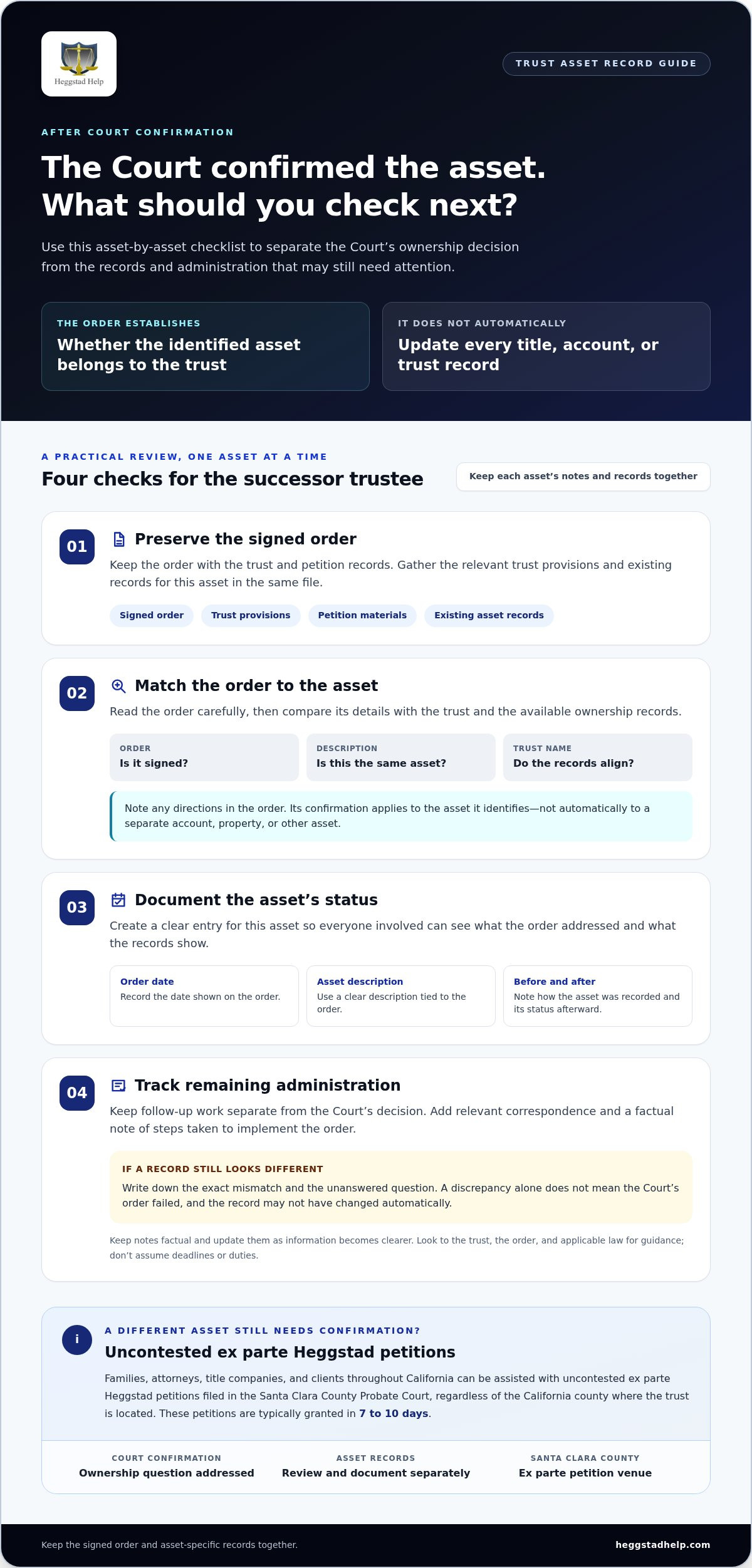
Before arranging a sale, take these steps in order: identify the owner shown on the deed, gather the trust and property records, then assess whether an uncontested Heggstad petition may address the title issue. If the court grants the petition, its order may confirm the house belongs to the trust so the trustee can proceed with a sale under the trust’s terms.
- Check the deed. Note the owner named on the recorded title and compare it with the trust’s name and terms.
- Gather the records. Collect the trust and any amendments, the deed, and other relevant ownership documents. Keeping these together helps clarify what the records show.
- Assess the petition path. The appropriate process depends on the facts and whether the matter is uncontested. A Heggstad petition requests a court order; it does not guarantee approval.
A Heggstad petition filing guide can help explain how the petition may address a house omitted from a trust. Heggstad Help handles uncontested petitions, not contested matters. If there is a disagreement about trust ownership, this filing path may not fit.
Who can Heggstad Help assist across California?
Heggstad Help assists families, attorneys, and their clients throughout the State of California, including those dealing with property in Los Angeles County, Orange County, and San Diego County. Uncontested ex parte petitions can be filed in Santa Clara County regardless of the California county where the trust property is located. Fixed fees cover filing fees and attorney fees.
What is a practical next step for an uncontested petition?
Organize the deed, trust documents, and relevant ownership records before discussing the situation. A clear set of records makes it easier to focus on the title discrepancy and the potential petition path. For more context about a house omitted from a trust, see the related discussion of a house forgotten in a trust.
Discuss an uncontested Heggstad petition when you’re ready to consider the next step.
Move Forward With a Clear Title Path
A title mismatch can make a planned sale feel stalled, but the uncertainty doesn’t have to remain vague. Before setting the sale process in motion, gather the deed and trust records and frame the key question: do the documents support asking the court to confirm the house belongs to the trust? That focused starting point can help clarify whether an uncontested Heggstad petition is a practical next step for your family’s circumstances.
Selling a house left out of trust California involves more than deciding who will sign the sale documents. The ownership record must support the trust’s authority to convey the property, and a court order may be part of resolving that issue. Each situation depends on its records, so treat a petition as a request for the Court’s decision, not a guaranteed result. For property owners and investors managing broader portfolios, proactive financial coordination—such as the advisory approach provided by KHT Accounting & Wealth—can also ensure business and trust assets remain properly structured over time.
Heggstad Help assists with uncontested Heggstad petitions, with Robert P. Bergman bringing his California estate-planning, trust, and probate law experience to this specialized work. If you’re ready to discuss the documents and possible filing path, Discuss an uncontested Heggstad petition. A clear next step can make a complicated title issue feel more manageable.
Frequently Asked Questions
Can you sell a house in California if it was left out of the trust?
Yes, but the trust may need a court order confirming the house is trust property before it can convey title. That differs from a house already titled in the trust, where the title record identifies the trust as owner. For selling a house left out of trust California, compare the deed with the trust documents first; whether a court confirms ownership depends on the evidence and its decision.
Does a Heggstad petition guarantee that the house will be transferred to the trust?
No. Filing a Heggstad petition doesn’t guarantee that the court will grant it or confirm the house as trust property. The judge considers the particular circumstances and evidence presented, which may include documents showing how the owner treated the property. A trust document alone doesn’t ensure a successful petition, and not every house omitted from a trust will qualify. Reviewing the available records can help clarify the issue.
Can a Heggstad petition be filed in a California county different from where the house is located?
Yes. Heggstad Help can assist with uncontested ex parte petitions filed in Santa Clara County even when trust property is elsewhere in California. This can serve families in the San Francisco Bay Area, Northern California, Southern California, the Central Valley, San Diego, Sacramento, Fresno, Bakersfield, Greater Los Angeles, Orange County, Riverside County, and San Bernardino County. Court procedures differ, so the property’s location doesn’t mean every petition follows the same route.
How long does an uncontested ex parte Heggstad petition take in California?
Timing varies, and the stated timelines aren’t guarantees. In Santa Clara County, petitions are typically granted in 7 to 10 days. In San Mateo County, they can be filed, heard, and granted the same day. In Contra Costa County, they can often be filed and granted the same day if the Court is satisfied that urgency has been demonstrated. Court handling and case facts may affect timing.
What if family members disagree about whether the house belongs to the trust?
A disagreement may mean the matter is contested, rather than an uncontested petition. Heggstad Help handles uncontested petitions only. Before assessing the situation, note what each family member disputes and organize the deed, trust documents, and records that relate to ownership. Those steps can help clarify whether the matter is uncontested. If it is, discuss an uncontested Heggstad petition as a possible next step.

Article by
Robert P. Bergman, Attorney at Law
Attorney Robert P. Bergman ("Bob Bergman") has been a Board-Certified Specialist in Estate Planning, Trust and Probate Law since 2011, as certified by the California State Bar Board of Legal Specialization. For several years, Bob has assisted families and the clients of other attorneys with obtaining court orders through Heggstad petitions to avoid the time and expense of Probate administration. Bob is friendly, very approachable, and believes in explaining complex legal topics in clear ordinary language so that his clients understand exactly what they're doing and why they're doing it.
Bob is often able to assist clients who are in other counties than his home county of Santa Clara through his approach to Heggstad petitions.
Disclaimer
This article is for informational purposes only. Nothing in this article is intended to replace legal advice from a competent attorney or be considered legal guidance for anybody's specific legal situation. Nobody should rely on information in this article in making legal decisions without such consultation.