
You finally have a buyer for your loved one’s home, but then the title company delivers the crushing news: the house was never deeded to the trust, and escrow is frozen. It’s a common nightmare where you’re told a house not in trust can’t sell California real estate without a full probate process lasting over a year. You’re likely feeling the weight of managing an empty property while facing a daunting legal hurdle that seems to have no end in sight.
We understand this frustration, but a title error doesn’t have to mean a 12-to-18 month delay. You can often legally fix this using a Heggstad petition (a court order that confirms an asset belongs in a trust even if the deed was never updated). As a Board-Certified Specialist, Robert P. Bergman helps families across California navigate this process with a transparent, fixed-fee structure that covers both filing and attorney fees.
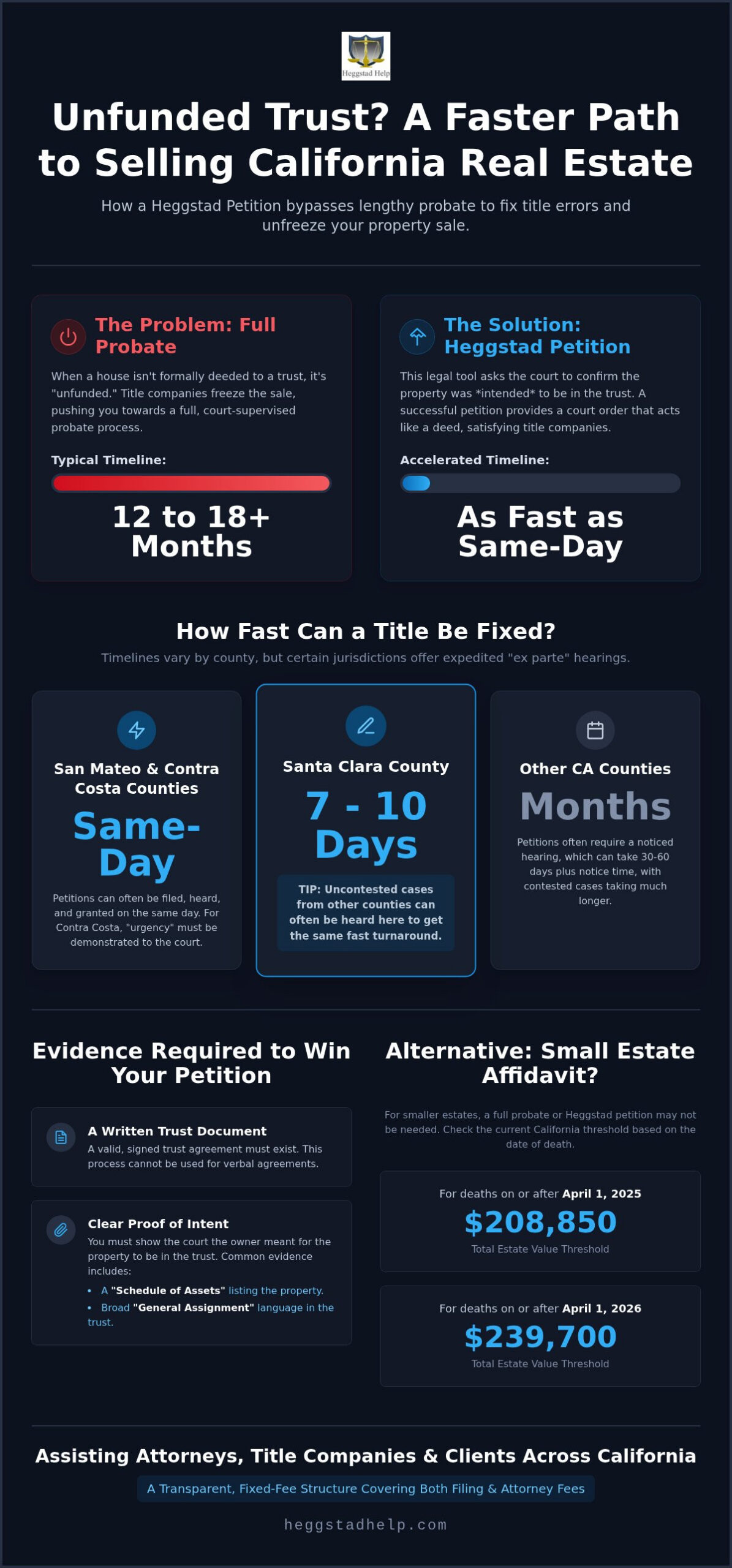
In this guide, you’ll learn how to bypass full probate and secure a court order to finalize your sale. We’ll explain how we achieve same-day results in San Mateo County or 7 to 10 day turnarounds in Santa Clara County. We’ll even show how cases from other counties can often be heard quickly in Santa Clara to avoid the months of waiting typical in other jurisdictions.
Key Takeaways
- Discover why a house not in trust can’t sell California property and how an “unfunded trust” creates a roadblock for title companies during escrow.
- Learn how a Heggstad Petition under Probate Code Section 850 can legally transfer a home into a trust after death by proving the owner’s original intent.
- Find out how specific counties like San Mateo and Santa Clara allow for accelerated “ex parte” orders that can fix title issues in as little as one to ten days.
- Identify the essential evidence required to win your case, including the “Schedule of Assets” and broad “General Assignment” language found in many trust documents.
- Understand the advantages of working with a Board-Certified Specialist who offers a fixed-fee structure covering both attorney fees and court filing costs.
The Unfunded Trust Crisis: Why You Can’t Sell the House
Imagine you’ve signed a listing agreement and found a motivated buyer; then the title company calls with bad news. They’ve discovered that while your parents had a trust, they never actually deeded the family home into it. This situation creates what we call an "unfunded trust." In simple terms, an unfunded trust occurs when someone creates the legal document but fails to complete the funding (the formal process of transferring legal title from an individual name to the trust’s name). It’s a common mistake that brings real estate transactions to a grinding halt.
This oversight is the primary reason why a house not in trust can’t sell California real estate without court intervention. Even if the trust document explicitly names you as the Successor Trustee and grants you the "power to sell" all assets, that power only applies to assets the trust actually owns. Because the deed still lists the deceased individual as the owner, the title company cannot legally recognize your authority to sign closing documents. This roadblock often stems from a simple oversight; perhaps a bank required the house be moved out of the trust during a refinance and it was never moved back, or a DIY trust kit was completed without recording the necessary deeds at the County Recorder’s office. The same funding problem that affects real estate can also impact other estate assets, and families dealing with forgotten LLCs or business accounts may need to transfer business interest to trust after death in California using the same Heggstad petition process.
How to Check the Current Title Status
If you’re unsure about the status of a property, your first step should be to obtain a Preliminary Title Report (a document prepared by an escrow or title company that shows the current owner and any liens on the property). Look specifically for the "Grantee" section. If the Grantee is listed as an individual name rather than "The [Name] Family Trust," the property is unfunded. Many people assume that listing the house on a "Schedule of Assets" (a list of items intended to be in the trust) is enough to transfer ownership. Unfortunately, for California real property, a written list does not replace the requirement for a recorded deed.
The Legal Consequences of an Unfunded Home
When a house not in trust can’t sell California law typically points toward a default path: full probate administration. This is a court-supervised process that can easily take 12 to 18 months to complete. Until the title is corrected, the property is essentially frozen. You cannot legally finalize a sale, and the expenses of maintaining an empty home continue to mount while legal issues linger. You don’t have to accept this "probate nightmare" as your only option. At Heggstad Help, we specialize in assisting attorneys, title companies, and families with a faster alternative that corrects these title errors through a fixed-fee structure that covers both filing and attorney fees, ensuring transparency and peace of mind.
Heggstad Petitions: The California Solution for Missing Assets
When a title company informs you that a house not in trust can’t sell California real estate, the most efficient path forward is often a Heggstad Petition. This legal request, filed under California Probate Code Section 850, asks the court to confirm that a property belongs in a trust even if the deed was never formally updated. It’s a powerful tool because it focuses on the decedent’s intent rather than just the paperwork. If you can show the court that the owner meant for the house to be trust property, the judge can issue an order that functions just like a recorded deed. This process acts as a vital shortcut, allowing you to bypass the multi-step probate process and move straight to a court order that satisfies title insurance requirements. Learn how a Heggstad Petition saves time compared to probate and keeps your real estate transaction on track.
Eligibility Requirements for a Heggstad Petition
To successfully file this petition, certain criteria must be met. First, a written trust document must exist; you cannot use this process for a purely oral agreement. Second, you must provide evidence of intent. This is typically found in a "Schedule of Assets" (a list attached to the trust) or specific language within the trust document itself that mentions the property. Finally, the petition must be filed in the proper venue, which is usually the county where the property is located or where the trust is currently being administered. If you’re dealing with a stalled sale, you may want to consult a specialist to review your trust documents for these specific requirements.
Small Estate Alternatives in 2026
Some families wonder if they can use a simpler Small Estate Affidavit instead of a Heggstad Petition. However, California sets strict financial thresholds for these affidavits based on the date of death. For individuals dying on or after April 1, 2025, the small estate threshold is $208,850. Since most California real estate values far exceed these amounts, a Heggstad Petition is usually the only viable alternative to full probate. Consider the financial impact: a standard probate for a $1 million home can result in a 4% statutory fee (the fee set by law) totaling $40,000 or more in combined costs. In contrast, our fixed-fee Heggstad services provide a much more cost-effective way to correct the title and finalize your home sale.
Timelines: How Quickly Can You Fix the Title and Sell?
Speed is the primary concern when a house not in trust can’t sell California real estate. While standard probate administration often drags on for 12 to 18 months, a Heggstad Petition offers a significantly faster route. The actual duration of your case depends largely on whether the petition is uncontested and which county court handles the filing. Our goal is always to secure a "Confirmation of Trust Assets" court order, which provides the legal certainty title companies require to close escrow and finalize the sale.
In most California counties, a "noticed hearing" (a scheduled court appearance where all interested parties are formally notified of the legal action) is the standard requirement. This process typically takes 30 to 60 days, plus the additional time required for legal notice. If heirs or beneficiaries disagree on the property’s status, the case becomes contested, which can lead to significant delays. However, for most families dealing with a simple paperwork error, we can often utilize "ex parte" procedures (legal actions taken without a formal, long-lead hearing) to move much faster.
County-Specific Speed Lanes in Northern California
We leverage specific court procedures in the Bay Area to move much faster than the standard timeline. In San Mateo County, we can often file, hear, and have an ex parte petition granted on the same day. In Contra Costa County, same-day grants are also possible if we demonstrate "urgency" to the court’s satisfaction, such as a pending escrow with a buyer who is ready to walk away. Santa Clara County is also remarkably efficient; uncontested petitions there are typically decided and granted within 7 to 10 days of filing.
The ‘Santa Clara Advantage’ for Other Counties
This is where our specialized knowledge provides a distinct benefit for clients outside of Northern California. If you’re dealing with a property in Los Angeles, San Diego, or other counties with significant court backlogs, a noticed hearing might take many months. This delay is often unacceptable when a house not in trust can’t sell California property because the buyer might lose their mortgage rate lock or find another home.
There’s a strategic solution to this problem. Uncontested Heggstad petitions for properties located in those other counties can often be heard ex parte in Santa Clara County instead. This allows us to secure a court order in just 7 to 10 days rather than waiting half a year or more in a backlogged Southern California court. By utilizing this "Santa Clara Advantage," we help successor trustees resolve title issues quickly and keep their home sales on track.
Evidence Required to Win Your Heggstad Petition
Securing a court order depends entirely on your ability to demonstrate "decedent intent" (the clear desire of the person who passed away to have their home owned by the trust). When a house not in trust can’t sell California real estate, the judge needs to see more than just a signature on a trust document. We must present specific evidence that bridges the gap between the trust’s creation and the missing deed. The most powerful piece of evidence is the "Schedule of Assets" (a list typically found at the back of a trust document that identifies which properties are included in the trust estate). If the home’s address or legal description appears on this list, your case for a Heggstad order is very strong.
If a specific list doesn’t exist, we look for "General Assignment" language. This is a broad clause within the trust or a separate document where the creator states they are transferring "all real and personal property" to the trust. While less specific than an address, it serves as a legal catch-all that often satisfies the court’s requirements. This same General Assignment language is equally important when families need to transfer business interest to trust after death in California, covering forgotten LLCs or brokerage accounts alongside real property. To strengthen the case, we frequently include supporting declarations (written statements signed under penalty of perjury) from the attorney who drafted the trust or from witnesses who can testify to the decedent’s wishes. Read our full guide on required evidence for Heggstad Petitions to see how these documents work together.
Document Checklist for Successor Trustees
Gathering the right paperwork early prevents delays in the filing process. You’ll need to provide the following items to your legal specialist:
- The original Trust Agreement along with any signed amendments.
- The most recently recorded deed (even if it still shows the individual name of the deceased).
- The pending Purchase Agreement if the property is currently in escrow and needs a quick resolution.
Common Pitfalls in Evidence
One common hurdle is a missing "Schedule A" or list of assets. Don’t panic if you can’t find this specific page. Even without a perfect "Schedule A," a skilled specialist can often find alternative proof of intent through other trust provisions or external documents. Another potential issue involves conflicting documents, such as a Will written after the trust that seems to give the house to someone else. These complications require careful handling to ensure the Heggstad petition isn’t contested by other heirs. If you’re unsure if your documents are sufficient, you can get expert help with your Heggstad petition to review your evidence before filing.
Next Steps: Fixing the Title with Heggstad Help
When you’re stuck because a house not in trust can’t sell California real estate, the path toward a resolution starts with expert intervention. You don’t need a general practitioner who handles everything from traffic tickets to divorces; you need a specialist who understands the specific "speed lanes" within the California probate court system. Robert P. Bergman is a Board-Certified Specialist in Estate Planning, Trust and Probate Law with over 40 years of experience. Our office assists successor trustees, attorneys, and title companies throughout the state to clear stalled titles and keep escrows moving forward.
We believe in total transparency, which is why we utilize a fixed-fee structure. This single fee covers both the court’s filing fees and all attorney fees required to secure your order. You won’t have to worry about unpredictable hourly billing or surprise costs while you’re already managing the stress of a loved one’s estate. To initiate the process, we offer a simple consultation to review your trust documents and determine the most efficient county for your filing. If you’re ready to move past the legal roadblocks, we’re here to provide a steady, knowledgeable hand.
Why Choose a Specialist Over a Generalist?
Choosing a specialist gives you access to deep knowledge of local court procedures that generalists often overlook. For instance, we know exactly how to navigate the ex parte (emergency) rules in Santa Clara County to secure orders in just 7 to 10 days. We also understand how to help clients with properties in backlogged areas like Los Angeles or San Diego by utilizing the "Santa Clara Advantage," where we file uncontested petitions in Santa Clara to avoid months of waiting. Our goal is always efficiency; we file specifically to avoid the standard, months-long noticed hearing process whenever possible. Learn more about our Heggstad Petition services and how we can accelerate your timeline.
Getting the House Back on the Market
Once the judge signs the Heggstad order, the legal "fix" is nearly complete. We take that signed court order and ensure it is recorded with the County Recorder in the county where the property is located. This recorded order acts as the formal bridge in the chain of title, effectively moving the home into the trust as of the date of the decedent’s death. Many families are surprised to learn that it is possible to transfer real estate to a living trust after death through this court-ordered process, bypassing the need for full probate administration entirely.
At this point, the title is officially "cleared." The title company will recognize the Successor Trustee’s authority to sign the grant deed for the buyer, allowing escrow to close without further delay. You can finally finalize the sale, pay off any remaining property expenses, and distribute the proceeds to the beneficiaries according to the instructions in the trust. It’s the resolution you’ve been waiting for, achieved in weeks rather than years.
Secure Your Property Sale and Protect the Estate
Facing the reality that a house not in trust can’t sell California real estate is stressful, but it’s a solvable problem. By utilizing a Heggstad petition, you can bypass the lengthy probate process and secure the court order needed to clear the title. Your loved one’s original intent, documented in the trust or a schedule of assets, is the key to unlocking this legal shortcut. Whether you’re dealing with a property in San Mateo, Santa Clara, or anywhere else in the state, there’s a path to finalize your home sale in weeks rather than years.
Robert P. Bergman is a Board-Certified Specialist who has spent over 40 years helping families navigate these specific hurdles. We offer a transparent, fixed-fee structure that covers both filing and attorney fees, so you don’t have to worry about hidden costs. With our ability to file ex parte petitions, we can often achieve results in as little as 7 to 10 days. Don’t let a missing deed derail your progress any longer.
Fix Your Trust Title Error Today – Contact Heggstad Help
You’ve already done the hard work of managing the estate; let us handle the technical legal fix to get your property back on the market and your escrow closed.
Frequently Asked Questions
Can I sell a house if the deed is not in the trust’s name?
No, you generally cannot finalize the sale because the title company will refuse to close escrow. Since a house not in trust can’t sell California real estate without a clear chain of title, the Successor Trustee lacks the legal authority to sign the grant deed. You must first correct the title error through a court order, such as a Heggstad Petition, before the sale can proceed.
How long does a Heggstad Petition take in California?
The timeline depends on the county and whether the petition is uncontested. In San Mateo County, we can often have a petition heard and granted the same day. In Santa Clara County, it typically takes 7 to 10 days. Other counties often require a noticed hearing, which usually takes 30 to 60 days plus notice time, though court backlogs can extend this significantly.
What is the cost of a Heggstad Petition versus full probate?
A Heggstad Petition is significantly more affordable than full probate, which involves statutory fees based on the gross value of the estate. For example, a $1 million home in probate could trigger over $40,000 in fees. We provide a fixed-fee structure that covers both filing and attorney fees, offering a transparent and predictable cost compared to the percentage-based fees of probate.
Do I need a noticed hearing to fix a trust title error?
Not always. While many counties default to a noticed hearing (a formal court date scheduled weeks in advance), we can often file uncontested petitions ex parte. This "ex parte" process allows us to seek a court order without a long-lead hearing in specific counties like Santa Clara or San Mateo, drastically shortening the time it takes to clear title.
What is the small estate threshold for California in 2026?
For individuals dying on or after April 1, 2025, the small estate threshold is$208,850. Because most California homes are worth more than this amount, a house not in trust can’t sell California property using a simple Small Estate Affidavit and will require a Heggstad Petition instead.
Can a Heggstad Petition be filed if there is no ‘Schedule A’?
Yes, you can still file even if the "Schedule A" or list of assets is missing. We can often prove the owner’s intent by using "General Assignment" language found within the trust document or by providing supporting declarations from the drafting attorney. A missing list is a common hurdle, but it’s rarely a dead end for a skilled specialist.
Do all beneficiaries have to agree to a Heggstad Petition?
While the law doesn’t strictly require every beneficiary to sign off, the process is much faster if the petition is uncontested. If all beneficiaries agree, we can often use the expedited ex parte procedures mentioned earlier. If someone objects, the case becomes contested, requiring a noticed hearing and a longer legal process to resolve the dispute.
Can I file a Heggstad Petition in Santa Clara for a property in Los Angeles?
Yes, if the petition is uncontested, we can often have it heard in Santa Clara County regardless of where the property is located. This is a major advantage because backlogged courts in Southern California can take many months to hear a case. Filing in Santa Clara allows us to secure a court order in just 7 to 10 days, saving you months of waiting.

Article by
Robert P. Bergman, Attorney at Law
Attorney Robert P. Bergman ("Bob Bergman") has been a Board-Certified Specialist in Estate Planning, Trust and Probate Law since 2011, as certified by the California State Bar Board of Legal Specialization. For several years, Bob has assisted families and the clients of other attorneys with obtaining court orders through Heggstad petitions to avoid the time and expense of Probate administration. Bob is friendly, very approachable, and believes in explaining complex legal topics in clear ordinary language so that his clients understand exactly what they're doing and why they're doing it.
Bob is often able to assist clients who are in other counties than his home county of Santa Clara through his approach to Heggstad petitions.
Disclaimer
This article is for informational purposes only. Nothing in this article is intended to replace legal advice from a competent attorney or be considered legal guidance for anybody's specific legal situation. Nobody should rely on information in this article in making legal decisions without such consultation.


