Imagine you’ve finally secured a buyer for your late parent’s home in Los Angeles County, only to have the title company stop the sale because the deed was never transferred into the living trust. You’re likely asking yourself, can a successor trustee sell a house not in trust without waiting for a 12-to-18 month probate process? It’s a frustrating hurdle, and it’s natural to fear that the delay will cause your sale to collapse. We understand the pressure to clear the title quickly and avoid the high costs of full probate. You’ll discover in this guide how a Heggstad (a legal procedure under Probate Code Section 850 used to confirm trust assets) petition can rescue the sale. We assist families in Orange County, San Diego County, and Riverside County by filing uncontested petitions ex parte, which means without a formal hearing. While many locations like San Francisco County take months to schedule hearings, our specialized approach in Santa Clara County typically secures a court order for a fixed fee in just 7 to 10 days.
Key Takeaways
- Find the definitive answer to can a successor trustee sell a house not in trust California and learn how a Heggstad petition provides a fast path to a clear title.
- Discover how a Heggstad petition (a filing under Probate Code Section 850) allows you to transfer property into a trust post-death without the 12 to 18 month delay of a full probate.
- Learn how filing ex parte in Santa Clara County can secure a court order in 7 to 10 days, even for properties located in Los Angeles County or Orange County.
- Identify the final steps for recording the court order and providing a Certification of Trust to title companies to ensure your real estate sale closes successfully.
The Successor Trustee’s Dilemma: Why You Cannot Sell a House Not in Trust
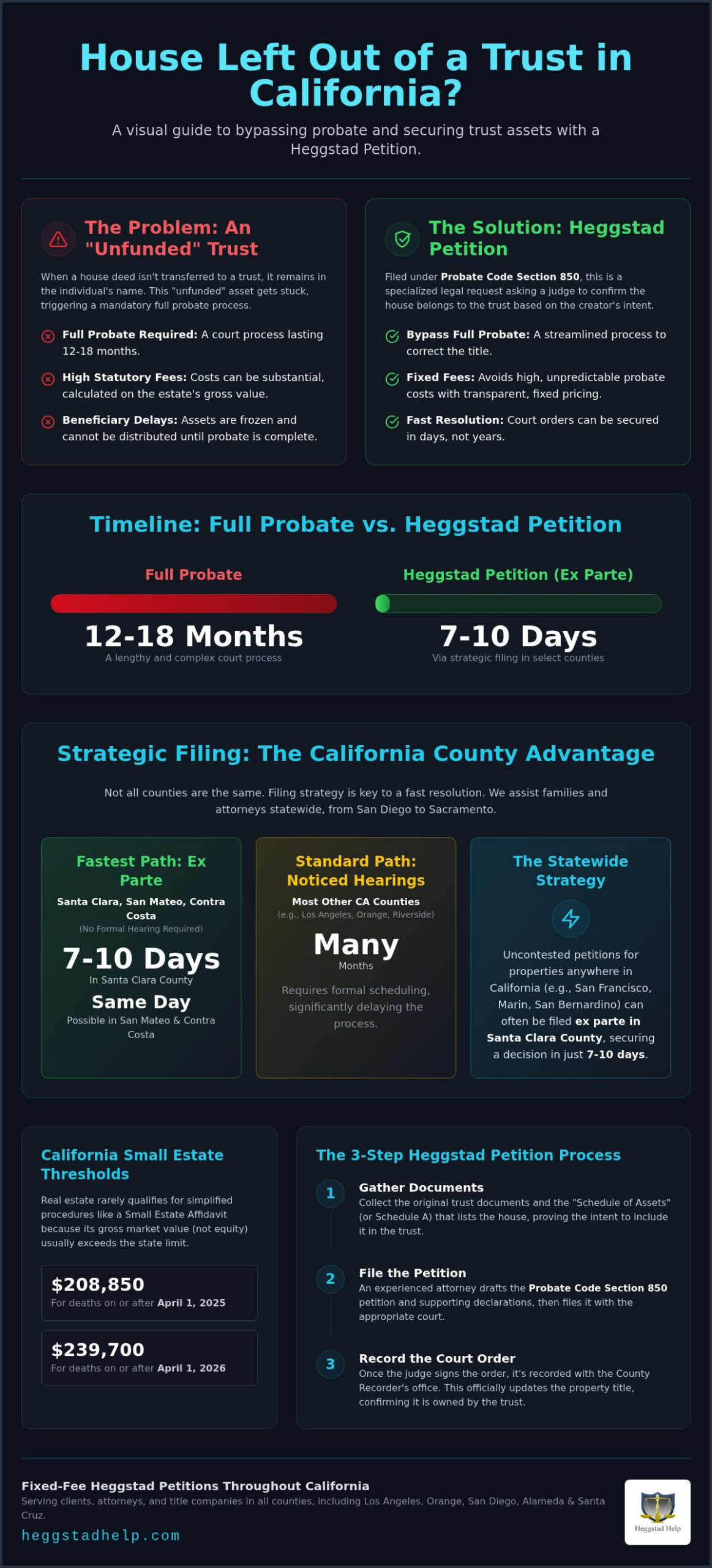
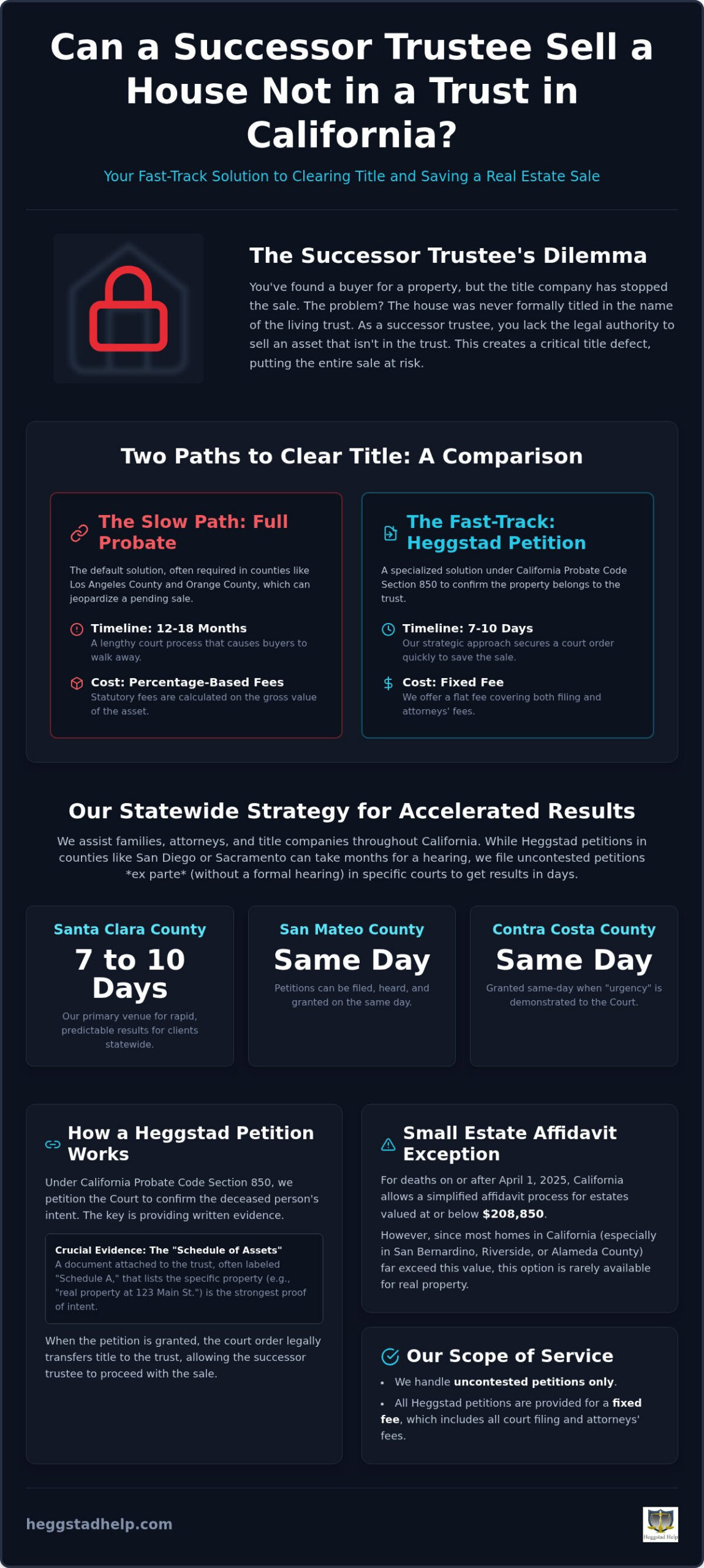
A successor trustee (the person designated to manage trust assets after the original trustee dies) only possesses legal authority over properties formally titled in the trust’s name. If you are wondering can a successor trustee sell a house not in trust in California, the short answer is no; at least not without court intervention. Title companies and escrow officers require a clear chain of title to issue title insurance (a policy that protects the buyer and lender from title defects). When a deed remains in the decedent’s individual name, the trust does not legally own the property. Without a specialized court order, the default solution is a full probate administration. This process frequently lasts 12 to 18 months in counties like Los Angeles County or Orange County, which can cause potential buyers to walk away from a pending sale.
Identifying a Title Defect in California
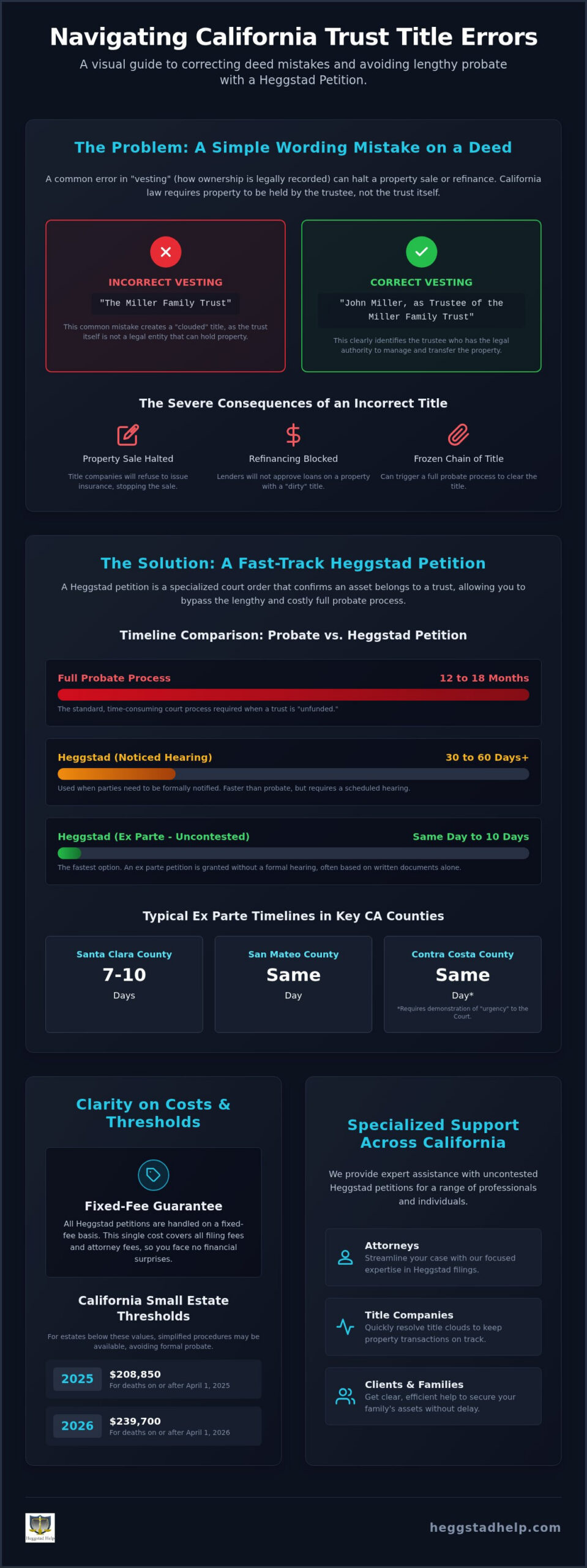
To determine if a problem exists, you must examine the last recorded grant deed (the legal document that transfers property ownership). If the deed does not explicitly list the owner as the "Trustee of the [Name] Trust," the asset was likely left out. This often happens because the settlor (the person who created the trust) forgot to record the deed or the document contained technical errors. This legal precedent, established by the Estate of Heggstad, allows us to petition the court to fix these common oversight mistakes. We regularly help clients in San Bernardino County and Alameda County identify these defects before they derail a real estate transaction.
The $208,850 Small Estate Threshold
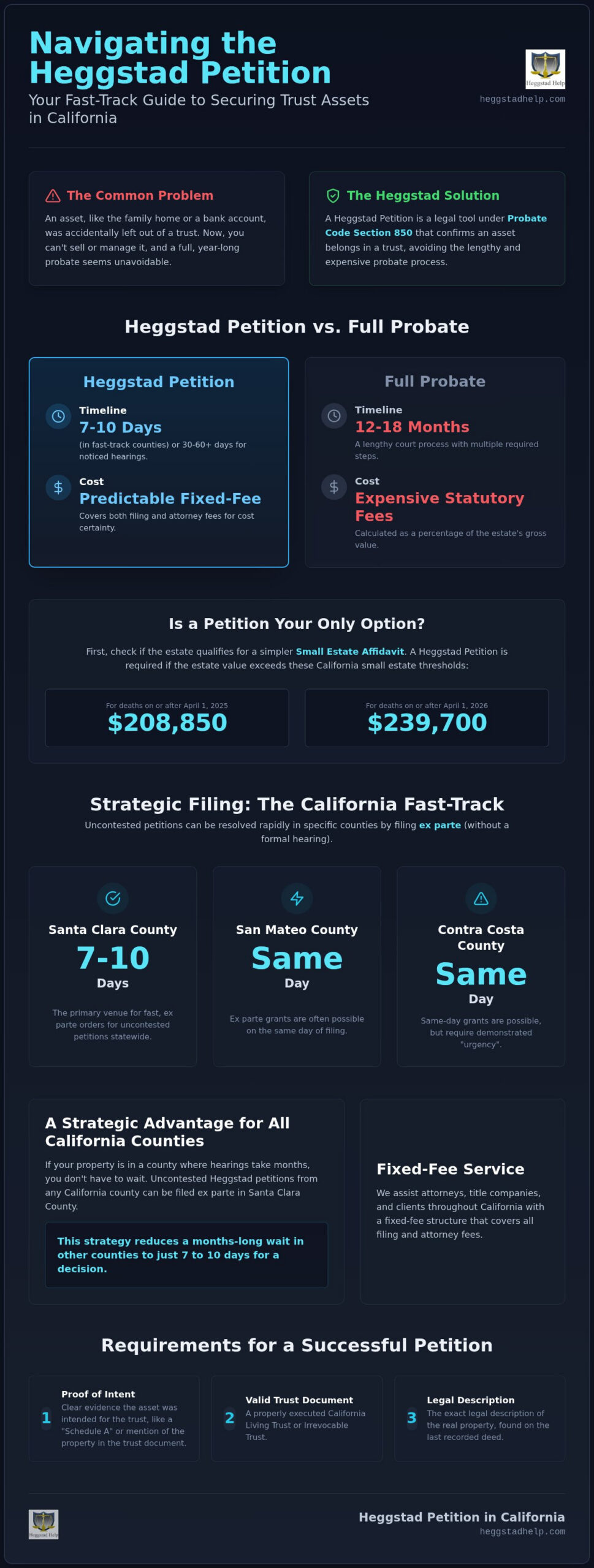
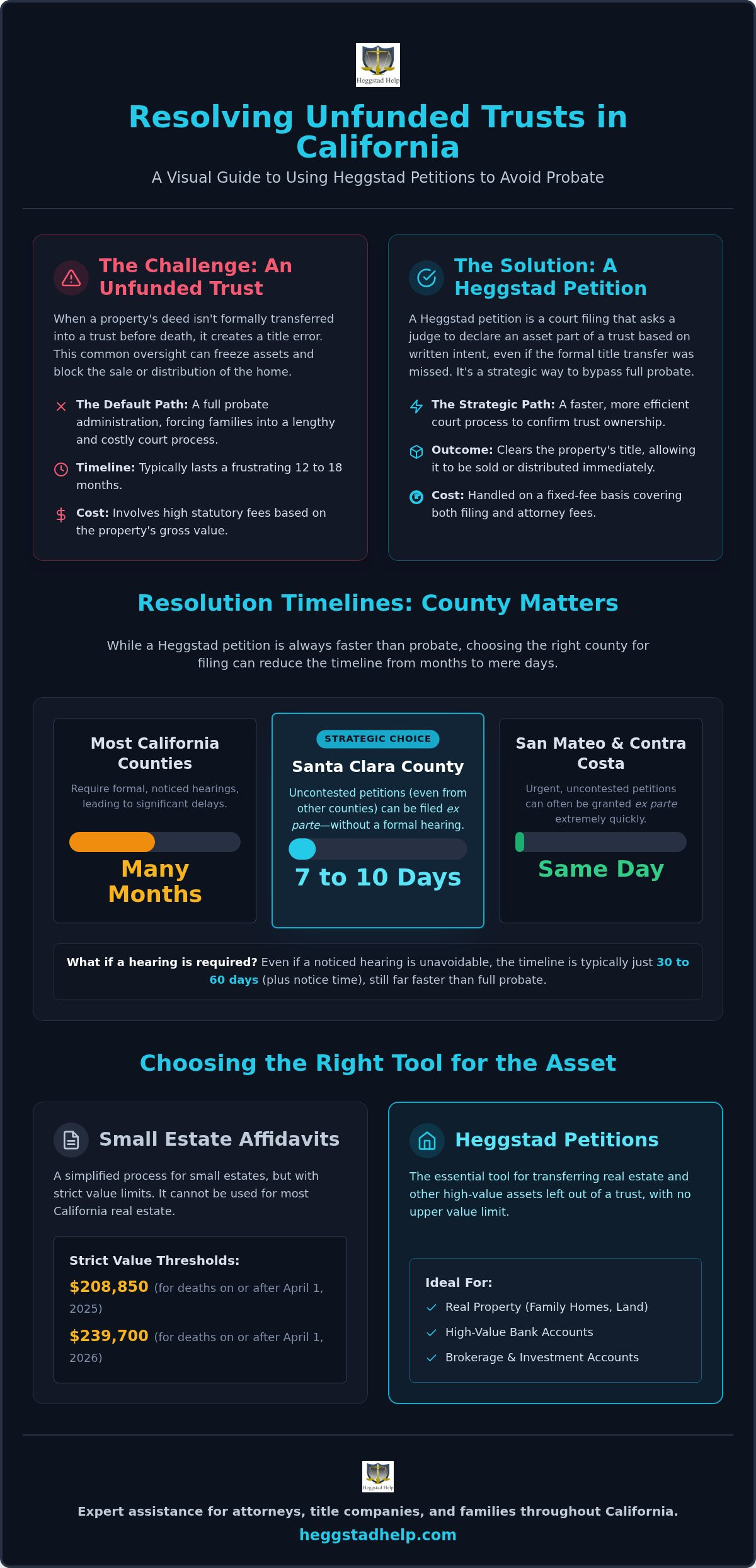
California law provides a simplified process for very small estates, but it rarely applies to real property. For deaths occurring on or after April 1, 2025, the threshold for a Small Estate Affidavit is exactly $208,850. Since most homes in San Diego County or Riverside County far exceed this value, a formal Heggstad petition or full probate is usually required to transfer the title. This specific dollar amount is adjusted every three years under the Probate Code. If the property value exceeds this limit, the successor trustee cannot use the simplified affidavit and must seek a court order to confirm trust ownership.
The Heggstad Petition: A Specialized Solution for Successor Trustees
A Heggstad petition is a specialized legal tool used to transfer real property into a trust after the owner has passed away. Named after the landmark 1993 case, this petition asks the Court to confirm that a house belongs in the trust, even if the deed was never formally transferred. It provides the definitive answer to the question: can a successor trustee sell a house not in trust California? To succeed, you must demonstrate the settlor’s intent through written evidence, such as a "Schedule of Assets" or "Schedule A" that explicitly lists the property. Understanding your specific Successor Trustee duties for an unfunded trust in California is the first step toward resolving these title issues.
Probate Code Section 850 and Asset Recovery
The legal authority for this procedure is found in California Probate Code § 850. This statute allows a successor trustee to recover property that was clearly intended for the trust but remained in the decedent’s name. When the petition is granted, the resulting court order serves as a legal bridge. It effectively "funds" the trust post-death, allowing the successor trustee to sign the sale deed just as if the property had been correctly titled from the beginning. This process is essential for families in Los Angeles County and Orange County who need to clear title before a buyer walks away.
Heggstad Petition vs. Traditional Probate
Choosing a Heggstad petition over traditional probate saves significant time and money. While a full probate in Riverside County or San Bernardino County typically takes 12 to 18 months, a Heggstad petition can often be resolved in weeks. Probate fees are calculated as a percentage of the gross estate value, whereas we offer fixed fees for these petitions. By filing ex parte in Santa Clara County, we help families in Sacramento County and San Diego County achieve results in 7 to 10 days. In San Mateo County or Contra Costa County, petitions can sometimes be granted the same day. If you are facing a looming closing date, you can consult a specialist to see if your case qualifies for this expedited process.
Accelerated Timelines for California Heggstad Petitions
The speed at which you can clear a property title depends heavily on the county where the petition is heard. While you may be dealing with a home in Los Angeles County or Orange County, standard noticed hearings there are typically set 30 to 60 days after filing, and in some cases, the wait lasts several months. If you are asking can a successor trustee sell a house not in trust California without these long delays, the answer involves using ex parte (expedited) filings. Our office specializes in uncontested petitions to ensure the fastest possible resolution, helping families in San Diego County, Riverside County, and San Bernardino County bypass traditional probate hurdles.
County-Specific Lead Times for Fast Results
Choosing the right venue for an uncontested petition is a strategic decision that saves time and prevents the loss of a buyer. In Santa Clara County, petitions are typically granted in 7 to 10 days. For situations requiring even more speed, San Mateo County petitions can often be filed, heard, and granted the same day. Similarly, Contra Costa County allows for same-day grants if "urgency" (such as a pending real estate sale with a strict closing deadline) is demonstrated to the Court. We also assist clients with properties in Alameda County and Santa Cruz County by leveraging these efficient Northern California systems.
How We Help Clients in Southern California
We assist attorneys, title companies, and clients throughout the State of California by filing in these fast-track courts. By using the streamlined procedures in Santa Clara County, we achieve results in 7 to 10 days for properties located in Sacramento County, San Francisco County, or Marin County. This approach provides a reliable path forward without the high costs of full probate. You can read more about the legal mechanics in our guide on California Probate Code Section 850 for real property. If you need to secure a court order to save a pending sale, our Heggstad Petition Filing services offer a predictable, fixed-fee solution.
Next Steps: Selling the Recovered House in California
Once the court grants your petition, you’ve cleared the primary legal obstacle to your real estate sale. If you’ve been asking can a successor trustee sell a house not in trust California, the resulting court order provides the definitive authority you need. This order effectively amends the title post-death, allowing you to proceed with the transaction without the 12 to 18 month delay of a full probate administration. The final procedural step involves recording the granted court order with the County Recorder’s office in the county where the house is located, such as San Bernardino County or Riverside County.
Working with Title Companies
Title companies act as the gatekeepers of any California real estate transaction. They must verify that the successor trustee has the legal right to transfer the property before they’ll issue title insurance. In counties like Los Angeles County and Orange County, a Heggstad petition is frequently the only solution title officers will accept for an unfunded house. Once the order is recorded, you’ll provide both the recorded document and a Certification of Trust (a summary of the trust’s essential terms) to escrow. This allows you to sign the listing agreement and the final deed to the new buyer with confidence.
Fixed Fees and Financial Predictability
HEGGSTAD HELP specializes in providing a predictable path toward title correction. Unlike generalist probate firms that may use hourly billing, our fixed-fee services cover both the court filing fees and the attorneys’ fees. This transparency provides peace of mind for families and attorneys in Sacramento County, Marin County, and Santa Cruz County. We regularly assist:
- Individual successor trustees who need to save a pending sale.
- Estate planning attorneys whose clients missed a property transfer.
- Title companies seeking a court order to clear a complex title defect.
By filing uncontested petitions ex parte in Santa Clara County, we achieve results in 7 to 10 days for clients throughout the State of California. For situations involving extreme urgency, we also utilize fast-track procedures in San Mateo County and Contra Costa County to secure orders even faster.
Securing Your Real Estate Sale with a Heggstad Petition
Discovering that a house was left out of a trust doesn’t have to mean losing your buyer or enduring a year of court delays. While you initially asked can a successor trustee sell a house not in trust California, you now know that a Heggstad petition provides the legal bridge needed to clear title. By demonstrating the settlor’s intent under Probate Code Section 850, you can move directly to escrow. Our office assists families in Los Angeles County, Orange County, and San Diego County by utilizing fast-track courts in Northern California. Led by a Board-Certified Specialist, we provide typical results in 7 to 10 days through ex parte filings in Santa Clara County. We offer fixed fees to ensure your trust administration remains predictable and efficient. You can Contact HEGGSTAD HELP today for a fixed-fee consultation on your California trust assets and take the final step toward a successful sale. You have a clear path forward; let us help you navigate the procedural hurdles with confidence.
Frequently Asked Questions
Can a successor trustee sell a house that isn’t listed in the trust document?
Yes, but you must first obtain a court order confirming the house is a trust asset. A successor trustee cannot sell a house not in trust California until the legal title is corrected to reflect trust ownership. If the property was intended for the trust but the deed was missed, we file a petition under Probate Code Section 850. This order allows the trustee to sign the sale deed and close escrow.
How long does a Heggstad petition take to clear a house title in California?
The timeline depends entirely on the county where the petition is filed. In Los Angeles County or Orange County, noticed hearings often take several months to be heard. However, our office files uncontested petitions ex parte in specific Northern California courts to achieve faster results. Santa Clara County typically grants orders in 7 to 10 days, while San Mateo County and Contra Costa County can often grant them the same day.
What is the cost of a Heggstad petition compared to full probate in California?
A Heggstad petition is significantly more cost-effective than a 12 to 18 month probate. Traditional probate fees are statutory percentages of the gross estate value, which can reach tens of thousands of dollars. We provide fixed fees that cover both filing fees and attorneys’ fees for families in San Diego County and Riverside County. This approach offers financial predictability and saves the estate from the high costs of full administration.
Do all beneficiaries have to agree to a Heggstad petition for it to be granted?
While total agreement isn’t a strict legal requirement to file, our office only handles uncontested petitions. If a beneficiary or heir objects, the case becomes contested litigation, which we don’t handle. Most families in Sacramento County or Alameda County find that beneficiaries readily agree because the process is faster and cheaper than probate. Success depends on providing clear written evidence that the settlor intended the house to be trust property.
What happens if a house was left out of a trust and the estate is under $208,850?
If the total estate value is exactly $208,850 or less for deaths on or after April 1, 2025, you might qualify for a Small Estate Affidavit. However, this threshold rarely applies to real property in San Francisco County or Marin County because home values usually exceed this limit. If the house value pushes the estate over the threshold, a Heggstad petition is the most efficient way to transfer the title without full probate.

Article by
Robert P. Bergman, Attorney at Law
Attorney Robert P. Bergman ("Bob Bergman") has been a Board-Certified Specialist in Estate Planning, Trust and Probate Law since 2011, as certified by the California State Bar Board of Legal Specialization. For several years, Bob has assisted families and the clients of other attorneys with obtaining court orders through Heggstad petitions to avoid the time and expense of Probate administration. Bob is friendly, very approachable, and believes in explaining complex legal topics in clear ordinary language so that his clients understand exactly what they're doing and why they're doing it.
Bob is often able to assist clients who are in other counties than his home county of Santa Clara through his approach to Heggstad petitions.
Disclaimer
This article is for informational purposes only. Nothing in this article is intended to replace legal advice from a competent attorney or be considered legal guidance for anybody's specific legal situation. Nobody should rely on information in this article in making legal decisions without such consultation.