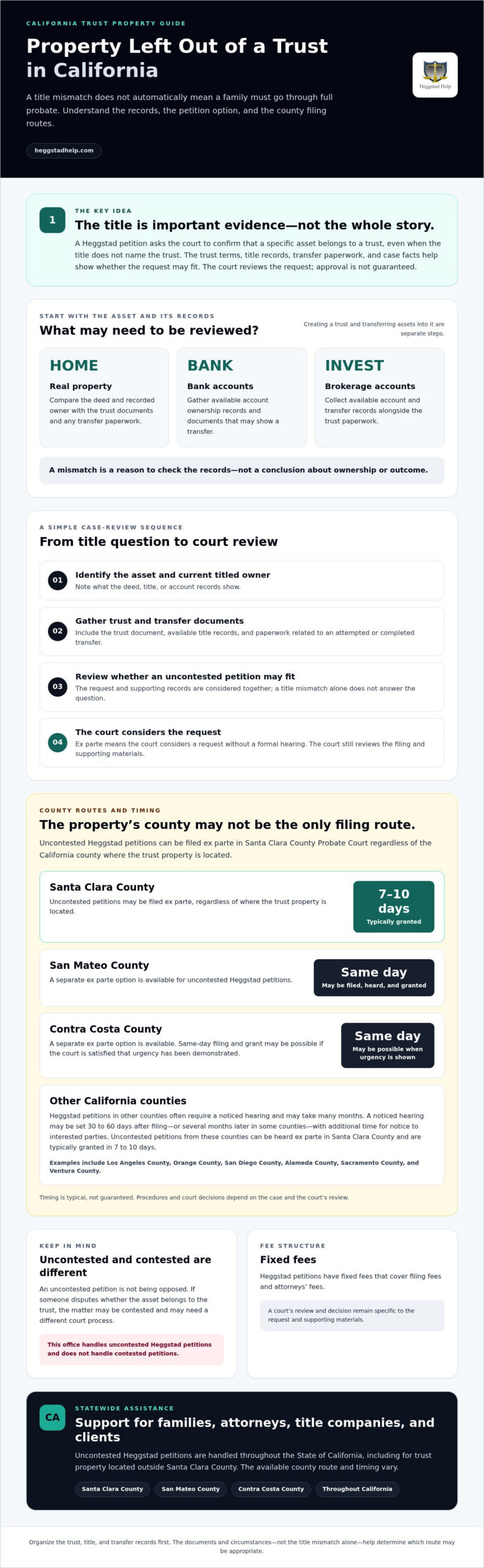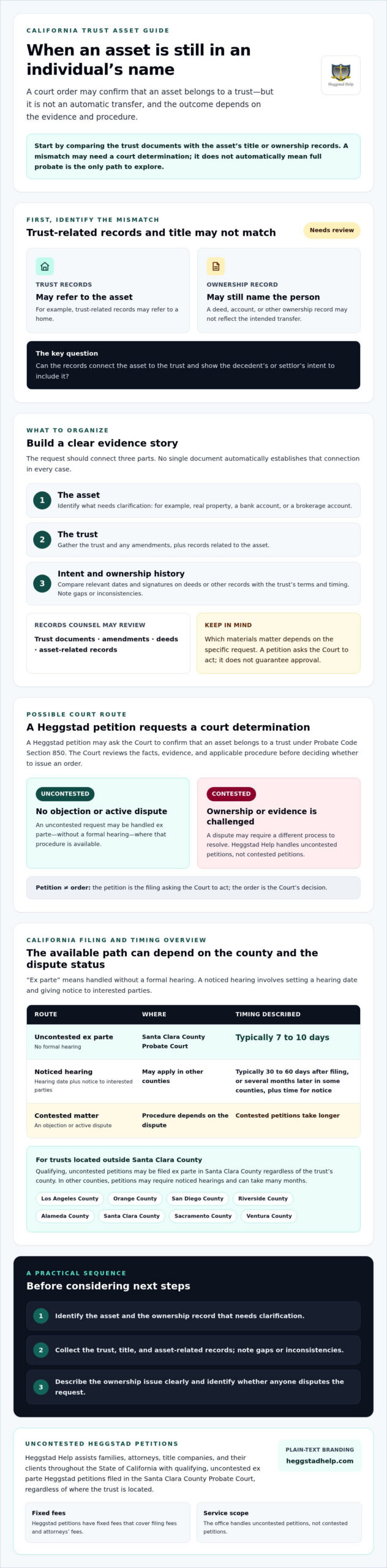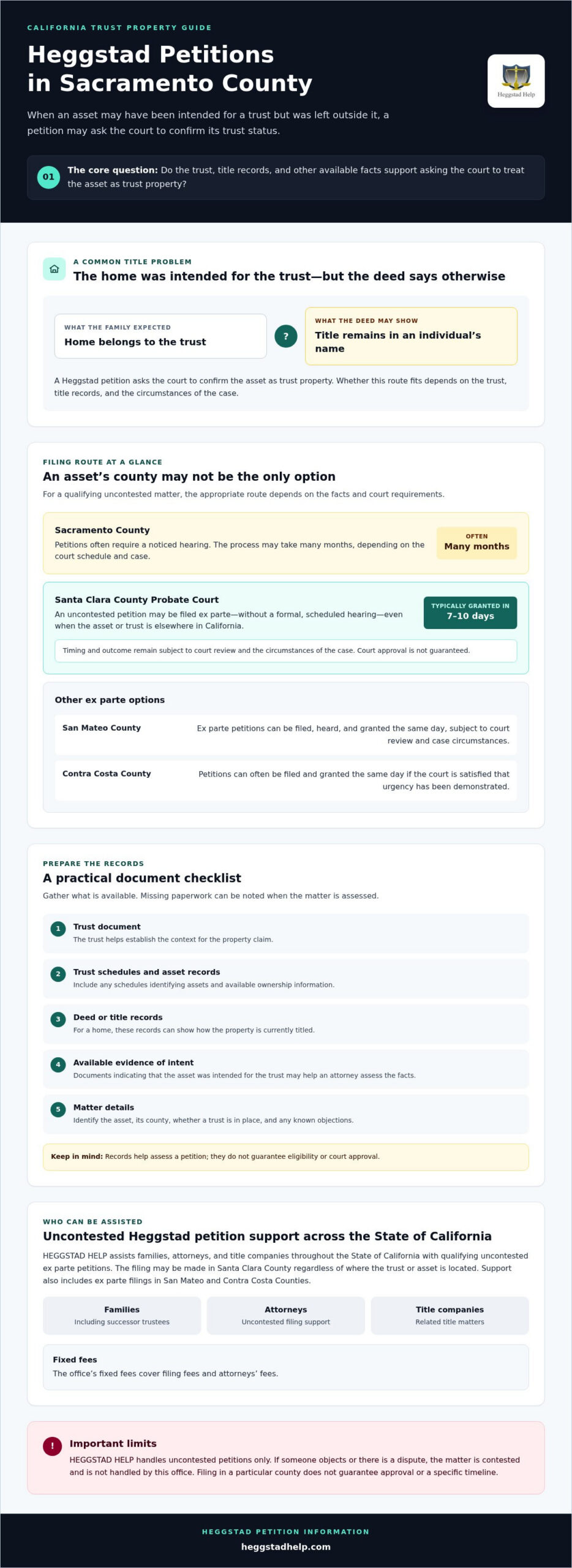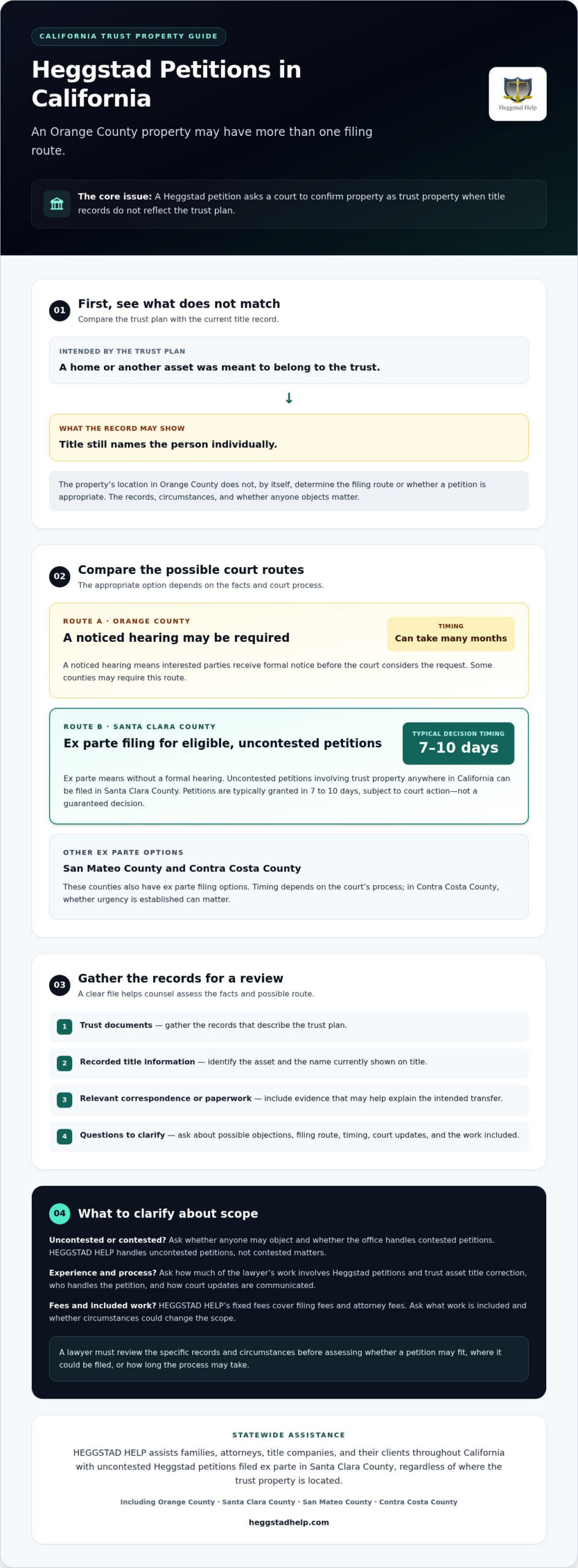
If the deed doesn’t show the trust as owner, it’s understandable to worry that the property will have to go through lengthy probate or that the recorded title settles the issue. A Riverside county trust title correction may depend on what the trust documents and other records show, as well as which court route fits the facts. The courthouse closest to the property may not be the only filing path.
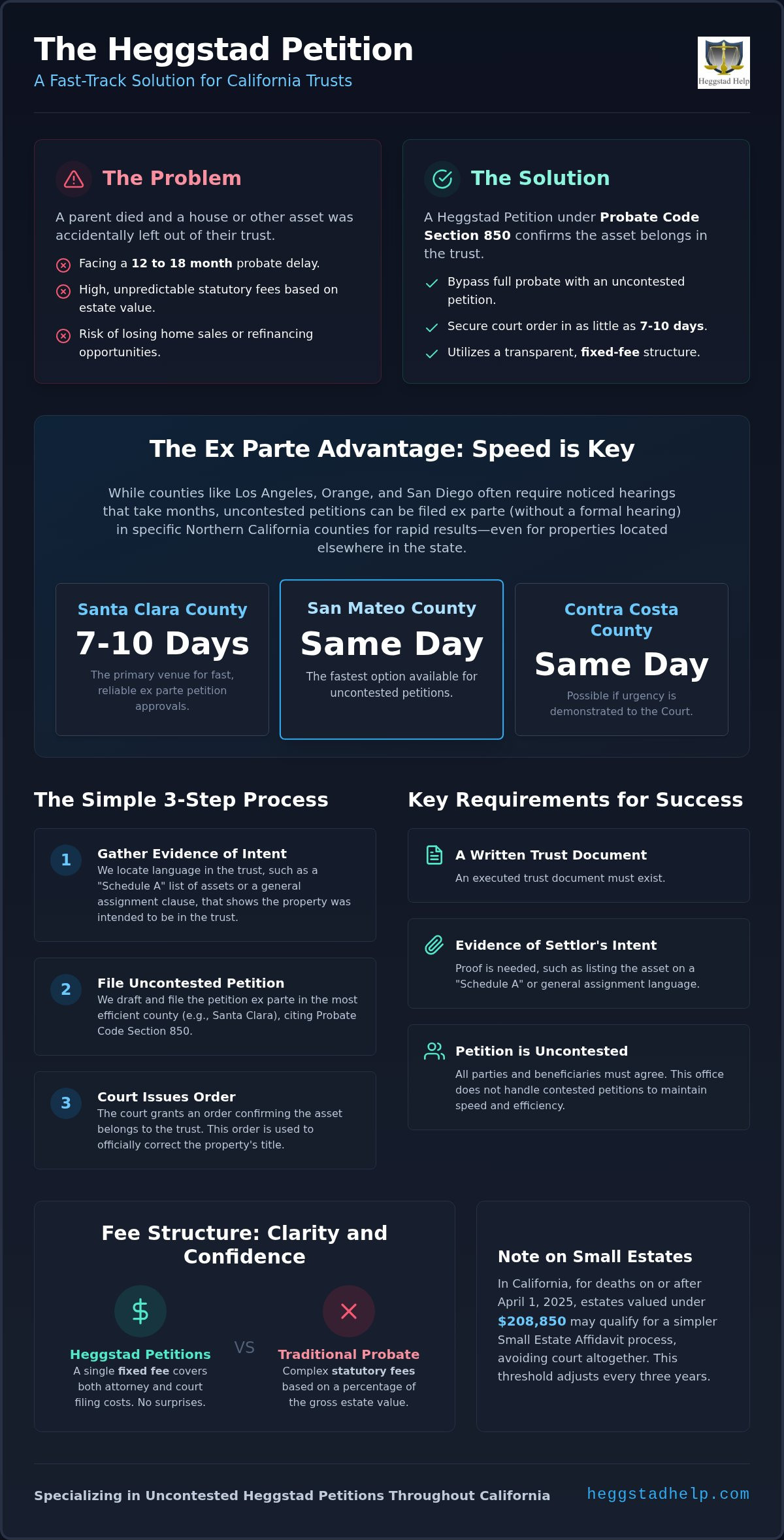
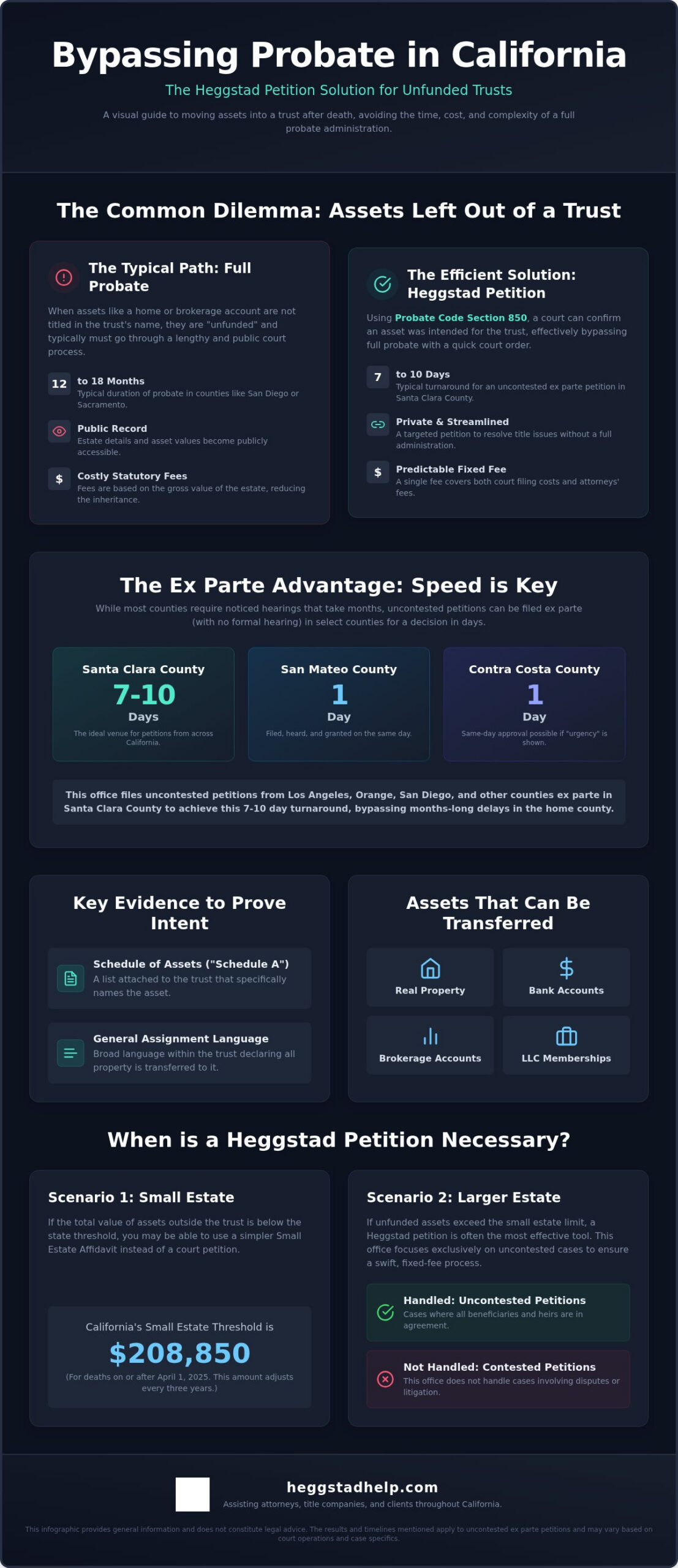
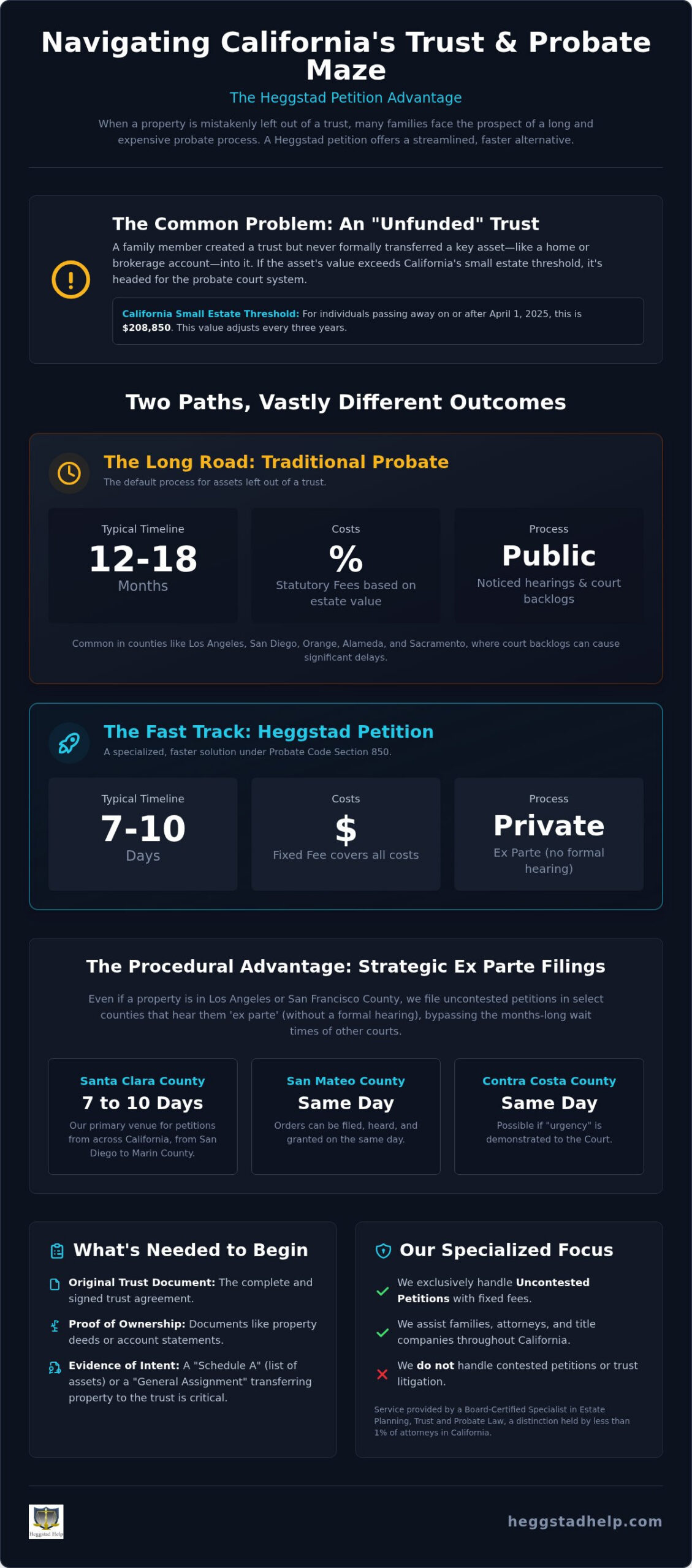
This article explains what to gather first, including the deed, trust, and any asset list or assignment that may show the owner intended the property to belong to the trust. You’ll also learn how a local noticed hearing differs from an uncontested ex parte Heggstad petition, which proceeds without a formal hearing. For eligible uncontested matters, HEGGSTAD HELP assists families, attorneys, title companies, and their clients throughout California by filing in Santa Clara County, regardless of where the trust property is located. Petitions there are typically granted in 7 to 10 days. We’ll help you understand whether the matter may fit this focused filing service.
Key Takeaways
- For Riverside county trust title correction, compare the recorded deed with the trust documents to identify where ownership records and intended trust ownership may differ.
- Write down the property’s county, the current titled owner, and the trust’s name before reviewing possible filing routes.
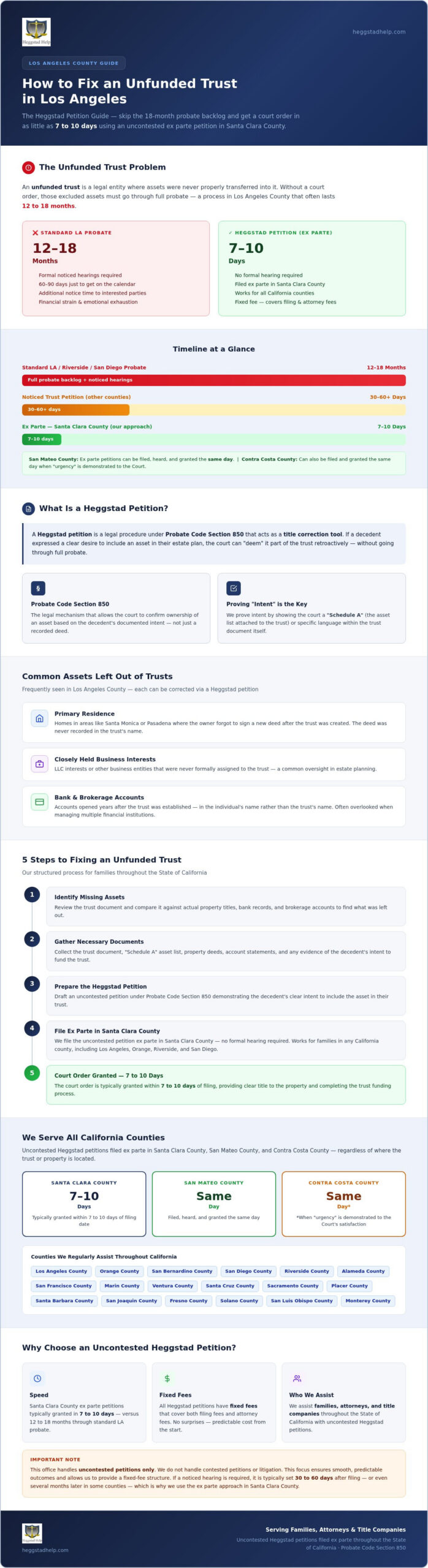
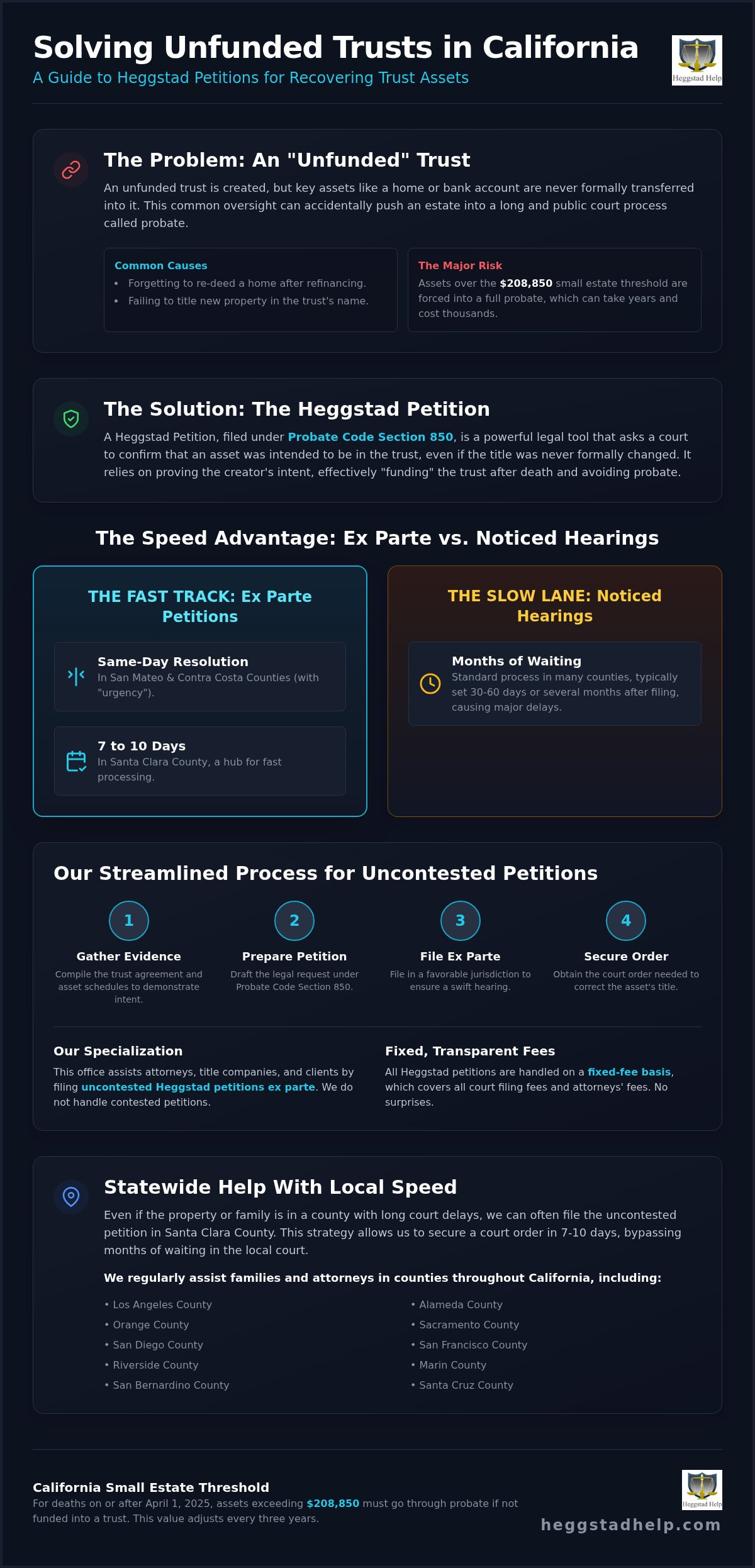
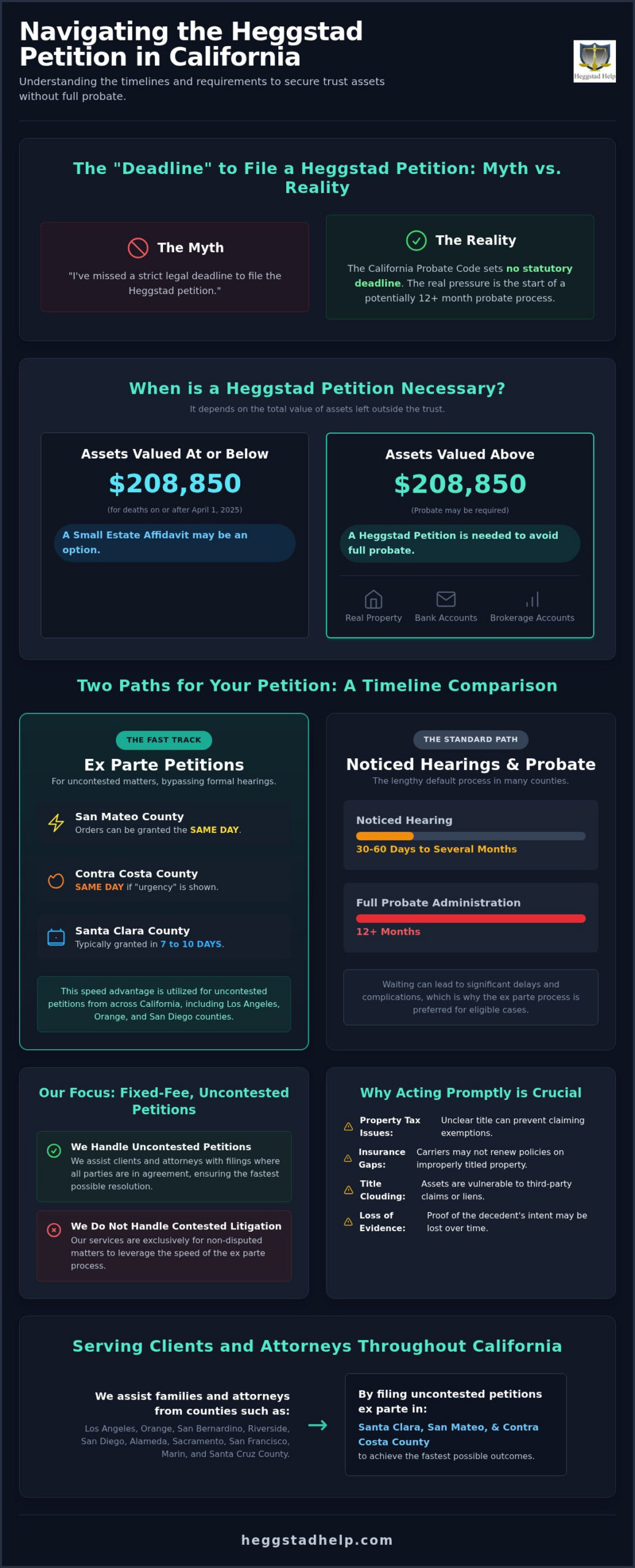
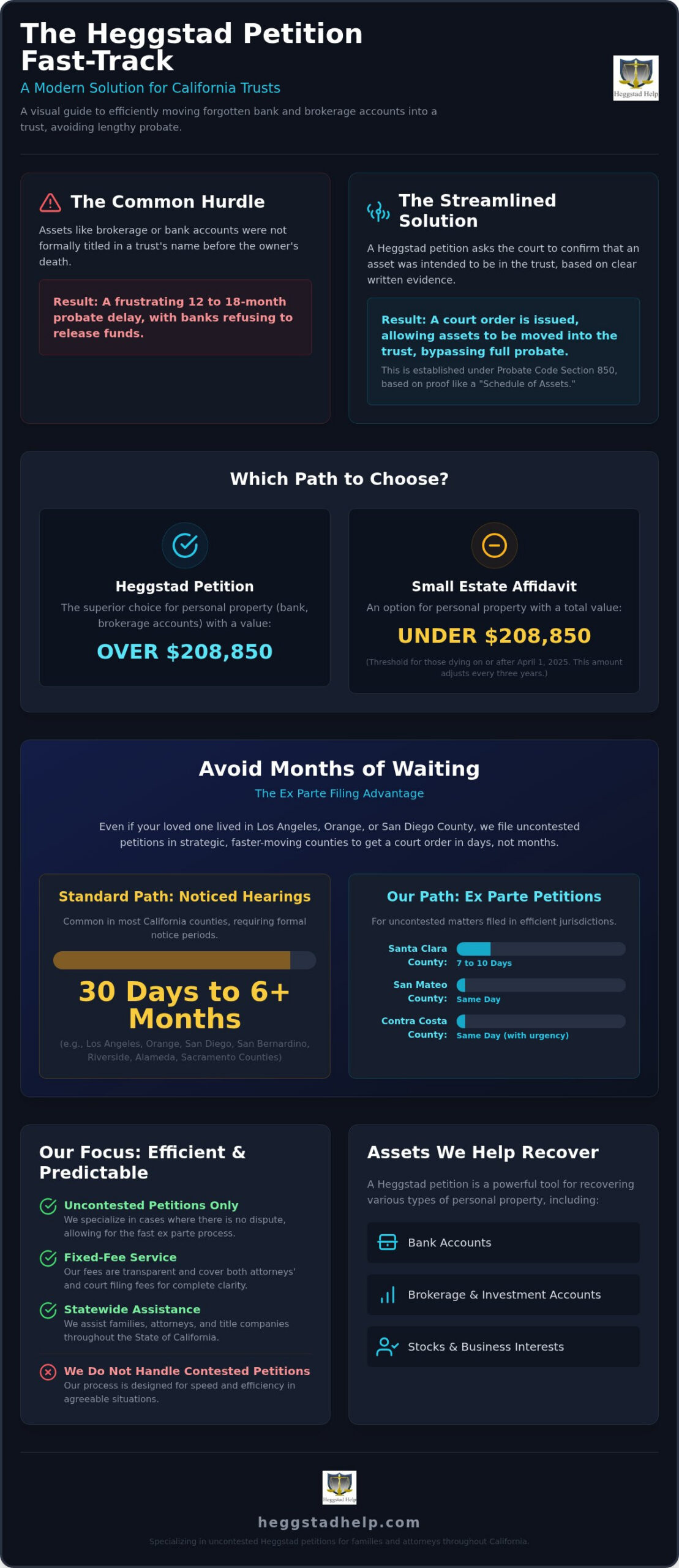
- A Riverside County noticed hearing may take many months, while an eligible uncontested Heggstad petition may be filed ex parte in Santa Clara County and is typically granted in 7 to 10 days.
- Learn how focused Heggstad petition filing may help families, attorneys, title companies, and clients throughout California, and what to consider when deciding whether a matter is uncontested.
Riverside County Trust Title Correction: Identify the Ownership Problem First
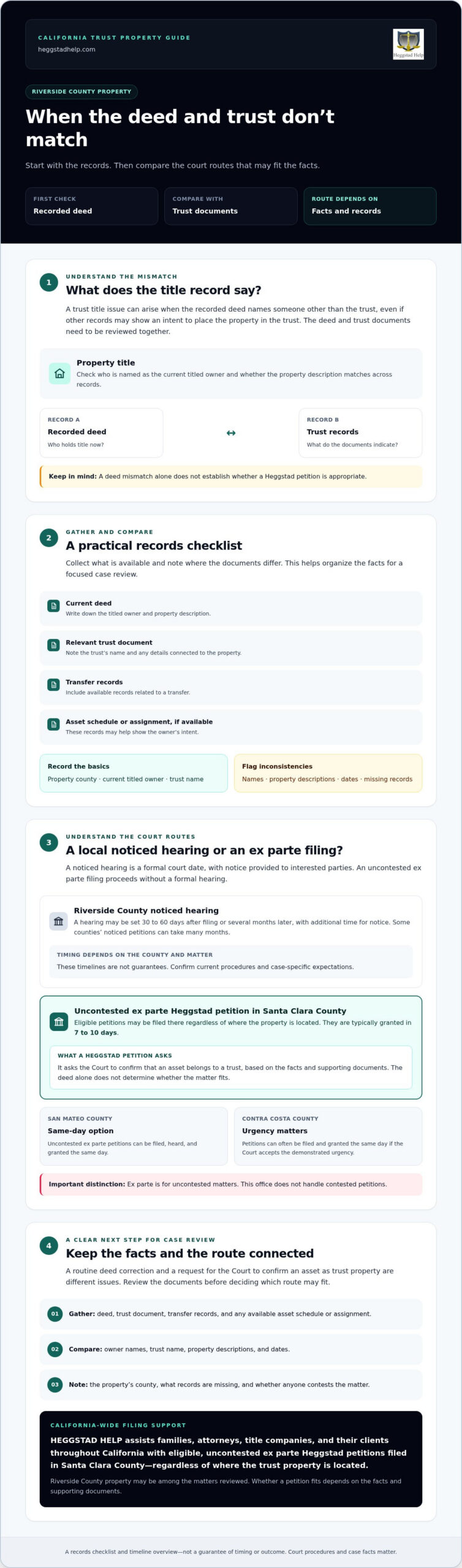
For Riverside County trustees, families, attorneys, and title professionals, start by checking what the recorded documents actually say. A Riverside county trust title correction addresses a mismatch between property records and the ownership the trust was intended to hold. Because a deed records who holds title, review it alongside the trust documents before deciding what the mismatch means. Real property includes land and things attached to it, but the records for a particular property still need careful comparison.
What to check in Riverside County property and trust records
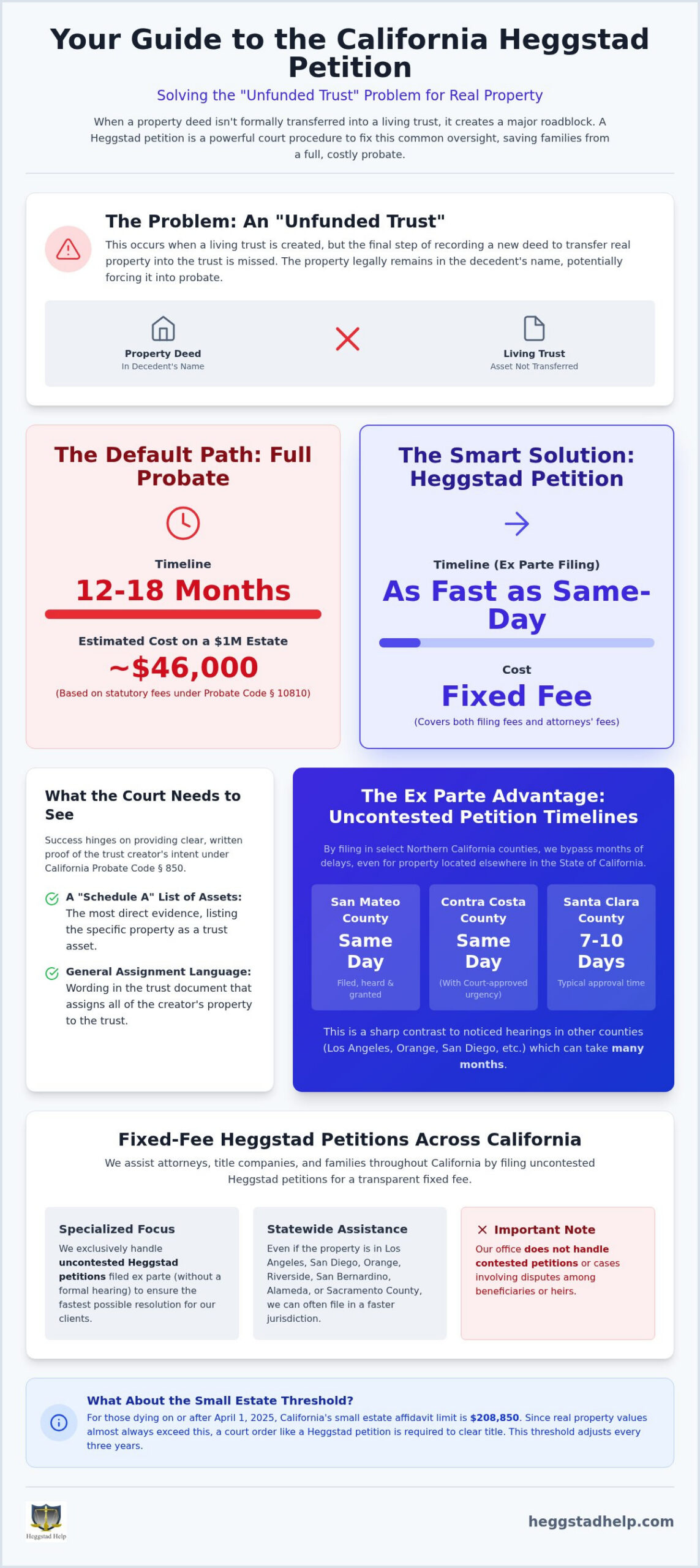
Gather the current deed, the relevant trust document, and any available transfer records. Compare the owner named on the deed with the trust name, and check whether the property description is consistent across the documents. Look for a schedule of trust assets or an assignment, if available. Note differences in names, descriptions, or dates, and flag missing records for focused case review. These checks help organize the facts, but they don’t establish a legal conclusion on their own.
When a title issue may call for a Heggstad petition
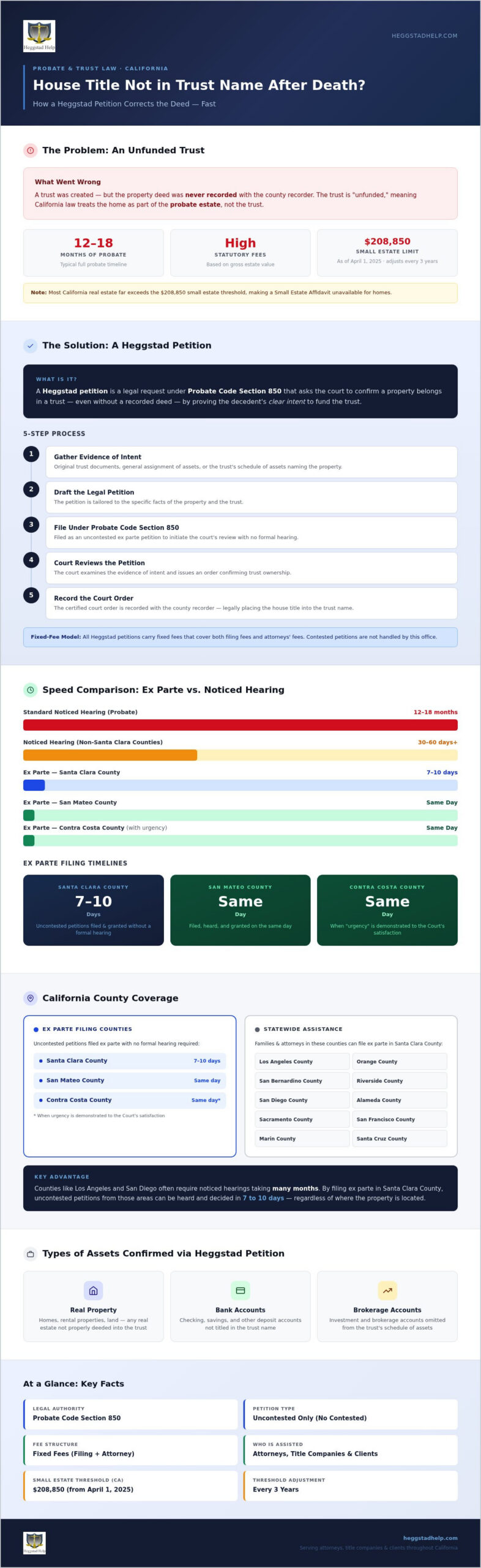
A missing or incorrect trust title doesn’t automatically mean a Heggstad petition is appropriate. A routine deed correction and a request for the Court to confirm that an asset belongs to a trust are different issues. A Heggstad petition asks the Court to confirm an asset as trust property based on the facts and supporting documents. Whether the matter fits an uncontested petition depends on those details, so don’t assume eligibility from the deed alone.
HEGGSTAD HELP assists families, attorneys, title companies, and their clients throughout California with uncontested ex parte Heggstad petitions filed in Santa Clara County, regardless of the property’s county. Keep copies of the deed, trust, and transfer records together, and note every inconsistency you find. That gives a case review a clearer starting point.
Riverside Property: Compare a Local Noticed Hearing With an Ex Parte Filing
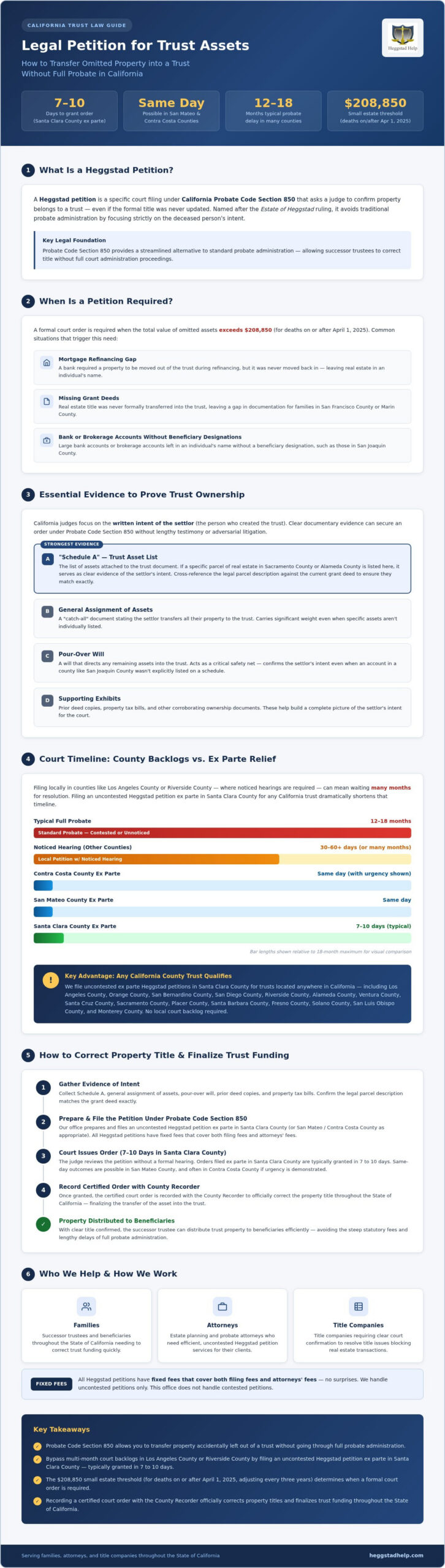
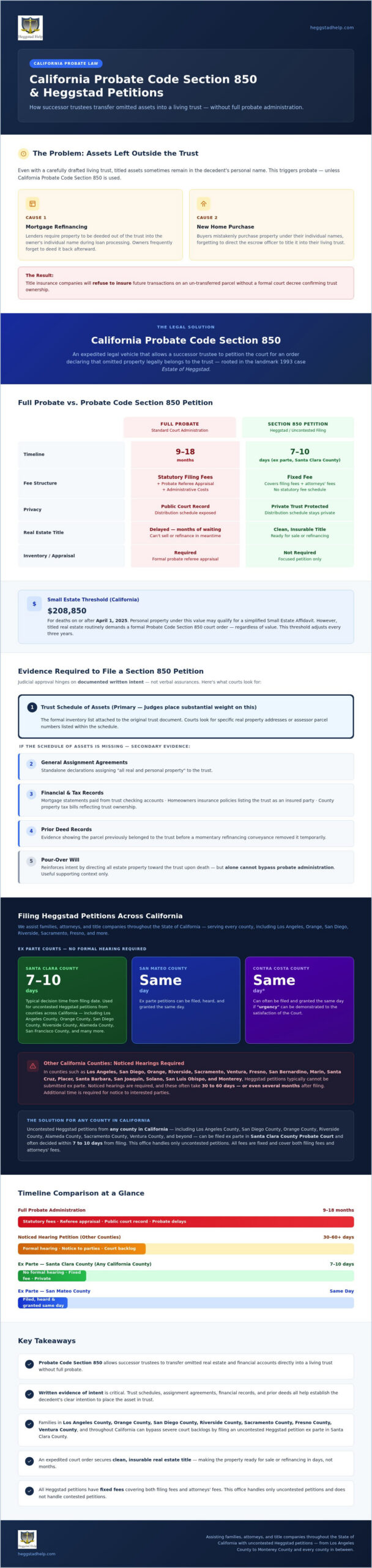
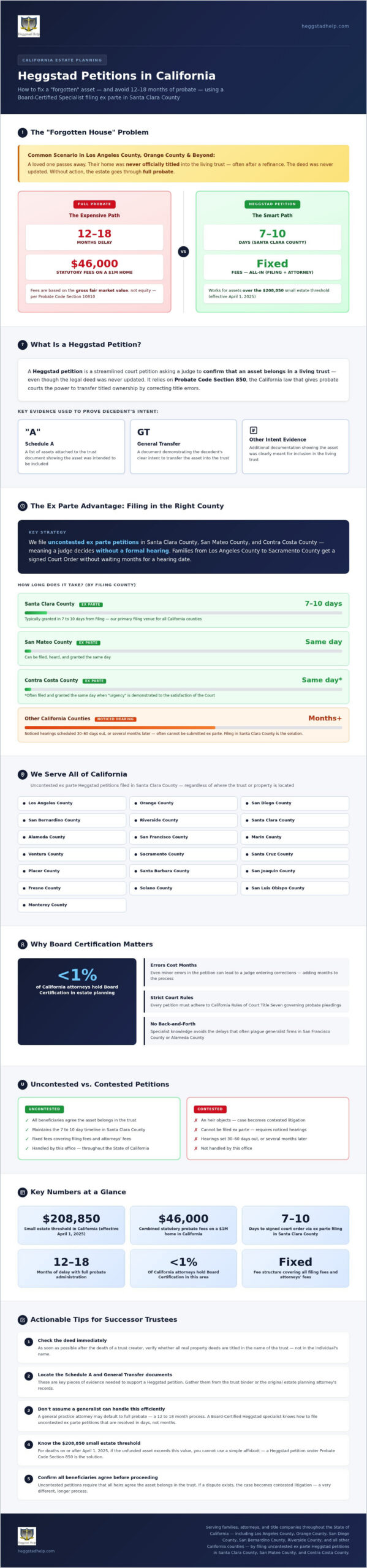
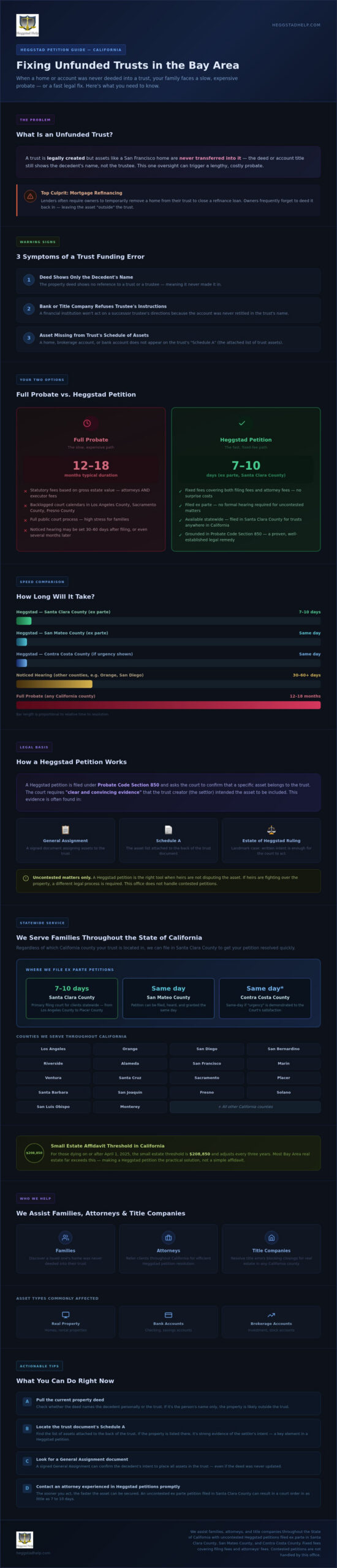
For Riverside county trust title correction, the filing location can affect how the matter is heard and how long the process may take. A noticed hearing is a formal court date, with notice provided to interested parties. An ex parte filing, as used for an uncontested Heggstad petition in these counties, proceeds without a formal hearing.
| Filing path | What to expect |
|---|---|
| Riverside County noticed hearing | A hearing is scheduled after filing, with additional time for notice. Depending on the county and matter, a hearing may be set 30 to 60 days later or several months later, and some counties’ noticed petitions can take many months. |
| Uncontested ex parte filing in Santa Clara County | Eligible petitions can be filed in Santa Clara County regardless of where the property is located. Petitions there are typically granted in 7 to 10 days. |
These timelines are not guarantees. Confirm current procedures and case-specific expectations before choosing a filing path. For deed-recording details, consult the Riverside County recording requirements. Recording rules and a court petition address different parts of a title issue.
What ex parte means for an uncontested Heggstad petition
Ex parte means the petition is presented without a formal hearing. This route is for uncontested matters, and the facts and documents still need review. This office doesn’t handle contested petitions. For related background, see California Probate Code Section 850: A Guide to Real Property Petitions.
How San Mateo and Contra Costa County options differ
Uncontested ex parte petitions in San Mateo County can be filed, heard, and granted the same day. Contra Costa County petitions can often be granted the same day if the Court accepts the demonstrated urgency. Families, attorneys, title companies, and clients statewide can also seek filing of an eligible uncontested petition in Santa Clara County, regardless of the property’s county. To assess whether that route may fit, review our Heggstad petition filing services.
How to Prepare for Riverside County Trust Title Correction
Organizing the records can make a case review more useful. For Riverside county trust title correction, collect what you know and keep the facts separate from conclusions about eligibility, the correct filing route, or who legally owns the property.
Documents and details to organize before discussing the matter
- Record the basics: Note the property’s county, the current titled owner shown on the deed, and the trust’s full name.
- Gather available records: Locate the current deed, relevant trust documents, transfer records, and correspondence about the property or trust.
- Build a brief timeline: Write down known dates, ownership changes, and any previous court filings. If a record is missing, note that rather than filling in the gap with an assumption.
The evidence needed depends on the specific facts. A Heggstad petition may ask the Court to determine a property claim under Probate Code Section 850, but identifying that law doesn’t establish that a petition fits your situation. For broader background, read Heggstad petition guidance.
Questions to clarify before choosing a filing route
Before discussing next steps, ask whether anyone disputes that the property was intended for the trust and whether a formal hearing has been scheduled or notice sent. Record the answers and gather related letters or court papers. These are facts to share for review, not a determination that the matter is contested or eligible for a particular filing.
Once your records and timeline are organized, you can request a focused review of an uncontested Heggstad petition through Heggstad petition filing services. The firm assists families, attorneys, title companies, and clients throughout California with eligible uncontested petitions.
Get Specialized Help With an Uncontested Riverside County Trust Title Matter
A Riverside county trust title correction may call for more than changing a deed. HEGGSTAD HELP focuses on Heggstad petition filing, ex parte court orders, and trust asset title correction. The office assists families, attorneys, title companies, and their clients throughout California with uncontested matters. It does not handle contested petitions or full Probate administration, so confirming whether anyone disputes the trust’s intended ownership is an important first step.
When the firm’s statewide ex parte service may fit
For an eligible, uncontested matter involving Riverside property, the petition may be filed ex parte in the Santa Clara County Probate Court, regardless of the county where the property is located. Ex parte means the filing proceeds without a formal hearing. Santa Clara County petitions are typically granted in 7 to 10 days, but timing and suitability depend on the case and court. HEGGSTAD HELP serves matters across the San Francisco Bay Area, Northern California, Southern California, the Central Valley, San Diego, Sacramento, Fresno, Bakersfield, Greater Los Angeles, Orange County, Riverside County, and San Bernadino County. Robert P. Bergman is a California-licensed attorney and Board-Certified Specialist in Estate Planning, Trust and Probate Law. Learn more about the firm’s Heggstad petition services.
A straightforward next step for trustees and referring professionals
Before requesting a case review, write a short summary of the title discrepancy and gather the current deed, relevant trust records, and any transfer documents or correspondence you already have. Note the property’s county, the titled owner, the trust’s name, and whether anyone objects. These details help clarify whether the matter may fit an uncontested petition, but they don’t establish eligibility by themselves.
If you’re ready to discuss an uncontested petition for Riverside property, discuss your Riverside County trust title matter.
Take the Next Step Toward Resolving the Title Issue
A Riverside county trust title correction starts with understanding the mismatch, not assuming what the deed or trust documents mean on their own. Gather the current deed, relevant trust records, and any transfer documents, then note the property’s county, titled owner, and trust name. Those details can help determine whether a Heggstad petition may fit and whether the matter is uncontested.
For eligible uncontested matters, families, attorneys, title companies, and clients throughout California can be assisted with ex parte Heggstad petitions filed in Santa Clara County, regardless of where the property is located. Petitions there are typically granted in 7 to 10 days, though timing and eligibility depend on the case. Robert P. Bergman is a California-licensed attorney and Board-Certified Specialist in Estate Planning, Trust and Probate Law, and the practice has operated since 1980.
To discuss whether this focused filing service may suit your circumstances, discuss an uncontested Heggstad petition for a Riverside County property. Bring the records you’ve gathered so the relevant facts can be reviewed.
Frequently Asked Questions
Can a Heggstad petition correct title to a Riverside County property?
It may, if the facts and supporting records show that the property was intended to belong to the trust. A Heggstad petition asks the Court to confirm an asset as trust property. It isn’t simply a routine deed correction, and a title mismatch alone doesn’t establish eligibility. For Riverside county trust title correction, compare the deed with the trust and any available asset schedule or assignment, then have the circumstances reviewed.
Does a Riverside County Heggstad petition have to be filed in Riverside County?
No. An eligible uncontested Heggstad petition involving Riverside County property may be filed ex parte in the Santa Clara County Probate Court, regardless of the property’s county. Ex parte means proceeding without a formal hearing. Heggstad petitions in Riverside County and other counties outside Santa Clara, San Mateo, and Contra Costa often require noticed hearings, which may take many months. Confirm the appropriate route for the specific facts and current court procedures.
How long does an uncontested Heggstad petition take in Santa Clara County?
Petitions filed ex parte in Santa Clara County are typically granted in 7 to 10 days, according to the firm’s information. That’s a typical timeframe, not a guaranteed result or a promise that every petition will qualify. The documents, case details, and court procedures can affect timing. Before making plans, ask for case-specific expectations and confirm that the matter is uncontested and suitable for this filing route.
What documents should I gather for a Riverside County trust title correction?
Start with the current deed and relevant trust documents, including any available asset schedule or assignment. Also collect transfer records, correspondence about the property, and papers from any previous court filing. Note the property’s county, the owner named on the deed, the trust’s name, and known ownership-change dates. The evidence needed varies by case, so organizing records doesn’t determine petition eligibility by itself.
Does HEGGSTAD HELP handle contested trust title petitions?
No. HEGGSTAD HELP handles uncontested Heggstad petitions and doesn’t handle contested petitions or full Probate administration. If someone disputes whether the property was intended for the trust, mention that during case review rather than assuming the matter qualifies for an uncontested filing. The practice assists families, attorneys, title companies, and clients throughout California with eligible petitions, including matters involving Riverside County property.

Article by
Robert P. Bergman, Attorney at Law
Attorney Robert P. Bergman ("Bob Bergman") has been a Board-Certified Specialist in Estate Planning, Trust and Probate Law since 2011, as certified by the California State Bar Board of Legal Specialization. For several years, Bob has assisted families and the clients of other attorneys with obtaining court orders through Heggstad petitions to avoid the time and expense of Probate administration. Bob is friendly, very approachable, and believes in explaining complex legal topics in clear ordinary language so that his clients understand exactly what they're doing and why they're doing it.
Bob is often able to assist clients who are in other counties than his home county of Santa Clara through his approach to Heggstad petitions.
Disclaimer
This article is for informational purposes only. Nothing in this article is intended to replace legal advice from a competent attorney or be considered legal guidance for anybody's specific legal situation. Nobody should rely on information in this article in making legal decisions without such consultation.